Axial RBX10 Ryft vs Traxxas TRX-4 DefenderWhich Should You Buy?
Quick Take
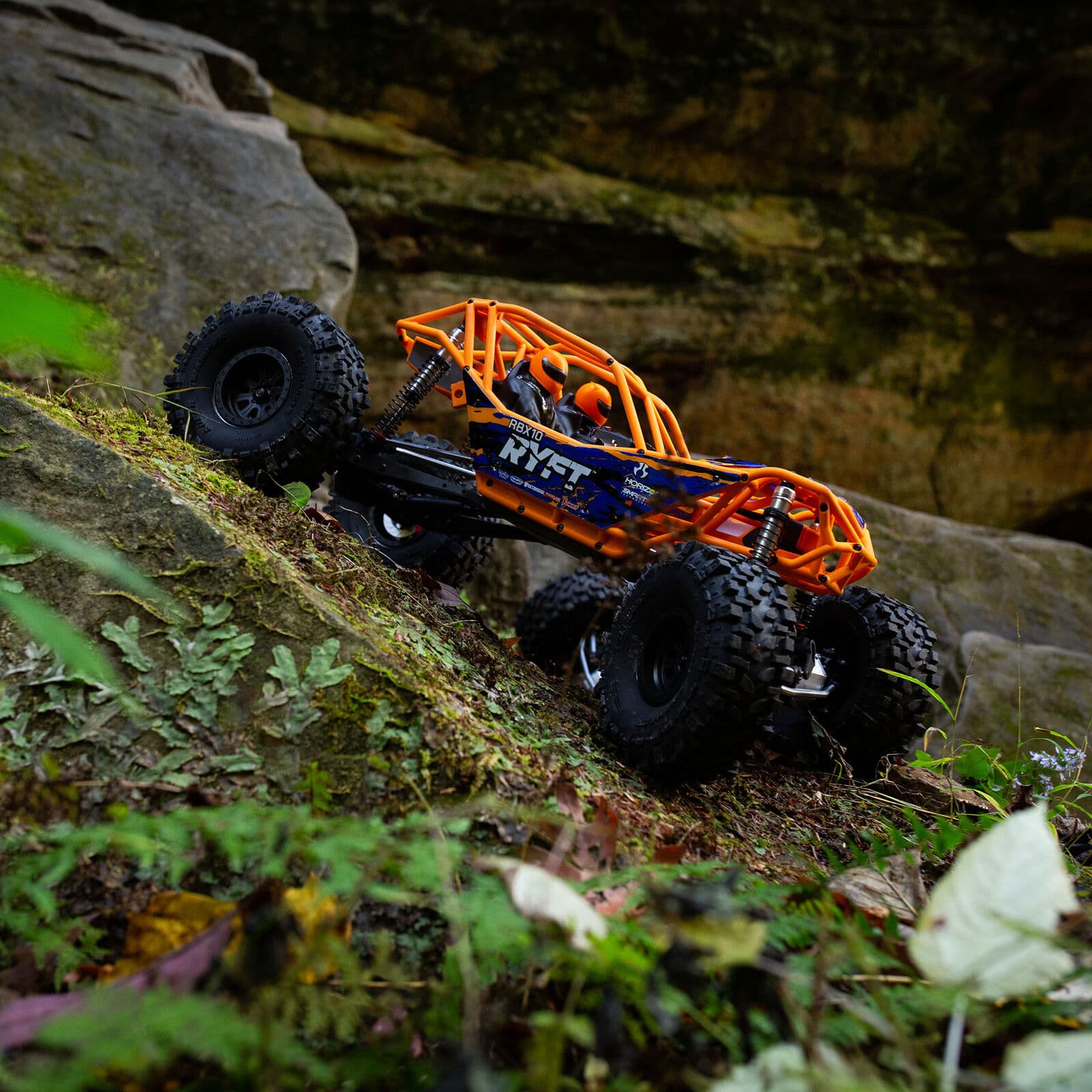
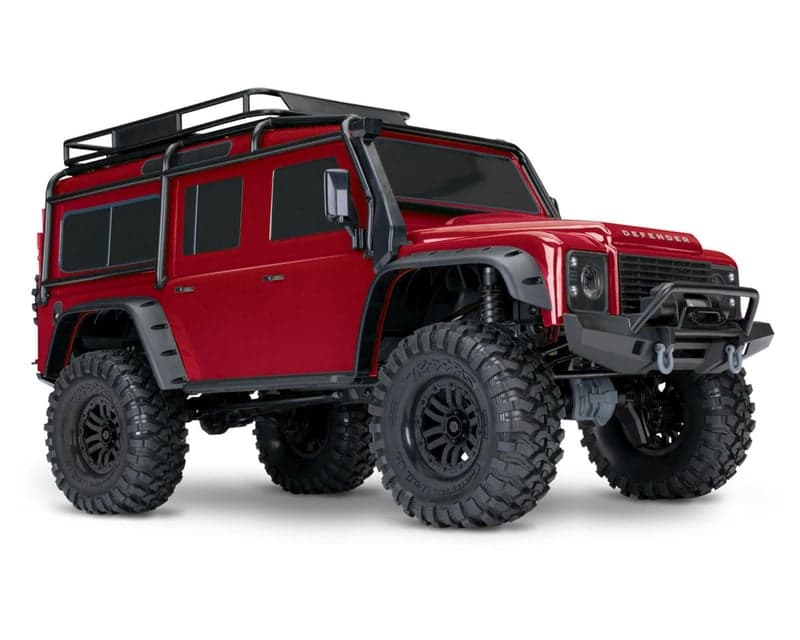
A rock bouncer versus a scale crawler. These could hardly be more different despite both living in the crawler category. The Ryft is a brushless-powered 25 mph rock basher, while the TRX-4 is a methodical scale trail machine with a 2-speed transmission. Depends on how you like to drive.
At a Glance
Axial RBX10 Ryft
Traxxas TRX-4 Defender
Spec Comparison
Spec
Axial RBX10 Ryft
Traxxas TRX-4 Defender
Price
$589.99
$499.95
Performance
Top Speed
25 mph
10 mph
Drivetrain
4WD
4WD
Motor Type
Brushless
Brushed
Dimensions
Length
23 in
22.06 in
Width
12.50 in
9.28 in
Height
10 in
10.16 in
Wheelbase
14.17 in
12.28 in
Ground Clearance
3.15 in
3.14 in
Chassis
Weight
8.38 lbs
7 lbs
Battery
5000mAh 3S
3000mAh 2S
Features
Waterproof
No
Yes
Detailed Comparison
The Axial RBX10 Ryft and the Traxxas TRX-4 Defender both carry the crawler label, but they occupy completely different corners of the hobby. The Ryft is a rock bouncer, designed to attack obstacles at speed with its brushless motor pushing 25 mph. The TRX-4 is a patient, precise scale crawler maxing out at 10 mph with its brushed motor. This isn't a competition of better or worse so much as a question of what kind of driving makes you happy on a Saturday afternoon.
Performance tells two totally different stories. The Ryft's brushless power on a 5000mAh 3S battery gives it explosive throttle response and the speed to launch off ledges and power over obstacles that would stop a traditional crawler cold. At 8.38 lbs with a 14.17-inch wheelbase, it's big and heavy, built to absorb the impacts from aggressive driving that would destroy lighter rigs. The TRX-4 at 7 lbs on a 12.28-inch wheelbase is more compact and features Traxxas's remote-locking differentials and a 2-speed transmission. That 2-speed makes a huge difference for scale crawling, giving you a low range for technical obstacles where you need maximum torque and a high range for trail cruising between the hard sections. No other truck in this comparison offers that kind of range.
The TRX-4 wins decisively on one critical spec: waterproofing. It's fully waterproof from the factory, while the Ryft is not. For trail rigs that inevitably encounter water crossings, mud, and morning dew on the grass, this matters more than most people realize until they fry an ESC. The TRX-4's ground clearance at 3.14 inches is essentially identical to the Ryft's 3.15 inches, but the TRX-4 uses portal axles that push the differentials higher above the terrain, a major advantage the raw ground clearance number doesn't reveal. Those portals mean the TRX-4's most vulnerable drivetrain components ride well above rocks that would bang directly on the Ryft's conventional axle housings.
Build quality on both is excellent but aimed at different abuse patterns. The Ryft uses heavy-duty components specifically sized and reinforced to survive jumps, hard landings, and high-speed rock contact. Everything from the shock towers to the driveshafts is overbuilt for impact forces. The TRX-4's Defender body is beautifully detailed with a scale interior, and the chassis is built for slow, high-torque situations where strength matters more than impact resistance. The Ryft's wider 12.5-inch stance provides stability at speed, while the TRX-4's narrower 9.28-inch width squeezes through tighter trail sections where the Ryft would get wedged.
The TRX-4 at its mid-range price is noticeably more than the Ryft at its mid-range price but the TRX-4 includes features like the 2-speed transmission, locking diffs, and portal axles that add hundreds of dollars of value if you tried to add them aftermarket. The Ryft counters with brushless power that would cost well a significant amount to add to the TRX-4's brushed platform. Runtime will favor the Ryft's larger 5000mAh 3S battery during moderate use, but if you're hammering the brushless motor at full throttle constantly, both rigs will give you roughly similar real-world runtime of 25 to 35 minutes. The TRX-4 is the better pure crawler, period. The Ryft is the better choice if you want to treat rocks like a playground rather than a puzzle, and the savings is a nice bonus.
The Verdict
Axial RBX10 Ryft
Crawling as an action sport. The Ryft attacks obstacles at speed instead of picking through them. Different philosophy, equal fun.
Full reviewTraxxas TRX-4 Defender
The TRX-4 is the feature-complete crawler. Two-speed, locking diffs, waterproof. For serious trail work, nothing does it better.
Full reviewWhere to Buy
Axial RBX10 Ryft
Traxxas TRX-4 Defender
Prices may vary. We may earn a commission on purchases at no extra cost to you.
Related Comparisons
Related Guides
Brushed vs Brushless Motors: What's the Difference?
How brushed and brushless motors work, what the performance differences are, and which one to pick.
2WD vs 4WD RC Cars: Which Is Better?
2WD and 4WD compared across handling, speed, durability, and terrain. Plus which drivetrain to pick.
RC Car Types Explained: Bashers, Crawlers, Drift & Racing
Bashers, crawlers, drift cars, buggies, truggies, and more. What each type does best and who it's for.