Axial RBX10 Ryft vs Element RC Enduro Sendero HDWhich Should You Buy?
Quick Take
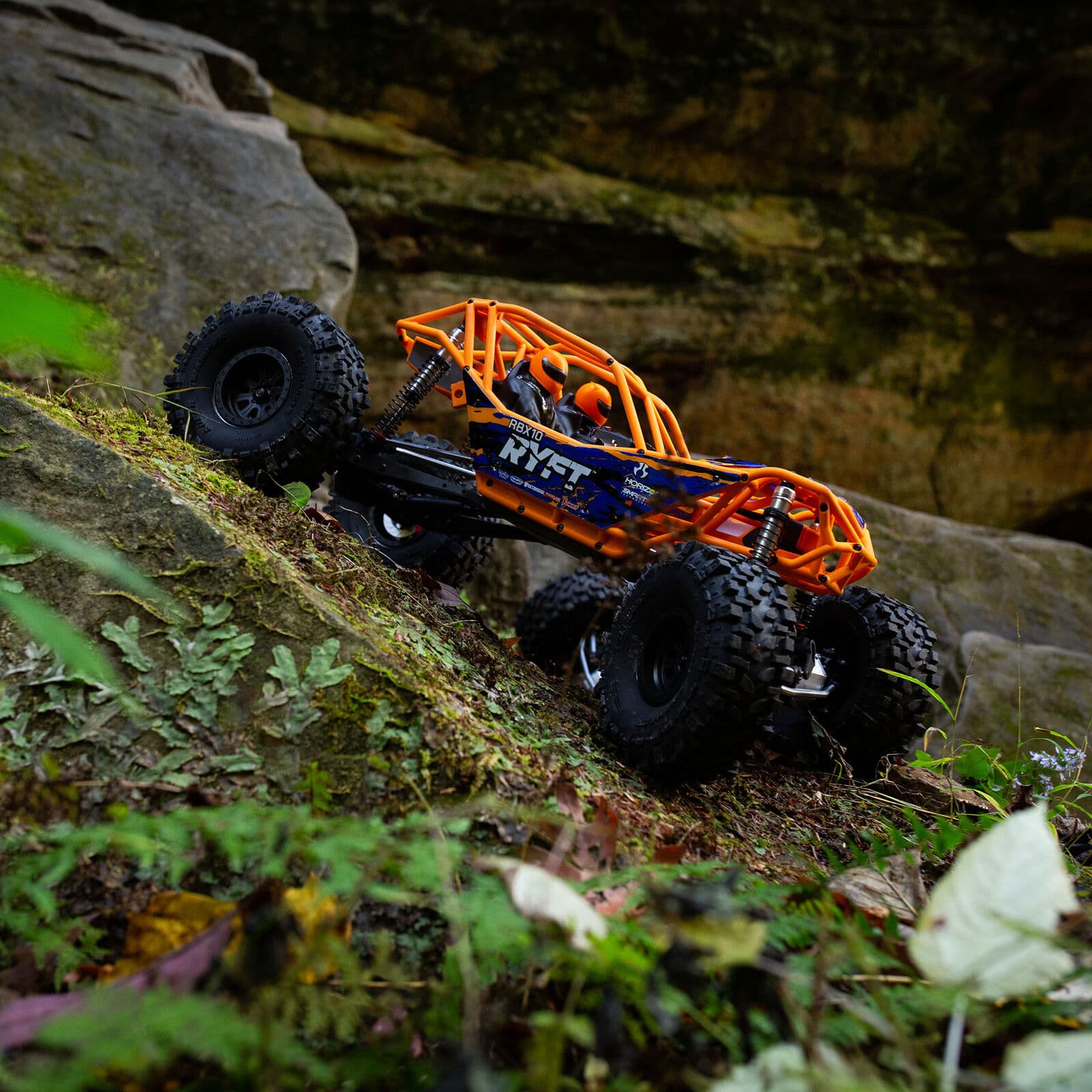
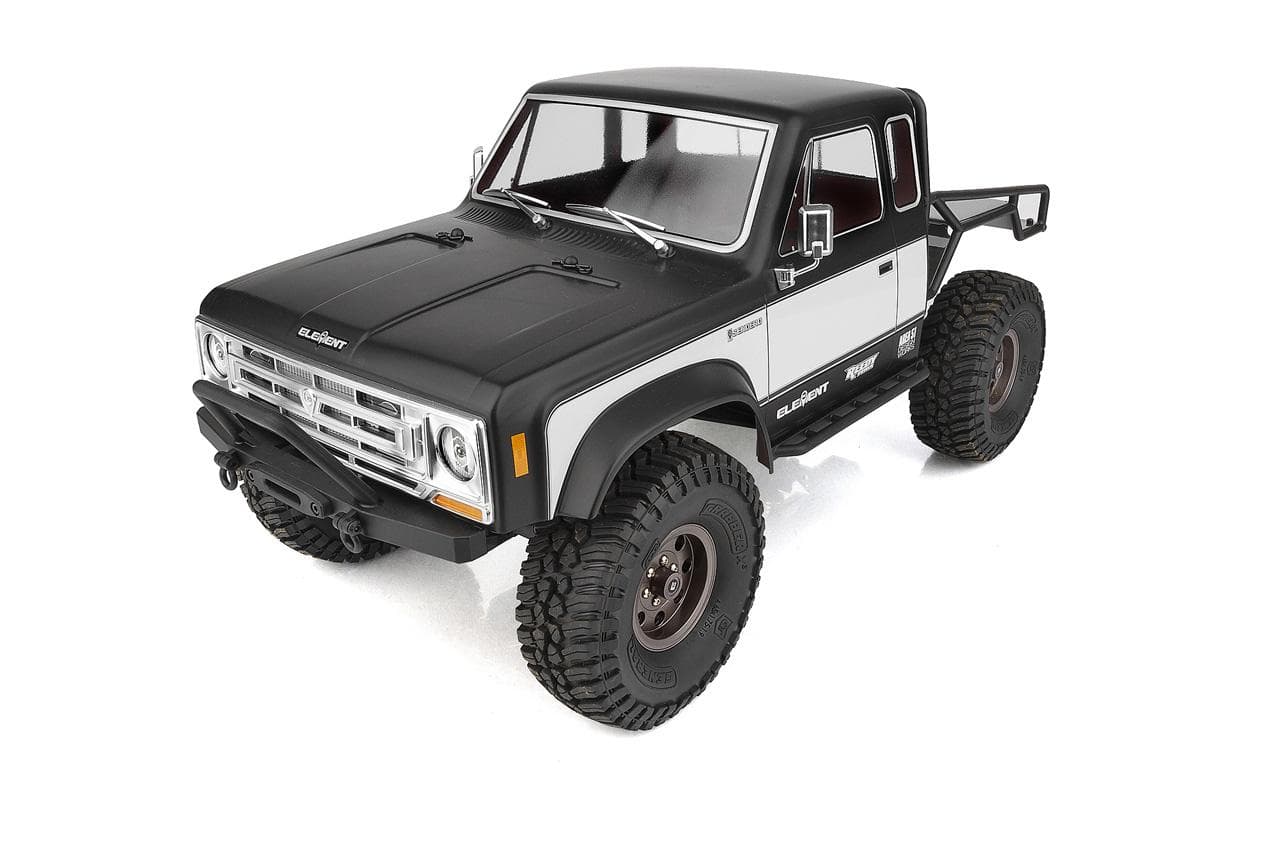
A brushless rock bouncer against a competitive price scale trail truck. These barely belong in the same conversation. The Ryft is built to bash through obstacles at speed, while the Sendero HD is a patient trail crawler with scale looks. Your driving style determines everything here.
At a Glance
Axial RBX10 Ryft
Element RC Enduro Sendero HD
Spec Comparison
Spec
Axial RBX10 Ryft
Element RC Enduro Sendero HD
Price
$589.99
$359.99
Performance
Top Speed
25 mph
8 mph
Drivetrain
4WD
4WD
Motor Type
Brushless
Brushed
Dimensions
Length
23 in
21 in
Width
12.50 in
10.24 in
Height
10 in
10.63 in
Wheelbase
14.17 in
12.80 in
Ground Clearance
3.15 in
3 in
Chassis
Weight
8.38 lbs
8 lbs
Battery
5000mAh 3S
3000mAh 2S
Features
Waterproof
No
No
Detailed Comparison
Comparing the Axial RBX10 Ryft to the Element RC Enduro Sendero HD is like comparing a trophy truck to a Jeep. Both go off-road, but the intent couldn't be more different. The Ryft packs a brushless motor hitting 25 mph on 3S power. The Sendero runs brushed at 8 mph on 2S. One attacks rocks with violence and momentum. The other approaches them with patience and technique.
The performance gap is among the widest you'll find between two trucks sharing the crawler category label. The Ryft's 25 mph top speed and instant brushless torque let it power up obstacles that require careful line selection and precise throttle control from the Sendero. But raw speed isn't always the answer on the trail. In fact, experienced crawlers will tell you it rarely is. The Sendero's 8 mph pace forces better driving technique and rewards proper line selection, which makes you a better driver over time. The Ryft's 14.17-inch wheelbase is longer than the Sendero's 12.8 inches, giving the Ryft more stability at speed but making it less maneuverable in tight sections. The Ryft's 3.15 inches of ground clearance barely edges out the Sendero's 3 inches.
Weight tells an interesting story. The Ryft at 8.38 lbs and the Sendero at 8 lbs are surprisingly close given their vastly different power levels. But the Ryft distributes that weight across a wider 12.5-inch stance compared to the Sendero's 10.24 inches, giving it a lower center of gravity relative to its footprint. The Sendero's higher weight relative to its narrower frame gives it a higher center of gravity, making it more prone to tipping on steep sidehills. This matters because the trails where you'd run a Sendero often involve exactly these kinds of off-camber challenges. Adding weight low in the chassis is a common Sendero upgrade for this reason.
Build quality reflects the price gap in tangible ways. The Ryft uses components rated for brushless abuse: reinforced differentials with stronger ring and pinion gears, heavy-duty shock towers that absorb jump landings, and a chassis designed around high-energy impacts. The Sendero HD uses Element RC's solid but more modest components, well-suited for trail speeds but not engineered for the forces the Ryft routinely generates. The Sendero's detailed truck body with its realistic proportions looks fantastic on the trail and photographs beautifully, giving you that scale realism many crawling enthusiasts consider essential to the experience. Neither truck is waterproof from the factory.
Battery runtime at crawling speeds slightly favors the Ryft's 5000mAh 3S pack in raw capacity, though the Sendero's brushed motor is so efficient at low speeds that its 3000mAh 2S still provides solid 40 to 45 minute trail sessions. The Ryft's brushless system will drain noticeably faster if you're using the power aggressively, dropping to 20 to 25 minutes of hard rock bouncing. At moderate crawling speeds, both trucks deliver enough runtime for a satisfying session.
The price difference is massive and shouldn't be dismissed. The Sendero HD at its price point is one of the best-value scale crawlers available today. The Ryft at its mid-range price is a completely different tool for a completely different job. Don't buy the Ryft expecting peaceful trail running, and don't buy the Sendero expecting it to rock bounce. Match the truck to your driving personality and you'll be happy with either one.
The Verdict
Axial RBX10 Ryft
A crawler that drives like a basher. The Ryft bridges two worlds and does both surprisingly well.
Full reviewElement RC Enduro Sendero HD
Scale trail driving at its price point. The Sendero rewards patience and skill over horsepower. Beautiful truck, zen driving experience.
Full reviewWhere to Buy
Axial RBX10 Ryft
Element RC Enduro Sendero HD
Prices may vary. We may earn a commission on purchases at no extra cost to you.
Related Comparisons
Related Guides
Brushed vs Brushless Motors: What's the Difference?
How brushed and brushless motors work, what the performance differences are, and which one to pick.
2WD vs 4WD RC Cars: Which Is Better?
2WD and 4WD compared across handling, speed, durability, and terrain. Plus which drivetrain to pick.
RC Car Types Explained: Bashers, Crawlers, Drift & Racing
Bashers, crawlers, drift cars, buggies, truggies, and more. What each type does best and who it's for.