Axial RBX10 Ryft vs Axial Wraith 1.9Which Should You Buy?
Quick Take
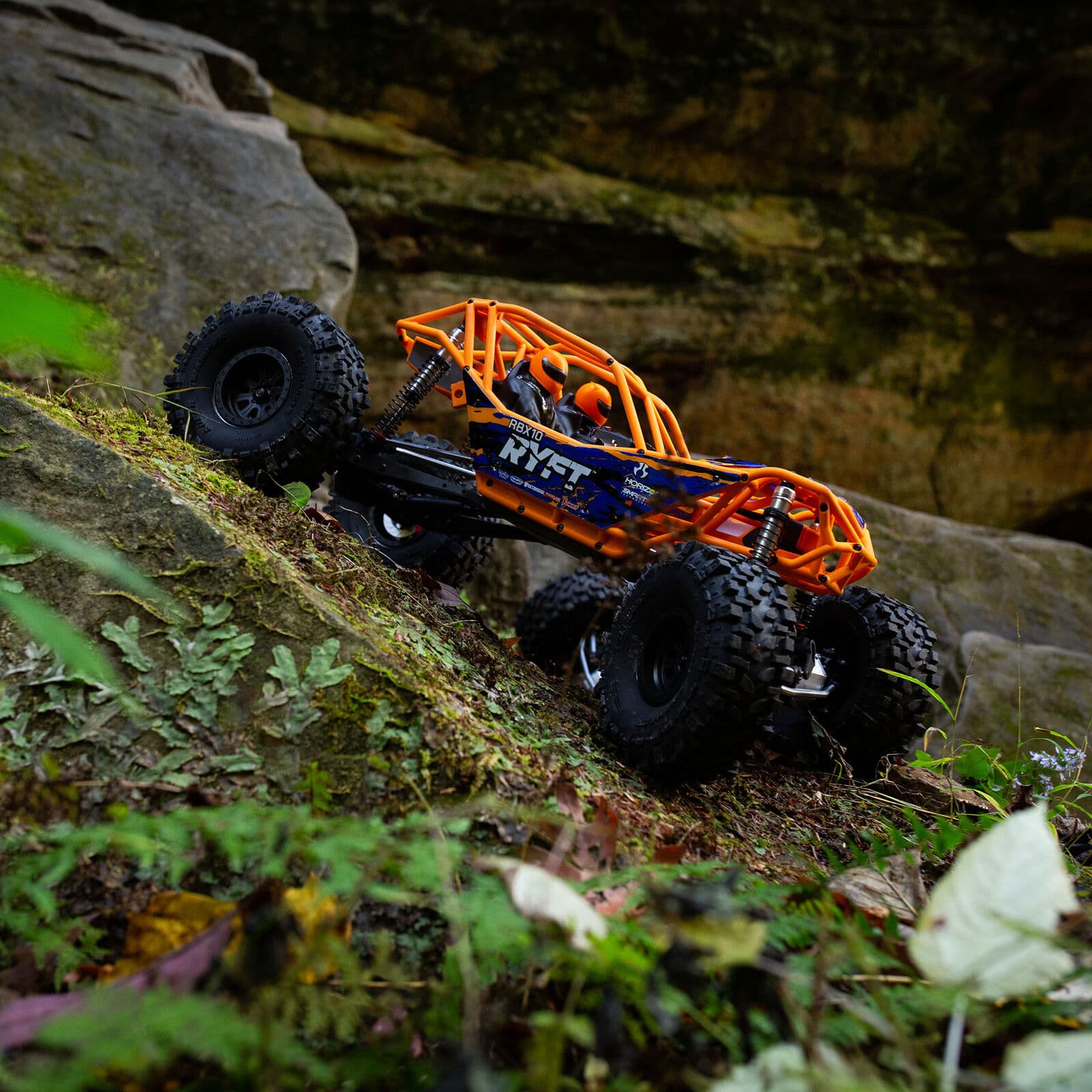
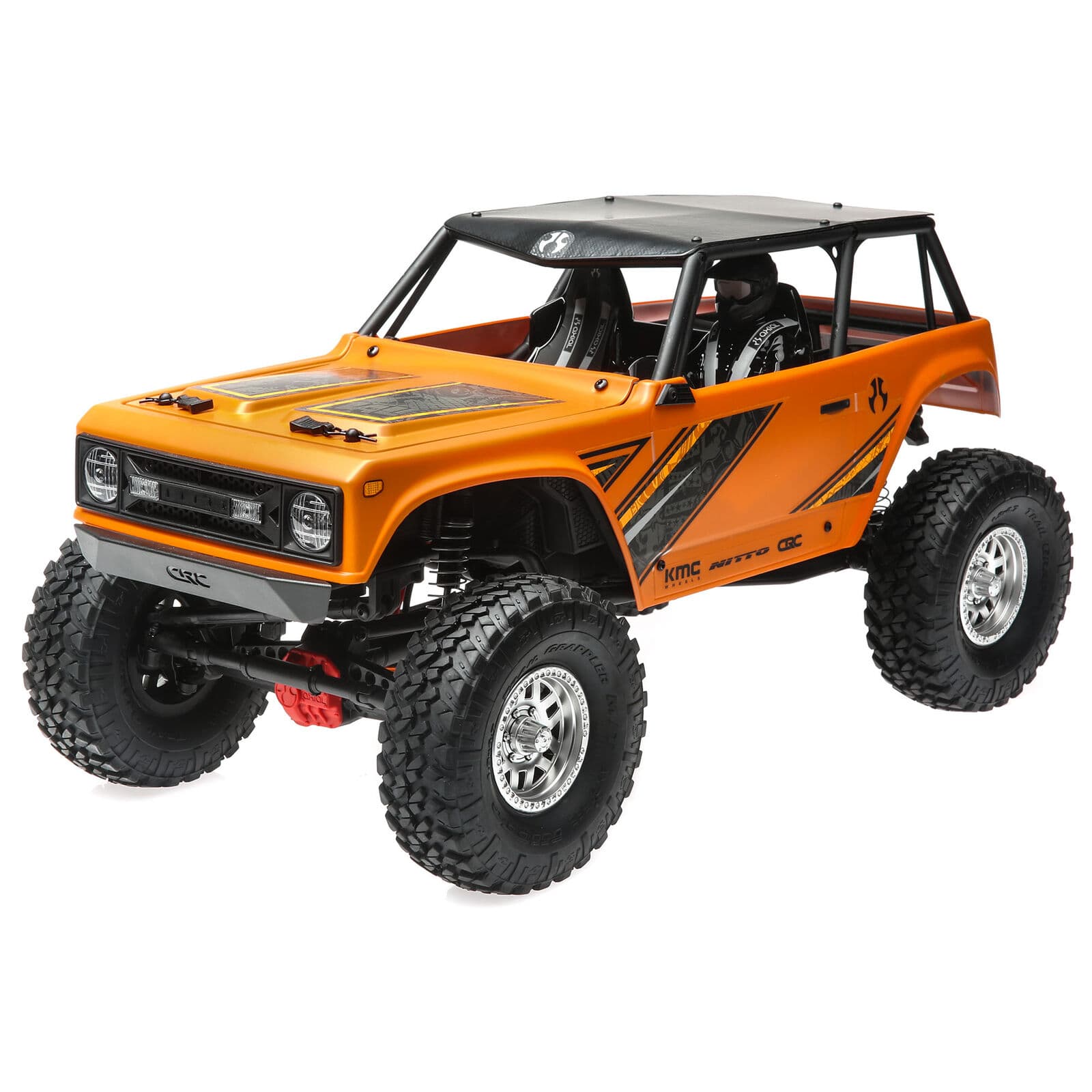
Axial's rock bouncer versus Axial's rock racer, both built for speed on the rocks, but the Ryft brings brushless power and a bigger chassis while the Wraith keeps things lighter and more nimble. The noticeable price gap reflects a real capability jump.
At a Glance
Axial RBX10 Ryft
Axial Wraith 1.9
Spec Comparison
Spec
Axial RBX10 Ryft
Axial Wraith 1.9
Price
$589.99
$369.99
Performance
Top Speed
25 mph
15 mph
Drivetrain
4WD
4WD
Motor Type
Brushless
Brushed
Dimensions
Length
23 in
19.10 in
Width
12.50 in
10.75 in
Height
10 in
9.75 in
Wheelbase
14.17 in
12.50 in
Ground Clearance
3.15 in
3.15 in
Chassis
Weight
8.38 lbs
6.70 lbs
Battery
5000mAh 3S
3000mAh 2S
Features
Waterproof
No
No
Detailed Comparison
The Axial RBX10 Ryft and Axial Wraith 1.9 both reject the slow-and-steady crawling philosophy, but they do it at different intensities. The Ryft is the bigger, meaner sibling with a brushless motor pushing 25 mph on a 5000mAh 3S battery. The Wraith runs brushed at 15 mph on a 3000mAh 2S pack. That's not only a speed gap. It's a completely different power tier that changes how each truck approaches every obstacle.
The size gap is substantial and matters in practice. The Ryft measures 23 inches long and 12.5 inches wide on a 14.17-inch wheelbase. The Wraith is more compact at 19.1 inches long, 10.75 inches wide, on a 12.5-inch wheelbase. The Ryft weighs 8.38 lbs versus the Wraith's 6.7 lbs. That's 1.68 lbs of additional mass, most of which is in the beefier drivetrain and larger battery. These numbers mean the Wraith fits into terrain the Ryft physically can't access, while the Ryft powers through obstacles the Wraith has to finesse around or approach more carefully. Ground clearance is identical at 3.15 inches, which makes sense given their shared approach to speed-oriented off-road driving.
Performance on mixed terrain favors the Ryft's raw power without question. Steep climbs that require momentum, large rock steps that need a burst of throttle to clear, open sections between obstacle fields where you want to let the motor breathe, the Ryft handles all of these better thanks to its brushless torque curve. The Wraith counters with agility that the heavier Ryft can't replicate. Its lighter weight and smaller footprint make it quicker to change direction, easier to recover from bad lines, and more forgiving when you misjudge an approach angle. The Wraith also fits in a backpack-style carrying case for hiking to remote trails, while the Ryft needs a dedicated bag or box.
Build quality is excellent on both, a hallmark of Axial's engineering team. The Ryft uses heavier-duty versions of key components: beefier driveshafts, larger-bore shocks, reinforced diff housings, all appropriate for the forces its brushless motor generates during hard driving and jump landings. The Wraith's drivetrain is robust for brushed power but would need significant reinforcement to handle a brushless upgrade safely. Attempting to drop a brushless system into the Wraith without upgrading the drivetrain is a recipe for stripped gears and broken outdrives. Neither vehicle is waterproof from the factory, which remains an annoying omission from Axial at these price points. Both need some money on waterproofing upgrades if your trails have water.
Battery and runtime favor the Ryft for raw capacity, 5000mAh 3S versus 3000mAh 2S. At moderate driving speeds, the Ryft offers notably longer runs before the battery warning light appears. But the Wraith's lower power draw means its smaller battery still provides 30 to 40 minutes of enjoyable rock racing. The Wraith at its price point versus the Ryft at its mid-range price creates an price gap that buys you brushless power, a larger battery, and a bigger platform. The Wraith is absolutely no slouch. 15 mph is plenty fast on rocks and feels really exciting, and if you want something lighter that fits in smaller spaces and costs less, it's the smarter buy. But if you want the most capable fast crawler Axial makes with no compromises on power, the Ryft's brushless advantage is worth every dollar of that premium.
The Verdict
Axial RBX10 Ryft
Maximum aggression. The Ryft is the Axial you pick when crawling speed is too slow and bashing terrain is too flat.
Full reviewAxial Wraith 1.9
significantly less and lighter. The Wraith is more nimble on tight trails and easier to throw in the back seat. Less power, more agility.
Full reviewWhere to Buy
Axial RBX10 Ryft
Axial Wraith 1.9
Prices may vary. We may earn a commission on purchases at no extra cost to you.
Related Comparisons
Related Guides
Brushed vs Brushless Motors: What's the Difference?
How brushed and brushless motors work, what the performance differences are, and which one to pick.
2WD vs 4WD RC Cars: Which Is Better?
2WD and 4WD compared across handling, speed, durability, and terrain. Plus which drivetrain to pick.
RC Car Types Explained: Bashers, Crawlers, Drift & Racing
Bashers, crawlers, drift cars, buggies, truggies, and more. What each type does best and who it's for.