Traxxas Hoss 4X4 VXL vs Traxxas Stampede 2WD VXLWhich Should You Buy?
Quick Take
A 4WD versus 2WD showdown within the Traxxas monster truck lineup. The Stampede 2WD VXL is considerably cheaper and actually hits 65 mph, but the Hoss brings 4WD grip and a much larger platform. Totally different driving experiences at very different price points.
At a Glance
Traxxas Hoss 4X4 VXL
Traxxas Stampede 2WD VXL
Spec Comparison
Spec
Traxxas Hoss 4X4 VXL
Traxxas Stampede 2WD VXL
Price
$429.95
$379.95
Performance
Top Speed
60 mph
65 mph
Drivetrain
4WD
2WD
Motor Type
Brushless
Brushless
Dimensions
Length
21.65 in
16.34 in
Width
14.37 in
12.75 in
Height
8.07 in
7.87 in
Wheelbase
13.15 in
10.24 in
Ground Clearance
2.85 in
2.75 in
Chassis
Weight
7.87 lbs
5.51 lbs
Battery
5000mAh 3S
5000mAh 3S
Features
Waterproof
Yes
Yes
Detailed Comparison
The Traxxas Stampede 2WD VXL is the scrappy underdog here. At its price point and 65 mph, it's both cheaper and faster than the Traxxas Hoss 4X4 VXL that maxes out at 60 mph. On a speed run, the Stampede wins. On literally everything else, the Hoss dominates.
The drivetrain difference is the headline. The Stampede runs 2WD, sending power only to the rear wheels. The Hoss is full 4WD. In dry, flat conditions, the Stampede's rear-wheel drive feels lively and fun. It'll do donuts and power slides all day. But add grass, dirt, gravel, or any loose surface, and the Hoss's 4WD system hooks up where the Stampede just spins. Acceleration off the line heavily favors the Hoss because all four tires are working. The grip difference is immediately obvious from your very first drive on anything other than clean asphalt. Even on pavement, the Hoss launches harder because it doesn't waste energy spinning the rear tires.
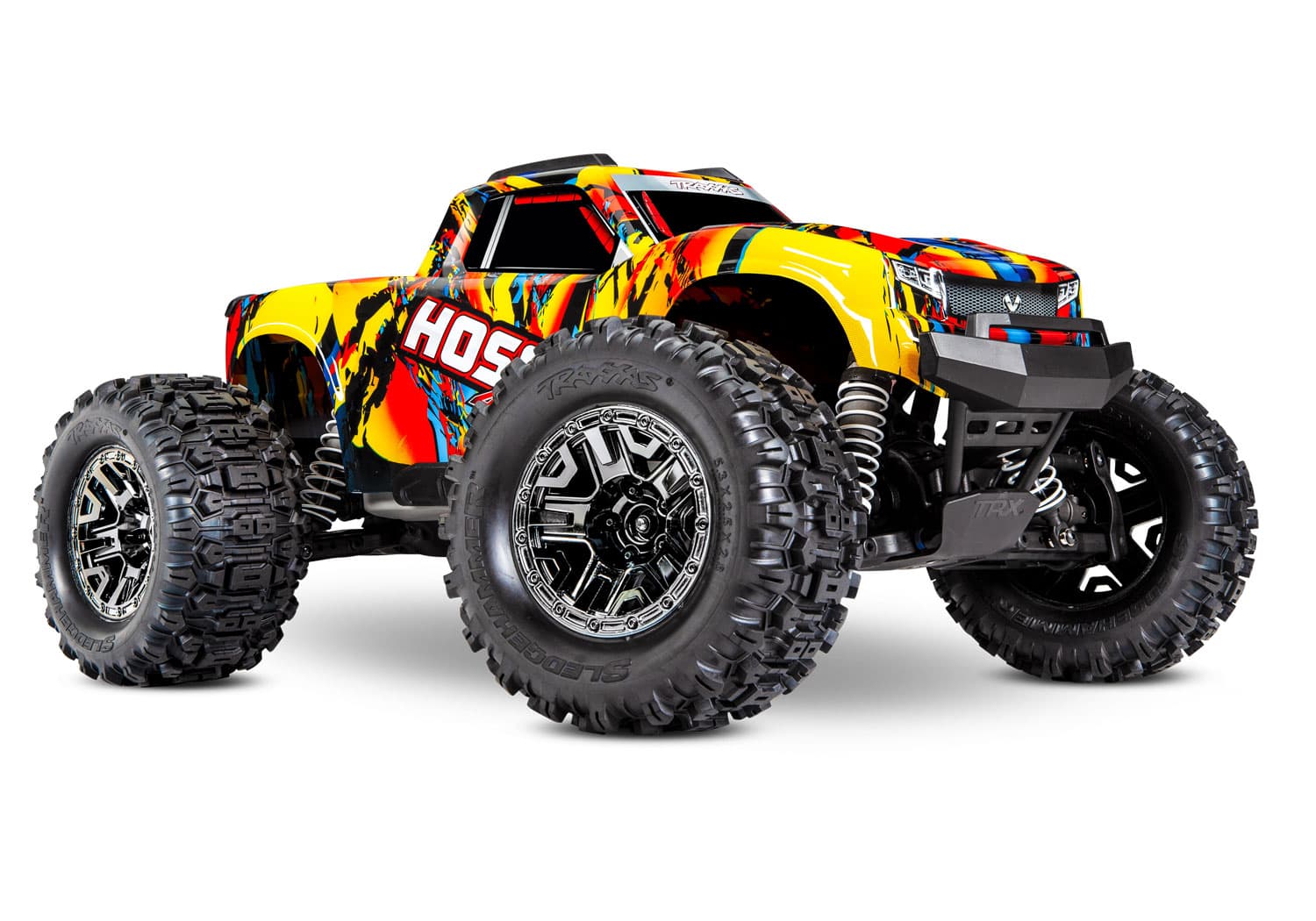
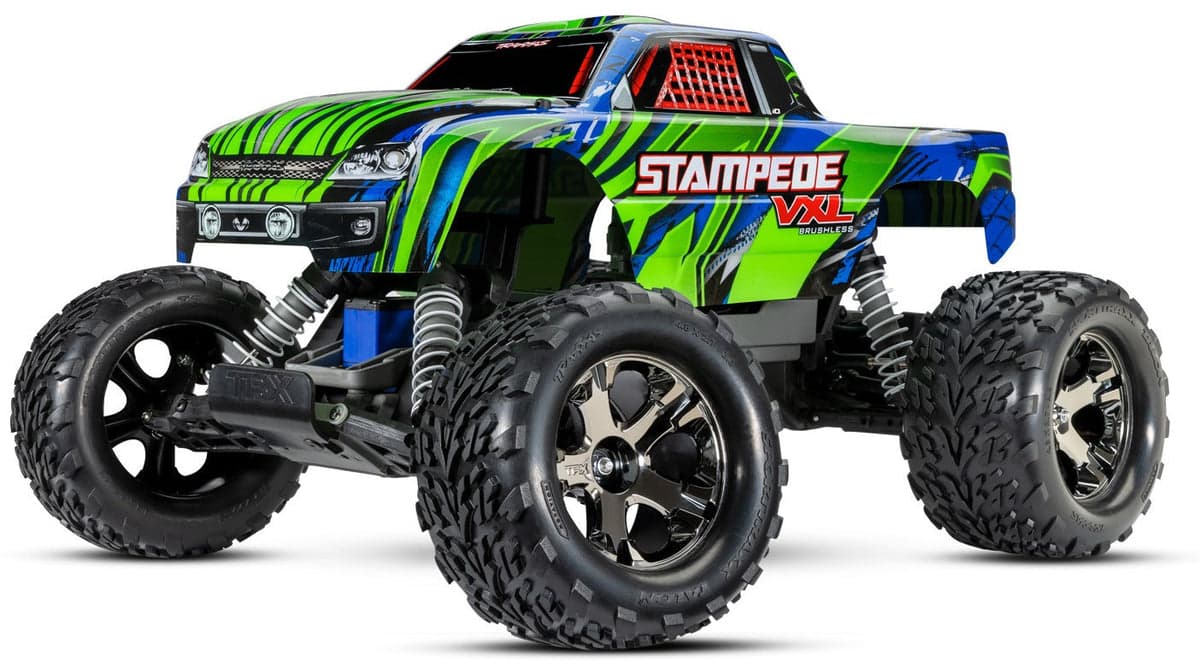
Physically, these trucks are in different leagues. The Hoss measures 21.65 inches long and 14.37 inches wide with a 13.15-inch wheelbase. The Stampede is 16.34 inches long and 12.75 inches wide with a 10.24-inch wheelbase. The Hoss weighs 7.87 lbs versus the Stampede's 5.51 lbs. That size and weight advantage makes the Hoss substantially more stable at speed and over rough ground. Ground clearance slightly favors the Stampede at 2.75 inches versus 2.85 inches for the Hoss, but the Hoss's longer wheelbase more than compensates when driving over uneven terrain. The Hoss just doesn't get upset by bumps and ruts the way the shorter-wheelbase Stampede does.
Build quality follows the price difference. The Hoss uses heavier-duty components throughout its drivetrain, which makes sense since 4WD puts more stress on the system. The Stampede 2WD is simpler mechanically, which actually means fewer things can break, but the parts that are there are lighter-duty. Both trucks run on 3S brushless power with 5000mAh battery compatibility, and both are waterproof. Runtime is similar, though the 2WD Stampede is slightly more efficient since it's not powering a front differential, so you might squeeze an extra minute or two per battery. The Stampede is also much easier to wrench on because there's no front diff, no front driveshaft, and no front CVDs to worry about. For a first-time owner learning how RC trucks work, that simplicity has real value.
The price difference is massive. You could buy the Stampede 2WD VXL and a spare battery pack for less than the Hoss alone. If you're on a tight budget and primarily drive on pavement or hard-packed surfaces, the Stampede 2WD is legitimately excellent for the money. But if you bash off-road, the 4WD Hoss is worth every extra penny. Trying to bash a 2WD truck in grass or dirt gets frustrating fast, with the rear end swinging out on every throttle input. The Hoss just goes where you point it regardless of surface. This decision basically makes itself based on where you drive. Pavement and parking lots? The Stampede 2WD is a blast and saves you a significant amount. Off-road, dirt, grass, mixed terrain? The Hoss is the only real choice.
The Verdict
Traxxas Hoss 4X4 VXL
The Hoss is the better truck if you drive off-road. 4WD traction on loose surfaces is essential, and the bigger platform handles speed with way more confidence.
Full reviewTraxxas Stampede 2WD VXL
The Stampede 2WD saves you a significant amount and hits 65 mph. If you mostly drive on pavement and enjoy a tail-happy car, this is a lot of fun for the money.
Full reviewWhere to Buy
Traxxas Hoss 4X4 VXL
Traxxas Stampede 2WD VXL
Prices may vary. We may earn a commission on purchases at no extra cost to you.
Related Comparisons
Traxxas Hoss 4X4 VXL vs Arrma Kraton 6S BLX
monster truckTraxxas Hoss 4X4 VXL vs Traxxas Maxx V2
monster truckTraxxas Hoss 4X4 VXL vs Traxxas Stampede 4X4 VXL
monster truckTraxxas Hoss 4X4 VXL vs Arrma Big Rock 3S BLX
monster truckTraxxas Hoss 4X4 VXL vs Arrma Outcast 6S BLX
monster truckTraxxas Hoss 4X4 VXL vs Losi LMT Grave Digger
monster truckRelated Guides
How Fast Are RC Cars? Speed Guide by Category
Real-world RC car speeds by category and price range. From 15 mph mini crawlers to 100+ mph speed machines.
Brushed vs Brushless Motors: What's the Difference?
How brushed and brushless motors work, what the performance differences are, and which one to pick.
2WD vs 4WD RC Cars: Which Is Better?
2WD and 4WD compared across handling, speed, durability, and terrain. Plus which drivetrain to pick.