Arrma Kraton 6S BLX vs Traxxas Hoss 4X4 VXLWhich Should You Buy?
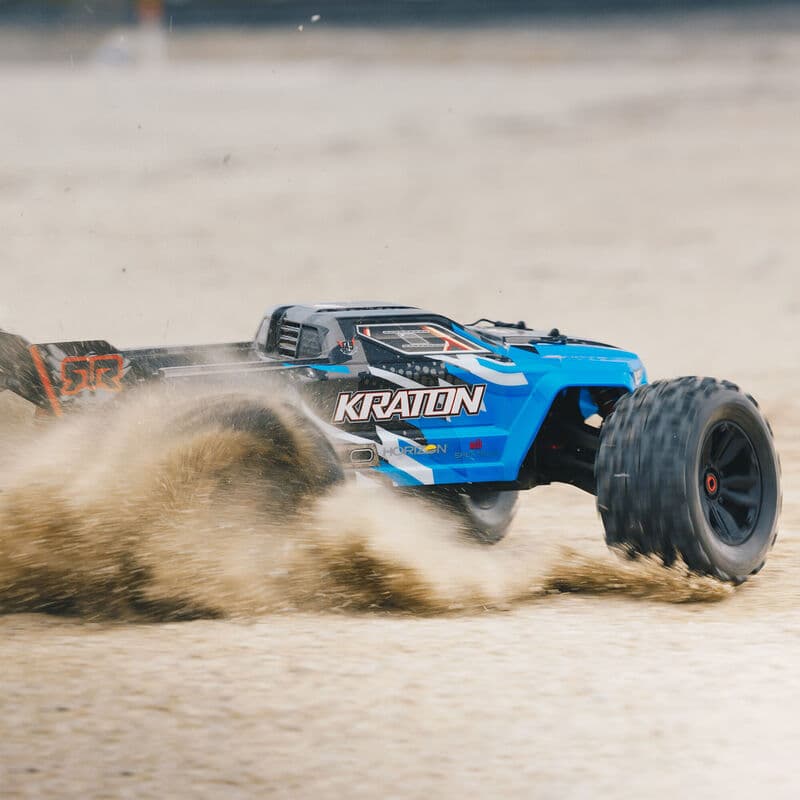
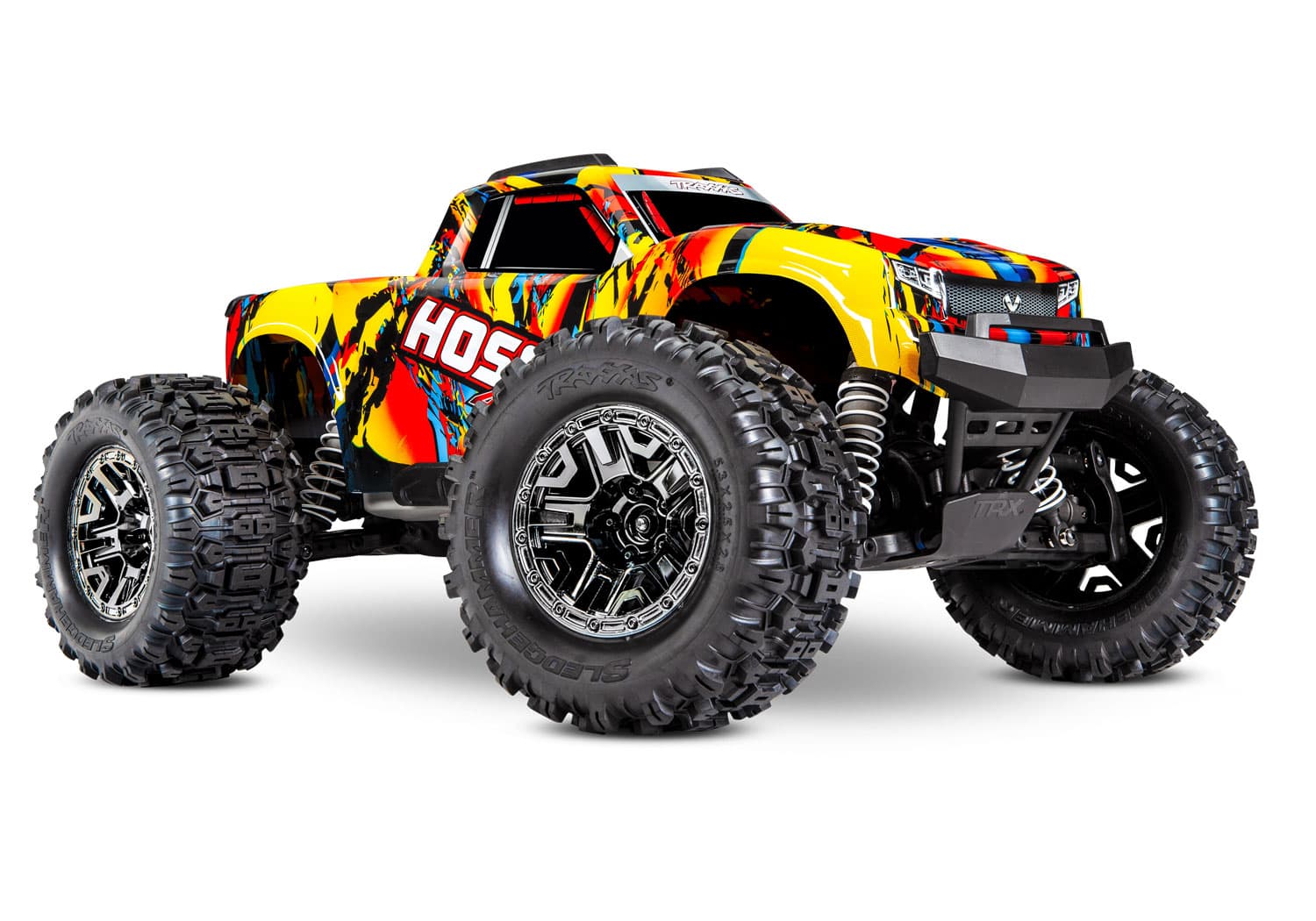
Quick Take
The Kraton 6S represents the 1/8-scale 6S class while the Hoss 4X4 VXL sits at the top of the 1/10-scale 3S tier. Both hit 60 mph, but the Kraton achieves it with twice the voltage and significantly more mass. The noticeable price gap makes this a question of how much truck you really need.
At a Glance
Arrma Kraton 6S BLX
Traxxas Hoss 4X4 VXL
Spec Comparison
Spec
Arrma Kraton 6S BLX
Traxxas Hoss 4X4 VXL
Price
$699.99
$429.95
Performance
Top Speed
60 mph
60 mph
Drivetrain
4WD
4WD
Motor Type
Brushless
Brushless
Dimensions
Length
21.85 in
21.65 in
Width
16.73 in
14.37 in
Height
8.74 in
8.07 in
Wheelbase
13.15 in
13.15 in
Ground Clearance
2.17 in
2.85 in
Chassis
Weight
10.69 lbs
7.87 lbs
Battery
5000mAh 6S
5000mAh 3S
Features
Waterproof
Yes
Yes
Detailed Comparison
The Arrma Kraton 6S BLX at its mid-range price and Traxxas Hoss 4X4 VXL at its mid-range price are separated by exactly a modest price and an enormous philosophical divide about how to reach the same performance target. The Kraton is a proper 1/8-scale machine running 6S power at 10.69 lbs. The Hoss is a 1/10-scale truck on 3S at 7.87 lbs. Both claim 60 mph top speeds, making this a case study in how wildly different engineering approaches reach the same number on the speedometer.
The Kraton achieves its 60 mph with brute force. Six cells of lithium power driving a high-torque brushless motor through a heavy-duty drivetrain built to handle the abuse. Acceleration is violent, the truck pulls hard from any speed, and the 6S system has headroom to spare. Drop the Kraton onto a steep gravel hill and it charges up without hesitation. The Hoss reaches the same velocity through efficiency, using half the voltage but substantially less mass, with optimized gearing that squeezes maximum speed from the 3S system. On a straight run, they are equal. Off the line from a dead stop, the Kraton pulls ahead immediately and opens a gap before the Hoss catches its stride.
Ground clearance favors the Hoss significantly at 2.85 inches versus the Kraton's 2.17 inches. That 0.68-inch gap means the Hoss glides over terrain features that scrape the Kraton's chassis plate. Roots, rocks, uneven pavement seams, parking lot curbs, all these are less of a problem for the Hoss. The Hoss is also nearly 3 lbs lighter, which means less momentum on impact but also less stress on components during jumps and landings. The Kraton's extra mass carries more energy through jumps, producing bigger air and longer hang time, but harder landings that test the durability of every component.
The Hoss measures 21.65 inches long with a 13.15-inch wheelbase, nearly matching the Kraton's 21.85 inches and identical 13.15-inch wheelbase. So despite the scale difference, these trucks have remarkably similar footprints on the ground. The Kraton is wider at 16.73 inches compared to 14.37 for the Hoss, giving it a more planted stance and noticeably better resistance to tipping during aggressive cornering. That extra 2.36 inches of width is visible and functional.
Both trucks are fully waterproof with 4WD brushless systems, so feature parity is close. The Kraton's 6S drivetrain is built heavier throughout, with larger bearings, beefier diffs, and thicker driveshafts designed to handle the higher torque loads. This gives it a durability edge in absolute terms, though the Hoss's lighter components see proportionally less stress from its 3S system. Each truck is well-matched to its respective power level, meaning both are reliable under normal bashing conditions.
Battery costs tell a clear story in the Hoss's favor. The Hoss's 3S 5000mAh packs are cheaper to buy, lighter to handle, and faster to charge than the Kraton's 6S equivalents. A 3S pack is noticeably cheaper than a comparable 6S pack. Over months of regular use, this difference adds up to hundreds of dollars. Runtime is comparable on similarly sized packs, though the Kraton's higher current draw under 6S means marginally shorter sessions with more aggressive driving.
The modest savings on the Hoss plus meaningfully lower ongoing battery costs make it the better value for drivers who want 60 mph performance without the financial commitment of a 6S platform. The Kraton earns its premium through superior torque, wider stance, and a heavier-duty drivetrain that can absorb more punishment over the long haul.
The Verdict
Arrma Kraton 6S BLX
The Kraton has more torque, a wider stance, and a drivetrain built for bigger hits. Is that worth a modest price more? If you bash hard, yes.
Full reviewTraxxas Hoss 4X4 VXL
The Hoss hits the same 60 mph with better ground clearance, cheaper batteries, and significantly less out of pocket. For most bashers, that's the better deal.
Full reviewWhere to Buy
Arrma Kraton 6S BLX
Traxxas Hoss 4X4 VXL
Prices may vary. We may earn a commission on purchases at no extra cost to you.
Related Comparisons
Arrma Kraton 6S BLX vs Traxxas Maxx V2
monster truckArrma Kraton 6S BLX vs Arrma Outcast 6S BLX
monster truckArrma Kraton 6S BLX vs Losi LMT Grave Digger
monster truckArrma Kraton 6S BLX vs Traxxas XRT 8S
monster truckArrma Kraton 6S BLX vs Arrma Notorious 6S BLX
monster truckArrma Kraton 6S BLX vs Arrma Kraton 8S EXB
monster truckRelated Guides
Brushed vs Brushless Motors: What's the Difference?
How brushed and brushless motors work, what the performance differences are, and which one to pick.
RC Car Scales Explained (1/10 vs 1/8 vs 1/16)
What RC car scale numbers mean, how big each scale actually is, and which scale is best for different uses.
How Fast Are RC Cars? Speed Guide by Category
Real-world RC car speeds by category and price range. From 15 mph mini crawlers to 100+ mph speed machines.