Arrma Kraton 6S BLX vs Losi LMT Grave DiggerWhich Should You Buy?
Quick Take
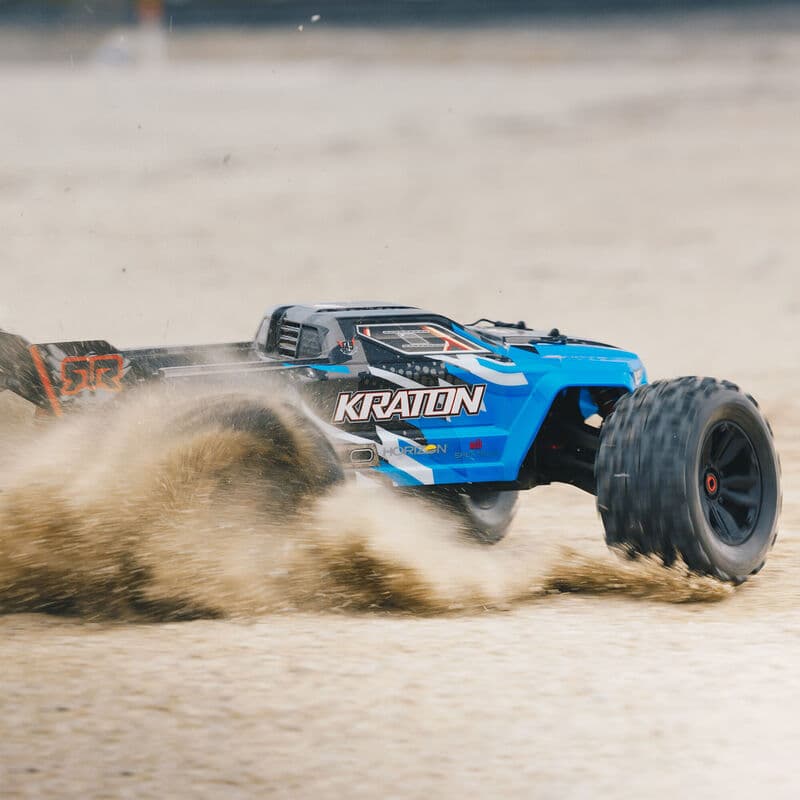
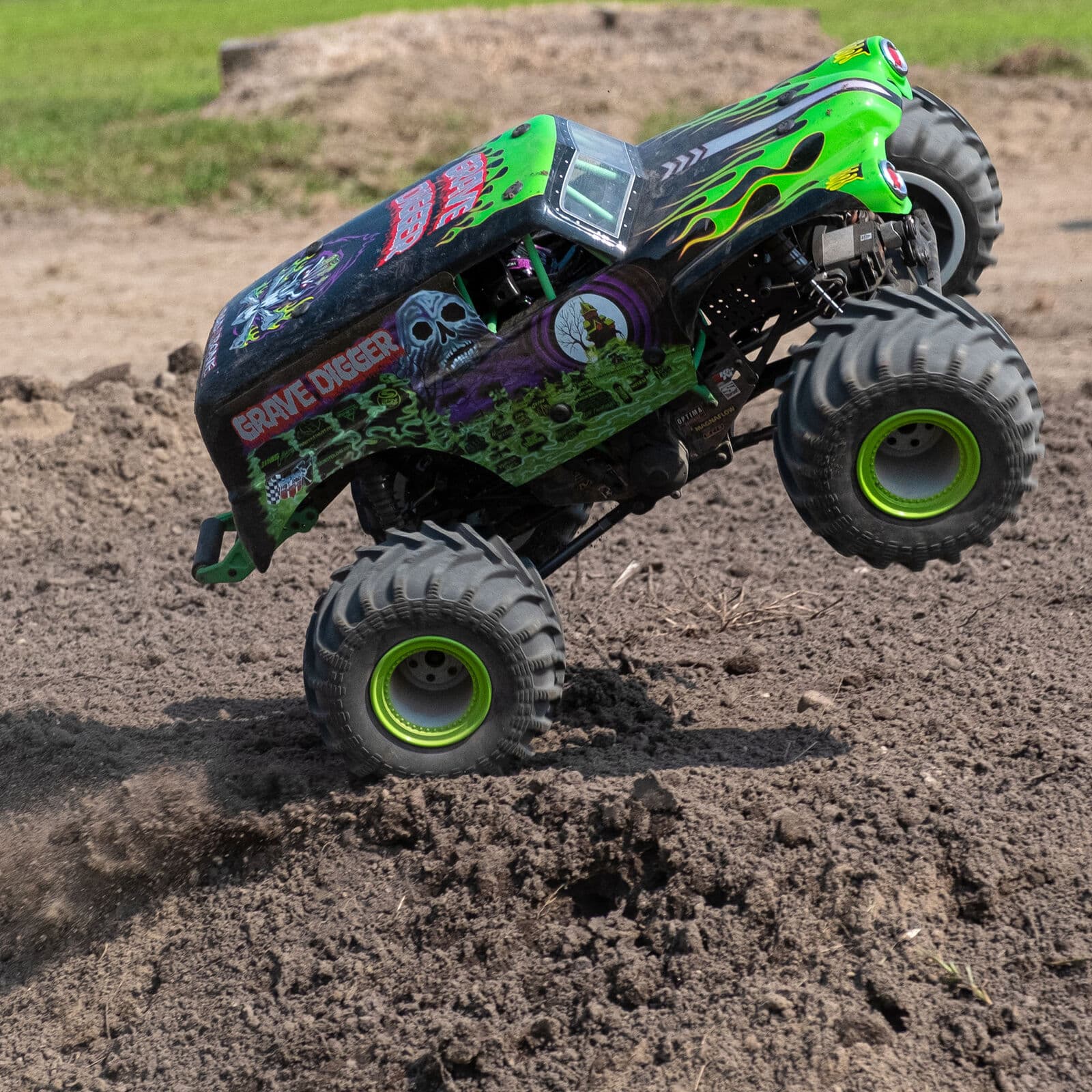
Speed demon meets scale monster. The Kraton 6S is a pure performance basher hitting 60 mph, while the Losi LMT Grave Digger trades straight-line speed for authentic monster jam looks and solid axle handling at 40 mph. Completely different trucks for completely different reasons.
At a Glance
Arrma Kraton 6S BLX
Losi LMT Grave Digger
Spec Comparison
Spec
Arrma Kraton 6S BLX
Losi LMT Grave Digger
Price
$699.99
$499.99
Performance
Top Speed
60 mph
40 mph
Drivetrain
4WD
4WD
Motor Type
Brushless
Brushless
Dimensions
Length
21.85 in
22.84 in
Width
16.73 in
17.52 in
Height
8.74 in
10.63 in
Wheelbase
13.15 in
13.39 in
Ground Clearance
2.17 in
3.54 in
Chassis
Weight
10.69 lbs
11.13 lbs
Battery
5000mAh 6S
5000mAh 3S
Features
Waterproof
Yes
No
Detailed Comparison
The Arrma Kraton 6S BLX and Losi LMT Grave Digger represent two opposing philosophies in the 1/8-scale monster truck space. The Kraton is a speed-first basher that exists to go fast and survive crashes. The LMT is a scale-first performer that exists to look and drive like a real Monster Jam truck. The 20 mph speed gap, 60 versus 40, tells you everything about their priorities and intended audience.
The Kraton's brushless 6S system produces explosive acceleration and a legitimate 60 mph top speed. Point it at an open field and it screams across the terrain with authority. The LMT runs on 3S power and tops out at 40 mph, but that speed limitation is entirely by design. The LMT uses solid rear axles that mimic the suspension geometry of real full-size monster trucks, which means it handles in a completely unique way compared to any independent-suspension basher. Wheelies, stoppies, two-wheel driving, and cyclone spins feel authentic in a way the Kraton just can't replicate regardless of how you tune it. The Kraton is faster in every measurable straight-line metric, but the LMT is much more entertaining at low and medium speeds.
The LMT is actually heavier at 11.13 lbs versus the Kraton's 10.69 lbs, and it has significantly more ground clearance at 3.54 inches compared to 2.17 inches. That massive 1.37-inch advantage comes from those enormous scale tires and the solid axle design that positions everything higher off the ground. The LMT also has a larger overall footprint at 22.84 inches long and 17.52 inches wide versus the Kraton's 21.85 by 16.73 inches. In person, the LMT looks imposing in a way that screams monster truck, while the Kraton looks like a fast basher.
Build quality is good on both platforms, but they are engineered for different stress profiles. The Kraton's drivetrain handles 6S torque loads with appropriately sized gears, bearings, and driveshafts. The LMT's drivetrain manages the unique forces generated by solid axles under jump landings and hard cornering, which stress components differently than independent suspension setups. One critical practical difference: the LMT is not waterproof, while the Kraton is fully sealed from the factory. If you bash in wet conditions regularly, morning dew on grass, puddles, light rain, or mud, this eliminates the LMT from consideration without additional waterproofing work that adds cost and complexity.
Battery life is better on the LMT just because 3S draws substantially less current than 6S, especially under acceleration. Both run 5000mAh packs, but the LMT's lower power demand means longer sessions per charge, often 25-35 minutes versus the Kraton's 15-25. The 3S packs are also cheaper to buy and faster to charge, which compounds into real savings over months of regular driving.
Price is where the LMT makes a strong case. At its mid-range price, it undercuts the Kraton by a modest price. That savings plus the lower battery costs mean the total first-year ownership cost difference can easily a significant amount. The LMT also carries the official Grave Digger license, which matters enormously if you or your kids are Monster Jam fans. That iconic body is a huge part of the appeal.
The Kraton wins on pure performance metrics: faster, waterproof, more powerful, more capable across terrain types. The LMT wins on character, scale realism, ground clearance, price, and running costs. They serve different audiences with minimal overlap.
The Verdict
Arrma Kraton 6S BLX
The Kraton is faster, waterproof, and more powerful. If you care about performance numbers, this wins every category.
Full reviewLosi LMT Grave Digger
The Grave Digger LMT is considerably cheaper, sounds cooler, and does things no independent-suspension truck can do. If Monster Jam is your thing, nothing else comes close.
Full reviewWhere to Buy
Arrma Kraton 6S BLX
Losi LMT Grave Digger
Prices may vary. We may earn a commission on purchases at no extra cost to you.
Related Comparisons
Arrma Kraton 6S BLX vs Traxxas Maxx V2
monster truckArrma Kraton 6S BLX vs Traxxas Hoss 4X4 VXL
monster truckArrma Kraton 6S BLX vs Arrma Outcast 6S BLX
monster truckArrma Kraton 6S BLX vs Traxxas XRT 8S
monster truckArrma Kraton 6S BLX vs Arrma Notorious 6S BLX
monster truckArrma Kraton 6S BLX vs Arrma Kraton 8S EXB
monster truckRelated Guides
Brushed vs Brushless Motors: What's the Difference?
How brushed and brushless motors work, what the performance differences are, and which one to pick.
RC Car Scales Explained (1/10 vs 1/8 vs 1/16)
What RC car scale numbers mean, how big each scale actually is, and which scale is best for different uses.
How Fast Are RC Cars? Speed Guide by Category
Real-world RC car speeds by category and price range. From 15 mph mini crawlers to 100+ mph speed machines.