Arrma Outcast 6S BLX vs Traxxas Hoss 4X4 VXLWhich Should You Buy?
Quick Take
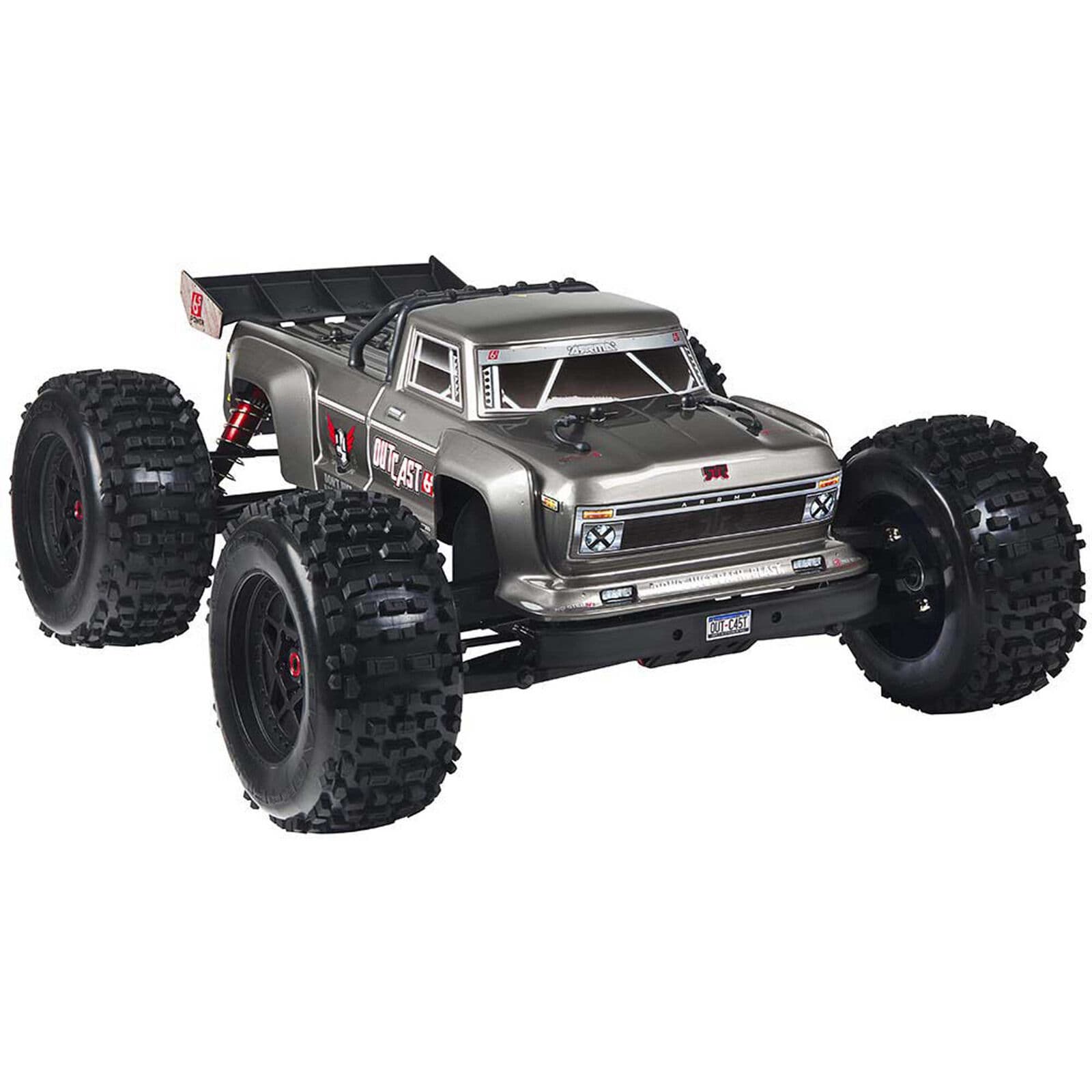
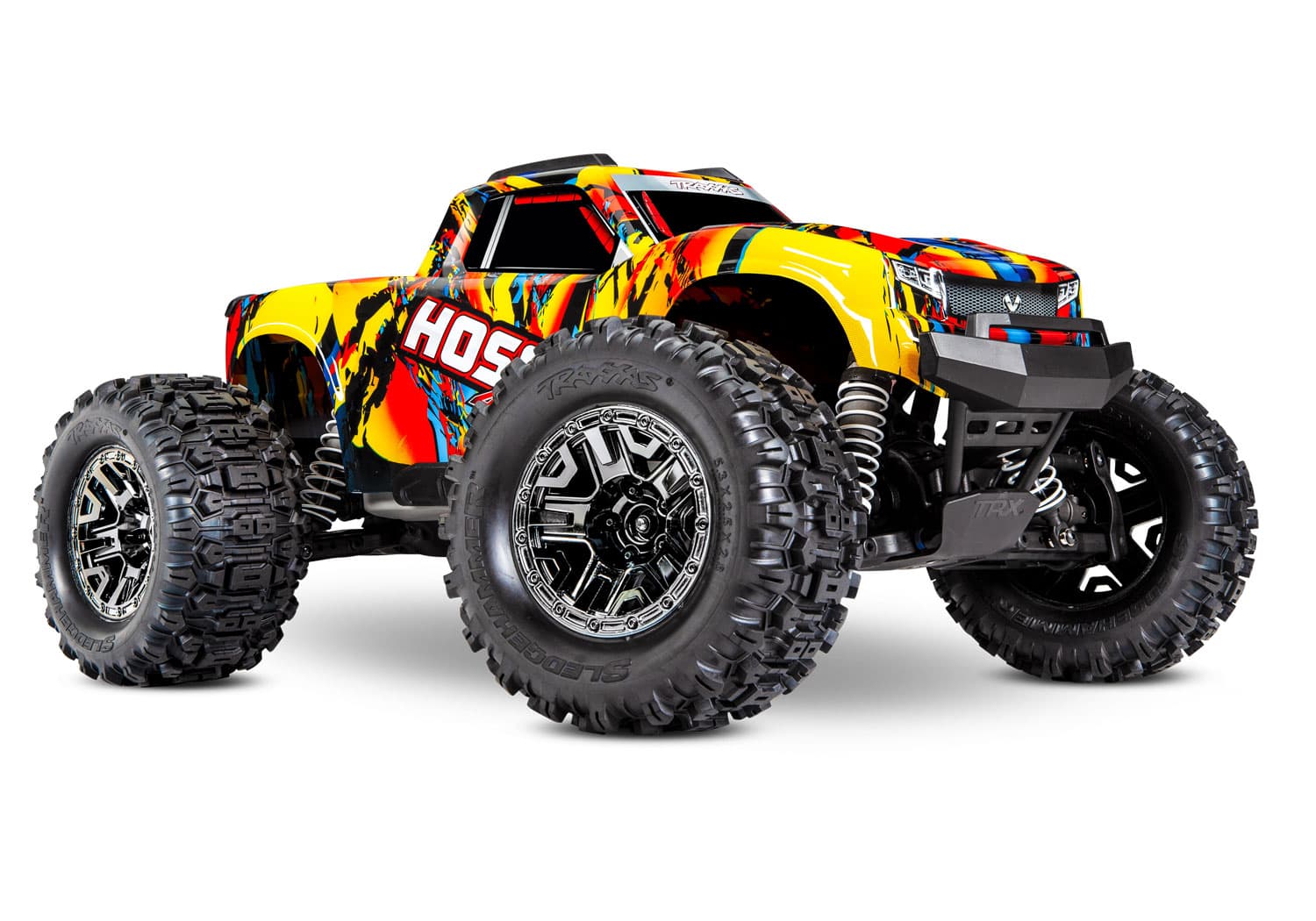
The Outcast runs 6S and costs noticeably more than the 3S Hoss. Same top speed on paper, but the power delivery and build quality gap between these two is significant. A question of how serious you are about bashing.
At a Glance
Arrma Outcast 6S BLX
Traxxas Hoss 4X4 VXL
Spec Comparison
Spec
Arrma Outcast 6S BLX
Traxxas Hoss 4X4 VXL
Price
$489.99
$429.95
Performance
Top Speed
60 mph
60 mph
Drivetrain
4WD
4WD
Motor Type
Brushless
Brushless
Dimensions
Length
21.46 in
21.65 in
Width
16.14 in
14.37 in
Height
8.46 in
8.07 in
Wheelbase
13.15 in
13.15 in
Ground Clearance
2.17 in
2.85 in
Chassis
Weight
10.58 lbs
7.87 lbs
Battery
5000mAh 6S
5000mAh 3S
Features
Waterproof
Yes
Yes
Detailed Comparison
On paper, the Arrma Outcast 6S BLX and Traxxas Hoss 4X4 VXL both hit 60 mph. Same speed, right? Not remotely the same experience. The Outcast reaches 60 mph on 6S power with headroom to spare. The Hoss reaches 60 mph on 3S with the motor working near its limit. The Outcast's torque curve is fatter across the entire RPM range, its acceleration is harder off the line, and it hits 60 mph with an authority the Hoss cannot match. Driving the Outcast feels effortless at speeds where the Hoss feels like it's giving everything it has.
The price difference (a noticeable price difference) reflects a fundamental gap in capability and build philosophy. The Outcast is a 1/8 scale truck at 21.46 inches long and 16.14 inches wide, weighing 10.58 lbs. The Hoss is 1/10 scale at 21.65 inches long and 14.37 inches wide, weighing 7.87 lbs. Interestingly, the Hoss is slightly longer, but the Outcast is nearly 2 inches wider. That width gives the Outcast better rollover resistance and a more planted feel during aggressive maneuvers. The wider stance is immediately noticeable in how confidently the Outcast handles turns at speed.
Ground clearance goes to the Hoss at 2.85 inches versus 2.17 inches. The Hoss sits higher and clears rough terrain more easily. For general off-road bashing over rocks, ruts, and tall grass, the Hoss's extra clearance is a genuine advantage. The Outcast's lower center of gravity is better for stunts and high-speed stability but less ideal for crawling over obstacles. This clearance difference means the Hoss can drive through terrain the Outcast has to drive around.
Durability is where the Outcast justifies its premium across the board. Every component in the Outcast's drivetrain is built for 6S forces. The diffs are bigger with more robust internals, the gears are made from harder materials, the shock towers are thicker with better reinforcement at mounting points, and the chassis is more rigid under twisting loads. The Hoss is well-built for 3S, but if you upgrade a Hoss to handle more power or repeatedly send it off jumps, you'll spend a lot replacing weak points over time. The Outcast comes ready for abuse out of the box without needing any reinforcement.
Battery economics significantly favor the Hoss. A 3S pack is noticeably cheaper than a comparable 6S pack. Both trucks use 5000mAh packs with similar runtime per session. Over a season of weekly driving, the Hoss saves you a significant amount in battery costs alone. That savings is real and should factor into your decision. Both are waterproof.
The Hoss is the truck most bashers actually need: fast enough to be exciting, affordable enough to be accessible, and tough enough for regular weekend bashing. It's the smart buy for someone who wants strong performance without stepping into the 6S financial commitment. The Outcast is the step up for bashers who know they want more power, more durability, and don't mind paying the premium in both purchase price and ongoing battery costs. If 60 mph is your target and budget matters, the Hoss gets there for less total investment. If 60 mph is your target but you want it with brutal acceleration and tank-like durability, the Outcast is worth the extra money and then some.
The Verdict
Arrma Outcast 6S BLX
6S torque, heavier-duty everything, and a truck that lands hard on purpose. The Outcast is noticeably more because it's built noticeably tougher.
Full reviewTraxxas Hoss 4X4 VXL
Same 60 mph, significantly less, cheaper batteries. The Hoss does 90% of what the Outcast does for less money. That last 10% is stunt capability.
Full reviewWhere to Buy
Arrma Outcast 6S BLX
Traxxas Hoss 4X4 VXL
Prices may vary. We may earn a commission on purchases at no extra cost to you.
Related Comparisons
Arrma Outcast 6S BLX vs Arrma Kraton 6S BLX
monster truckArrma Outcast 6S BLX vs Arrma Big Rock 3S BLX
monster truckArrma Outcast 6S BLX vs Traxxas Maxx V2
monster truckArrma Outcast 6S BLX vs Traxxas Stampede 4X4 VXL
monster truckArrma Outcast 6S BLX vs Losi LMT Grave Digger
monster truckArrma Outcast 6S BLX vs Team Associated Rival MT10 V2
monster truckRelated Guides
How Fast Are RC Cars? Speed Guide by Category
Real-world RC car speeds by category and price range. From 15 mph mini crawlers to 100+ mph speed machines.
Brushed vs Brushless Motors: What's the Difference?
How brushed and brushless motors work, what the performance differences are, and which one to pick.
2WD vs 4WD RC Cars: Which Is Better?
2WD and 4WD compared across handling, speed, durability, and terrain. Plus which drivetrain to pick.