Arrma Outcast 6S BLX vs Traxxas Maxx V2Which Should You Buy?
Quick Take
Two premium 4WD bashers at the same this price point. The Outcast runs 6S for more raw power, the Maxx V2 runs 4S with a more refined package. An evenly matched fight between Arrma and Traxxas's best mid-range trucks.
At a Glance
Arrma Outcast 6S BLX
Traxxas Maxx V2
Spec Comparison
Spec
Arrma Outcast 6S BLX
Traxxas Maxx V2
Price
$489.99
$599.95
Performance
Top Speed
60 mph
60 mph
Drivetrain
4WD
4WD
Motor Type
Brushless
Brushless
Dimensions
Length
21.46 in
23.39 in
Width
16.14 in
17.32 in
Height
8.46 in
10.83 in
Wheelbase
13.15 in
14.13 in
Ground Clearance
2.17 in
3.15 in
Chassis
Weight
10.58 lbs
9.80 lbs
Battery
5000mAh 6S
5000mAh 4S
Features
Waterproof
Yes
Yes
Detailed Comparison
Identical price, identical top speed, totally different approaches. The Arrma Outcast 6S BLX and Traxxas Maxx V2 are identically priced and both hit 60 mph, making this one of the fairest head-to-head comparisons in the hobby. The differences come down to power delivery, platform design, and what each brand prioritized during development.
The Outcast runs 6S power. The Maxx V2 runs 4S. Despite reaching the same top speed, the Outcast has more voltage headroom, meaning its motor isn't working as hard at peak speed and has torque to spare for climbing out of holes and launching off obstacles. This translates to more low-end grunt, which matters for launches off ramps and accelerating out of corners. The Maxx V2's 4S system is more efficient for its speed range and generates less heat under sustained full-throttle driving. Both approaches work well, but the Outcast feels more muscular and aggressive while the Maxx feels more refined and composed.
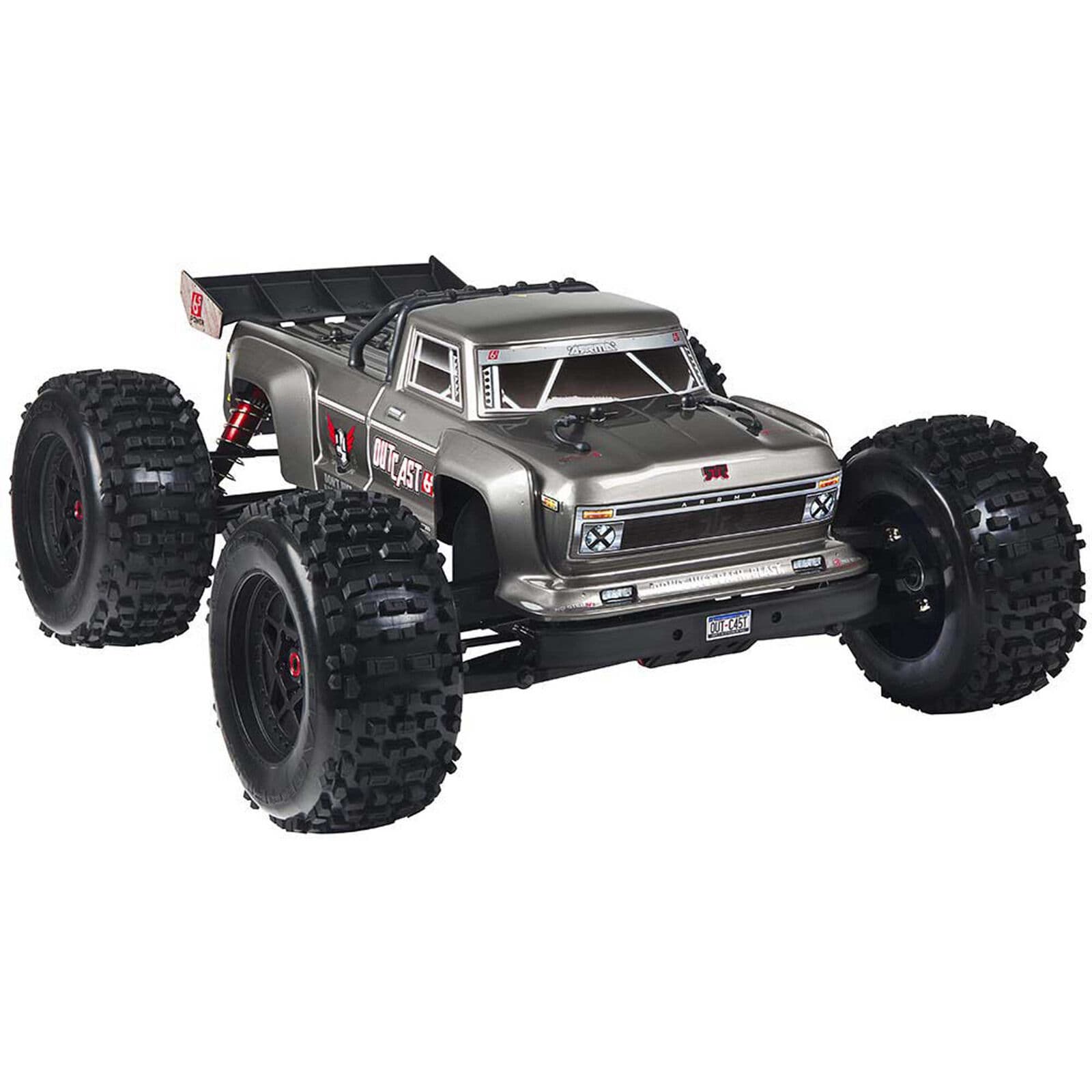
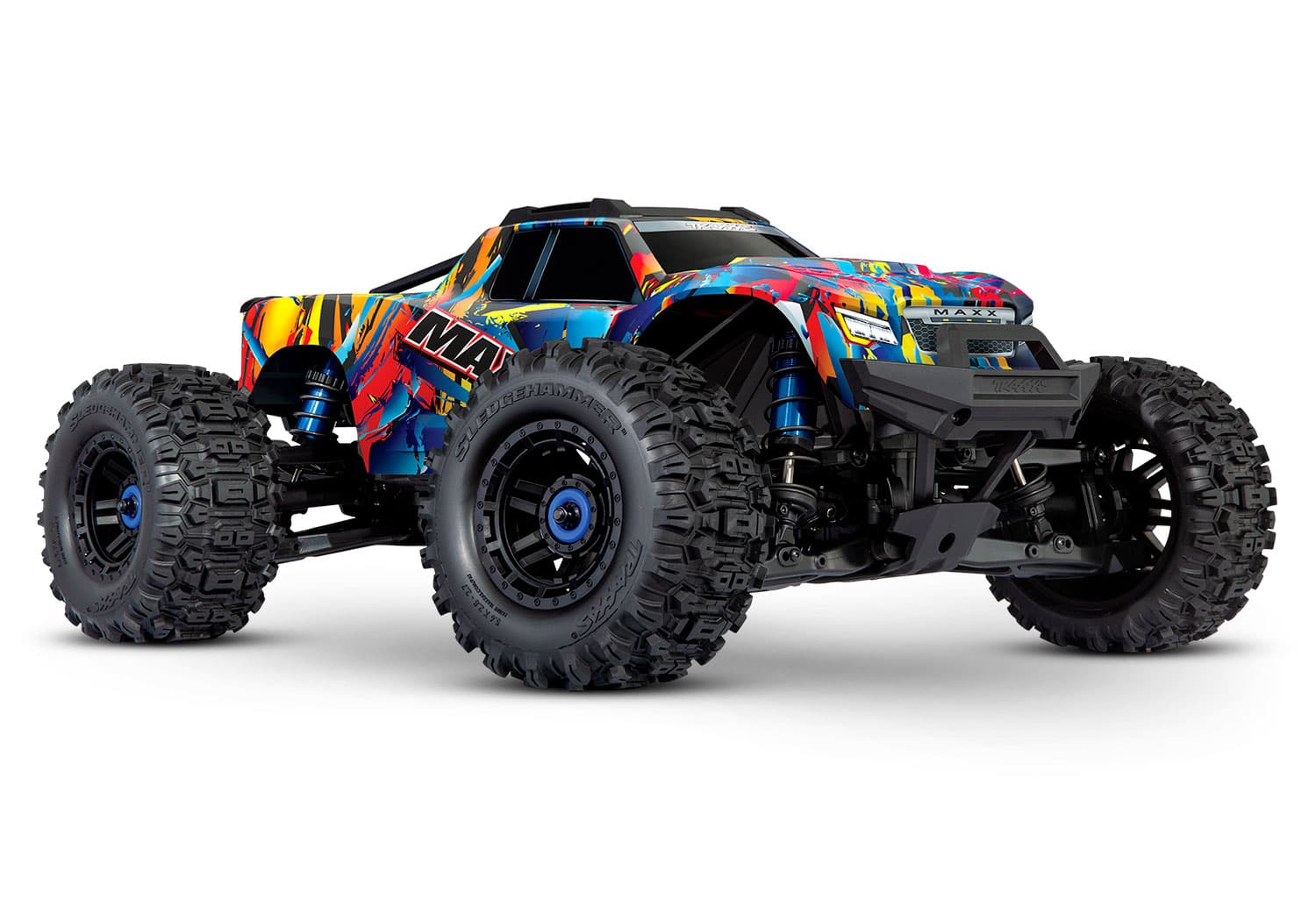
The Outcast is a 1/8 scale truck at 21.46 inches long and 16.14 inches wide. The Maxx V2 is 1/10 scale at 23.39 inches long and 17.32 inches wide. Despite the scale labels suggesting the Outcast should be bigger, the Maxx is actually longer and wider. Its 14.13-inch wheelbase beats the Outcast's 13.15 inches, and ground clearance strongly favors the Maxx at 3.15 inches versus 2.17 inches. That's nearly an inch more clearance, which gives the Maxx a real advantage on rough terrain where rocks, roots, and ruts can catch the Outcast's lower belly.
Weight goes to the Maxx V2 at 9.8 lbs versus the Outcast's 10.58 lbs. The Maxx is lighter despite being physically larger, which speaks to efficient engineering and careful material selection. This weight advantage helps with agility, puts less stress on components during hard landings, and reduces momentum during crashes, potentially causing less damage. The Outcast's extra weight does help with traction and stability during stunts, though.
The Outcast was designed specifically as a stunt basher. Its geometry is optimized for aerial tricks, wheelies, and landing hard from height without breaking. The wide body and reinforced components are purpose-built for the forces generated by big jumps and hard landings. The Maxx V2 is a more well-rounded platform that handles everything from speed runs to jumping to general bashing without being specialized for any single activity. If you spend most of your time in the air, the Outcast's design philosophy pays off. If you want one truck that does everything competently, the Maxx does a bit of everything.
Battery costs favor the Maxx noticeably. 4S packs are cheaper than 6S packs, typically by a meaningful margin. Over a season of driving, this adds up to real money, especially if you run multiple packs per session. Both trucks use 5000mAh packs, and both are waterproof. Runtime is comparable between the two since the voltage difference roughly balances with current draw.
Parts availability is strong for both brands, though Traxxas maintains a slight edge with more brick-and-mortar dealers stocking Maxx parts on shelves. Arrma's support through Horizon Hobby is excellent and continues to improve, with online ordering making same-day shipping routine. At the same price, you're getting premium performance either way. The Outcast is the better stunt truck. The Maxx V2 is the better all-rounder.
The Verdict
Arrma Outcast 6S BLX
Built for sending it. The Outcast is the 6S stunt truck. Big air, hard landings, repeat. That's the whole identity.
Full reviewTraxxas Maxx V2
Wider, self-righting, cheaper batteries. The Maxx V2 is the all-arounder. Less specialized, more useful.
Full reviewWhere to Buy
Arrma Outcast 6S BLX
Traxxas Maxx V2
Prices may vary. We may earn a commission on purchases at no extra cost to you.
Related Comparisons
Arrma Outcast 6S BLX vs Arrma Kraton 6S BLX
monster truckArrma Outcast 6S BLX vs Arrma Big Rock 3S BLX
monster truckArrma Outcast 6S BLX vs Traxxas Stampede 4X4 VXL
monster truckArrma Outcast 6S BLX vs Traxxas Hoss 4X4 VXL
monster truckArrma Outcast 6S BLX vs Losi LMT Grave Digger
monster truckArrma Outcast 6S BLX vs Team Associated Rival MT10 V2
monster truckRelated Guides
How Fast Are RC Cars? Speed Guide by Category
Real-world RC car speeds by category and price range. From 15 mph mini crawlers to 100+ mph speed machines.
Brushed vs Brushless Motors: What's the Difference?
How brushed and brushless motors work, what the performance differences are, and which one to pick.
2WD vs 4WD RC Cars: Which Is Better?
2WD and 4WD compared across handling, speed, durability, and terrain. Plus which drivetrain to pick.