Arrma Outcast 6S BLX vs Team Associated Rival MT10 V2Which Should You Buy?
Quick Take
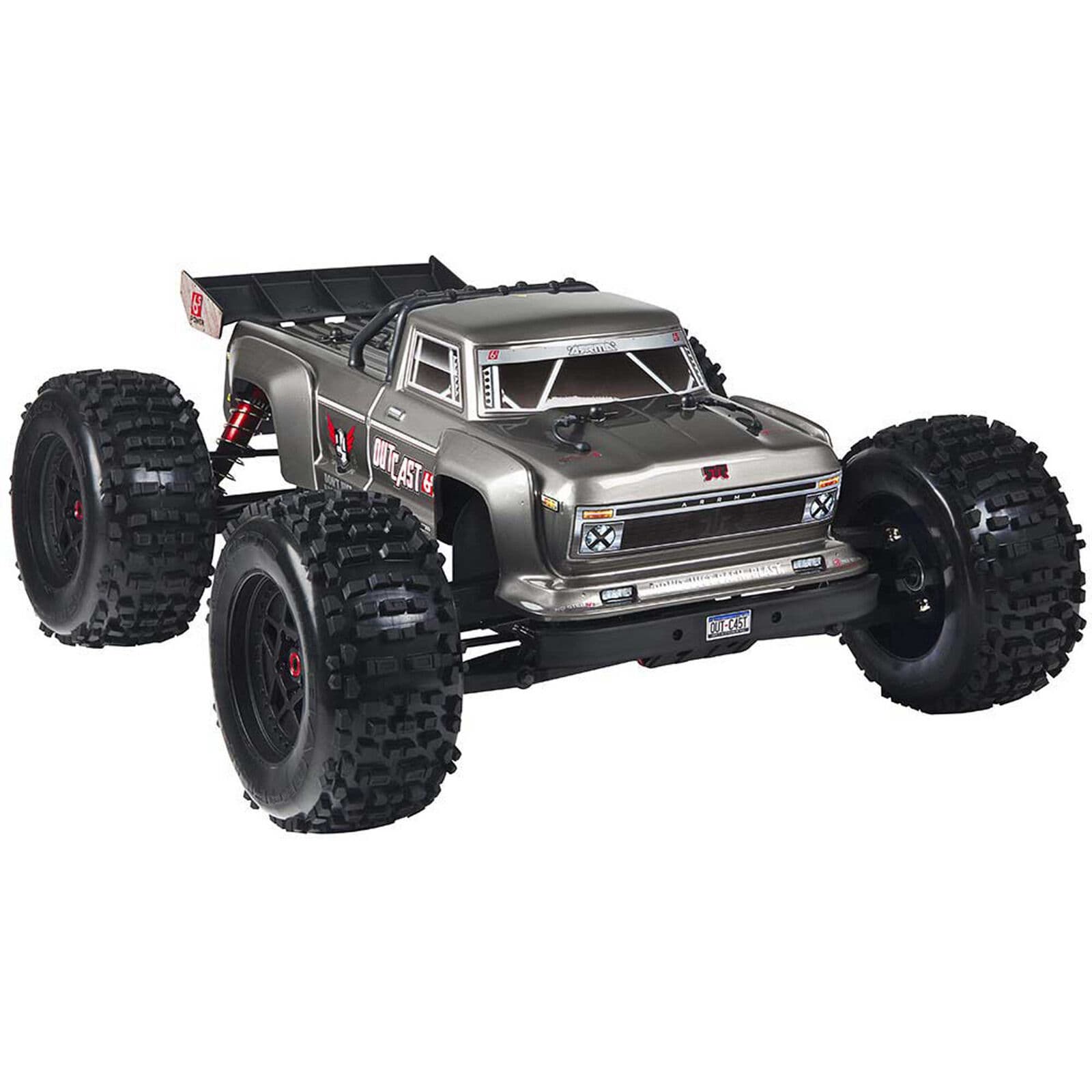
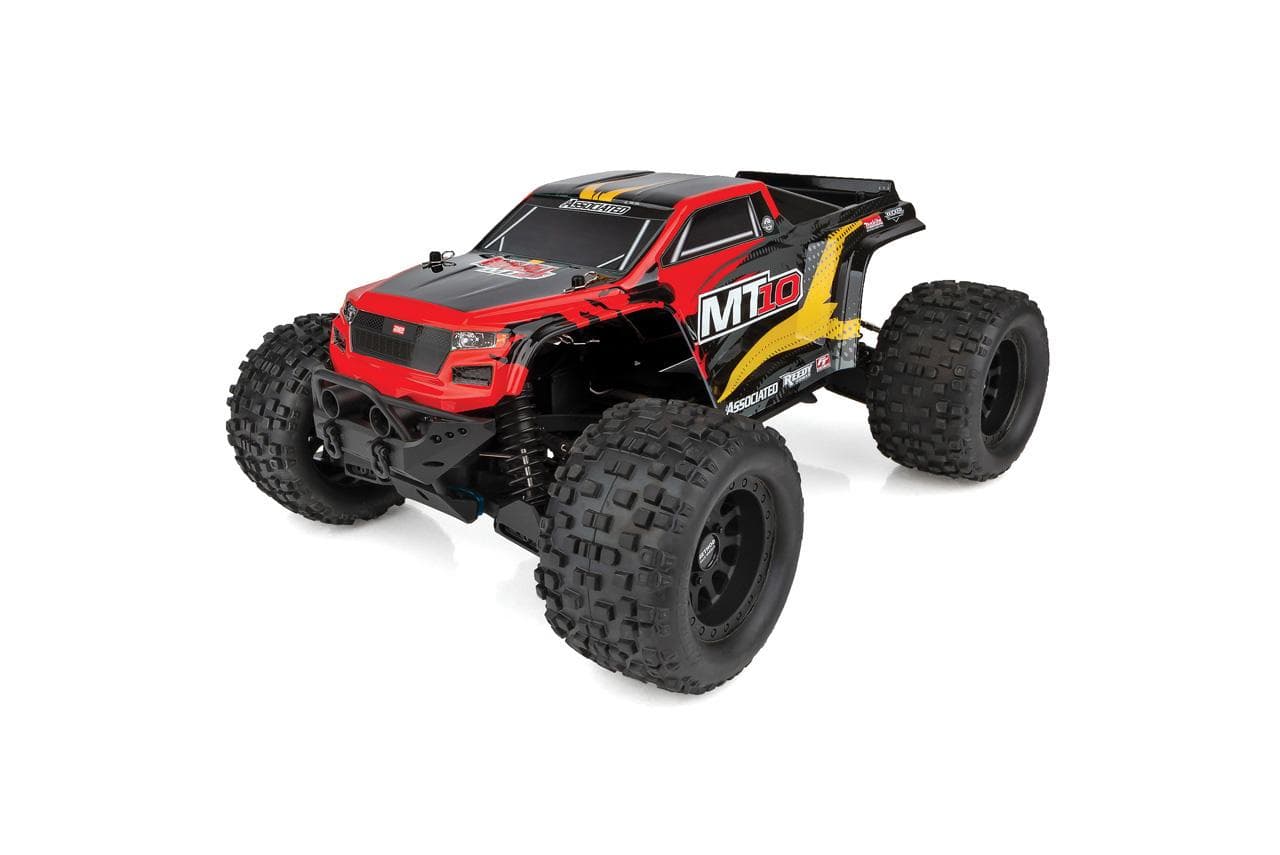
A 1/8-scale 6S stunt machine versus a budget-friendly 1/10 basher. The Arrma Outcast 6S BLX costs significantly more and runs in a completely different tier of power and airtime. This matchup only makes sense if you're deciding between spending big now or starting smaller.
At a Glance
Arrma Outcast 6S BLX
Team Associated Rival MT10 V2
Spec Comparison
Spec
Arrma Outcast 6S BLX
Team Associated Rival MT10 V2
Price
$489.99
$339.99
Performance
Top Speed
60 mph
40 mph
Drivetrain
4WD
4WD
Motor Type
Brushless
Brushless
Dimensions
Length
21.46 in
19.96 in
Width
16.14 in
12.80 in
Height
8.46 in
7.48 in
Wheelbase
13.15 in
11.22 in
Ground Clearance
2.17 in
2.17 in
Chassis
Weight
10.58 lbs
6.17 lbs
Battery
5000mAh 6S
5000mAh 3S
Features
Waterproof
Yes
Yes
Detailed Comparison
The Arrma Outcast 6S BLX and the Team Associated Rival MT10 V2 look like they belong in the same category on paper, but driving them back to back tells a very different story. The Outcast runs on 6S power and hits 60 mph. The Rival MT10 V2 tops out around 40 mph on 3S. That 20 mph gap translates into a massive difference in acceleration, backflip height, and overall insanity. The Outcast's brushless system on 6S has so much torque it can stand on its rear bumper from a standstill. The Rival MT10 is quick for a 1/10 truck, but it just can't match that kind of violence.
Build quality separates these two as well. The Outcast weighs 10.58 lbs and is built with thick aluminum chassis braces and beefy drivetrain components designed to survive repeated 6S abuse. At that weight, it absorbs landings that would destroy lighter trucks. The wider 16.14-inch stance and 13.15-inch wheelbase create a stable platform for high-speed runs and enormous jumps. The Rival MT10 V2 at 6.17 lbs uses a more traditional composite tub chassis that holds up fine for 3S bashing but would not survive the same kind of punishment. Its narrower 12.8-inch width and 11.22-inch wheelbase make it feel more nimble but less planted. Team Associated did a decent job with the V2 revision, improving the shock towers and adding a metal center diff housing, but the overall robustness gap between these two is significant.
Battery and runtime is where the Outcast's power comes at a cost. Running dual 3S packs or a single 6S means higher battery expenses and slightly shorter run times compared to the Rival MT10's single 3S setup. A 5000mAh 6S pack in the Outcast will give you about 15-20 minutes of aggressive driving. The Rival MT10 on a 5000mAh 3S can stretch to 20-25 minutes since it draws less current. Replacement batteries for 6S also cost roughly double what 3S packs run, and chargers capable of handling 6S are more expensive. Over a year of regular use, the Outcast's battery costs can add up to significantly more.
The driving experience itself is worth noting beyond raw specs. The Outcast is a stunt machine that thrives on huge launches, monster backflips, and full-throttle chaos. It wants wide open spaces and big ramps. The Rival MT10 is more at home in a backyard setting where you can have fun at moderate speeds without needing a football field of space to recover from overshoot. The Rival is also easier to drive for less experienced pilots since 40 mph on 3S is far more manageable than 60 mph on 6S.
Value is where the Rival MT10 V2 fights back hard. At its price point, it is a fully capable basher with 4WD, brushless power, waterproofing, and a reasonable top speed. The Outcast at its mid-range price asks you to spend 57% more before you even factor in the higher battery costs. If you are new to the hobby or want something your kids can drive, the Rival MT10 is probably the smarter buy. But if you already know you want massive air and 6S power, the Outcast offers something the Rival just can't replicate regardless of upgrades. The Outcast wins on performance and durability. The Rival MT10 V2 wins on value and running costs. Both are waterproof, both are 4WD brushless, and both will put a grin on your face, just at very different intensity levels.
The Verdict
Arrma Outcast 6S BLX
Violent acceleration and the biggest backflips money can buy. The Outcast 6S is for drivers who think 3S trucks are boring.
Full reviewTeam Associated Rival MT10 V2
Reasonable price, reasonable power, reasonable battery costs. The Rival MT10 V2 is the sensible truck. Sometimes sensible wins.
Full reviewWhere to Buy
Arrma Outcast 6S BLX
Team Associated Rival MT10 V2
Prices may vary. We may earn a commission on purchases at no extra cost to you.
Related Comparisons
Arrma Outcast 6S BLX vs Arrma Kraton 6S BLX
monster truckArrma Outcast 6S BLX vs Arrma Big Rock 3S BLX
monster truckArrma Outcast 6S BLX vs Traxxas Maxx V2
monster truckArrma Outcast 6S BLX vs Traxxas Stampede 4X4 VXL
monster truckArrma Outcast 6S BLX vs Traxxas Hoss 4X4 VXL
monster truckArrma Outcast 6S BLX vs Losi LMT Grave Digger
monster truckRelated Guides
How Fast Are RC Cars? Speed Guide by Category
Real-world RC car speeds by category and price range. From 15 mph mini crawlers to 100+ mph speed machines.
Brushed vs Brushless Motors: What's the Difference?
How brushed and brushless motors work, what the performance differences are, and which one to pick.
2WD vs 4WD RC Cars: Which Is Better?
2WD and 4WD compared across handling, speed, durability, and terrain. Plus which drivetrain to pick.