Team Associated Rival MT10 V2 vs Traxxas Stampede 2WD VXLWhich Should You Buy?
Quick Take
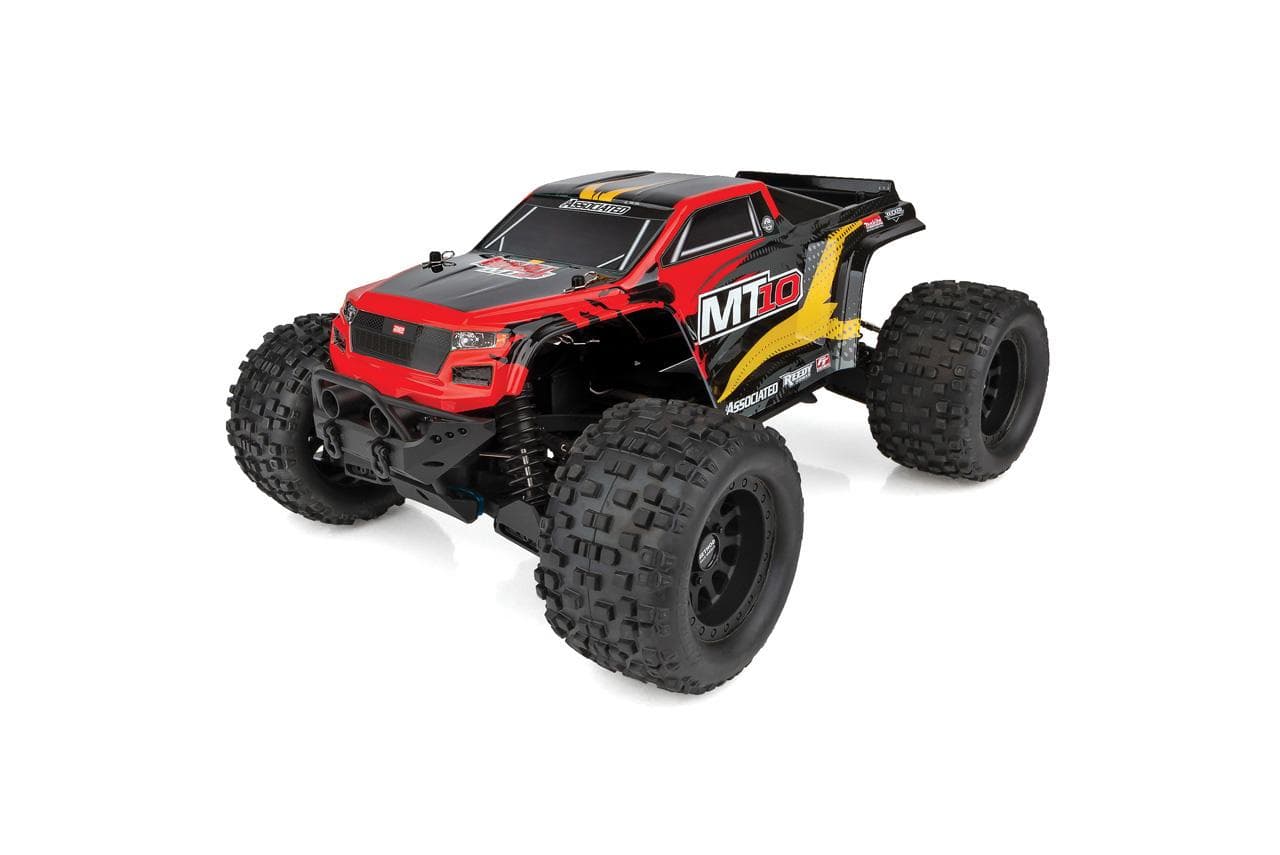
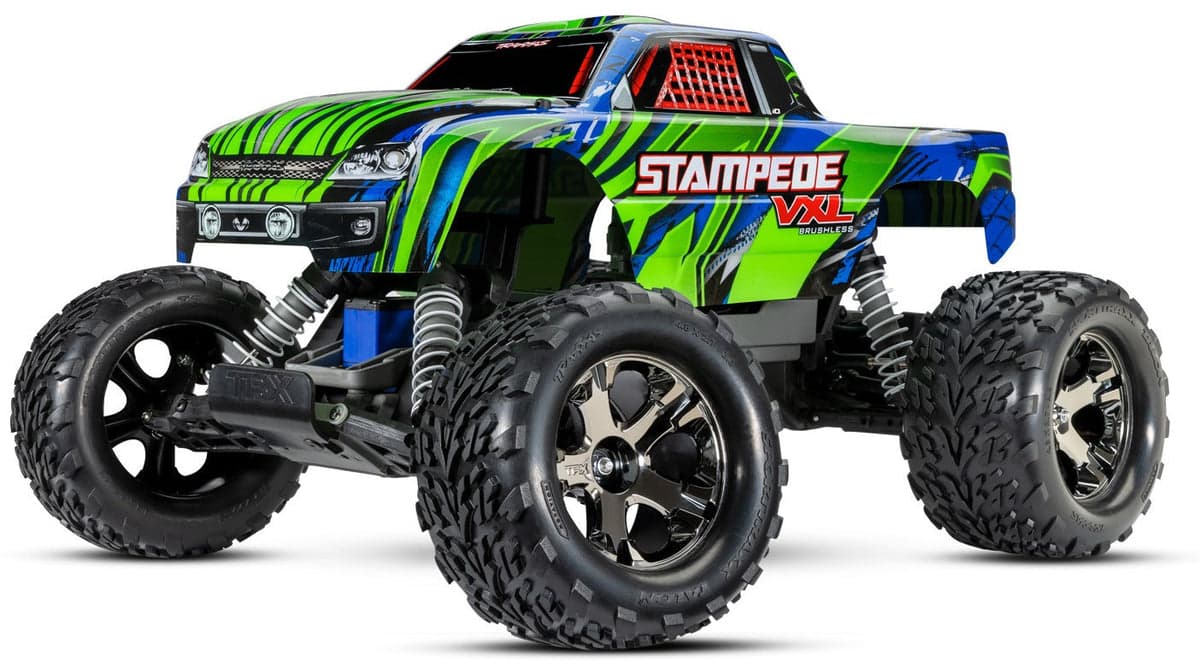
4WD precision versus 2WD straight-line speed at the same a significant amount price bracket. The Rival MT10 V2 offers grip and composure on any surface. The Stampede 2WD VXL offers 65 mph thrills on smooth pavement. Standard traction-vs-velocity tradeoff.
At a Glance
Team Associated Rival MT10 V2
Traxxas Stampede 2WD VXL
Spec Comparison
Spec
Team Associated Rival MT10 V2
Traxxas Stampede 2WD VXL
Price
$339.99
$379.95
Performance
Top Speed
40 mph
65 mph
Drivetrain
4WD
2WD
Motor Type
Brushless
Brushless
Dimensions
Length
19.96 in
16.34 in
Width
12.80 in
12.75 in
Height
7.48 in
7.87 in
Wheelbase
11.22 in
10.24 in
Ground Clearance
2.17 in
2.75 in
Chassis
Weight
6.17 lbs
5.51 lbs
Battery
5000mAh 3S
5000mAh 3S
Features
Waterproof
Yes
Yes
Detailed Comparison
The Team Associated Rival MT10 V2 and Traxxas Stampede 2WD VXL cost their respective prices respectively, making the Stampede noticeably cheaper with a significantly faster 65 mph top speed versus the Rival MT10's 40 mph. On first glance, the Stampede looks like the obvious winner for budget-conscious speed seekers. But the drivetrain difference between these trucks changes the entire equation. The Rival MT10 runs full-time 4WD with power going to all four wheels at all times. The Stampede is rear-wheel-drive 2WD. That means the Rival MT10 has consistent traction in conditions where the Stampede spins helplessly and goes nowhere on grass, loose dirt, gravel, wet pavement, inclines, and basically any surface that isn't smooth and dry.
The Stampede's 65 mph capability happens on smooth, hard surfaces with ideal grip conditions and optimal gearing. Try to replicate that on a grass field and you'll be chasing a truck doing donuts with minimal forward progress while the tires shred the turf. The Rival MT10's 40 mph works reliably on basically any surface you can drive on, because four driven wheels always find traction somewhere. Both trucks run brushless motors on 5000mAh 3S packs, so battery costs and runtime are equivalent, no financial difference in ongoing operation. Weight favors the Stampede at 5.51 lbs versus 6.17, which helps its acceleration but hurts its stability during jumps and over rough terrain. The Rival MT10 is wider at 12.8 versus 12.75 inches, essentially identical, but substantially longer at 19.96 versus 16.34 inches with a bigger wheelbase (11.22 vs 10.24 inches), all contributing to more predictable handling and better jump performance.
Build quality clearly favors the Rival MT10 V2. Team Associated's competition engineering heritage shows in the suspension geometry, shock quality, bearing precision, and overall assembly standards. The Stampede 2WD platform has been around in various iterations for decades and while it's proven reliable and easy to maintain, the design is showing its age compared to newer platforms like the Rival MT10. The Stampede's rear-drive layout can be a blast for power slides, donuts, and tail-out cornering, which is a driving style the 4WD Rival MT10 doesn't naturally support. If you enjoy that tail-happy, sideways driving style on pavement, the Stampede provides real entertainment value.
Ground clearance goes to the Stampede at 2.75 versus 2.17 inches, and both trucks carry full waterproof ratings for worry-free driving in wet conditions. Parts for the Stampede are available literally everywhere. It's the most popular RC truck platform ever produced, and every hobby shop stocks a full wall of Stampede parts. Rival MT10 parts are readily available through online retailers but harder to find on local shelves for impulse purchases. At noticeably less, the Stampede's value proposition is strong if you understand and accept what you're getting: a dedicated rear-drive speed demon that thrives on smooth surfaces and struggles on loose terrain. The Rival MT10 costs slightly more but gets you a truck that handles everything from parking lots to dirt fields to gravel roads with equal competence. For someone buying their first serious RC truck, the Rival MT10's 4WD capability makes it the much safer recommendation.
The Verdict
Team Associated Rival MT10 V2
4WD, composed handling, a competitive price. The Rival MT10 V2 drives like a truck that costs more than it does.
Full reviewTraxxas Stampede 2WD VXL
Fastest truck here at 65 mph and the cheapest at its price point. The catch? 2WD. On smooth surfaces, that's no catch at all.
Full reviewWhere to Buy
Team Associated Rival MT10 V2
Traxxas Stampede 2WD VXL
Prices may vary. We may earn a commission on purchases at no extra cost to you.
Related Comparisons
Team Associated Rival MT10 V2 vs Arrma Big Rock 3S BLX
monster truckTeam Associated Rival MT10 V2 vs Arrma Outcast 6S BLX
monster truckTeam Associated Rival MT10 V2 vs Losi LMT Grave Digger
monster truckTeam Associated Rival MT10 V2 vs Redcat Volcano EPX Pro
monster truckTeam Associated Rival MT10 V2 vs Arrma Granite 3S BLX
monster truckTeam Associated Rival MT10 V2 vs Traxxas Stampede 4X4 VXL
monster truckRelated Guides
How to Choose Your First RC Car
A beginner's guide to picking your first RC car, from categories and budgets to what actually matters.
How Fast Are RC Cars? Speed Guide by Category
Real-world RC car speeds by category and price range. From 15 mph mini crawlers to 100+ mph speed machines.
Brushed vs Brushless Motors: What's the Difference?
How brushed and brushless motors work, what the performance differences are, and which one to pick.