Arrma Big Rock 3S BLX vs Team Associated Rival MT10 V2Which Should You Buy?
Quick Take
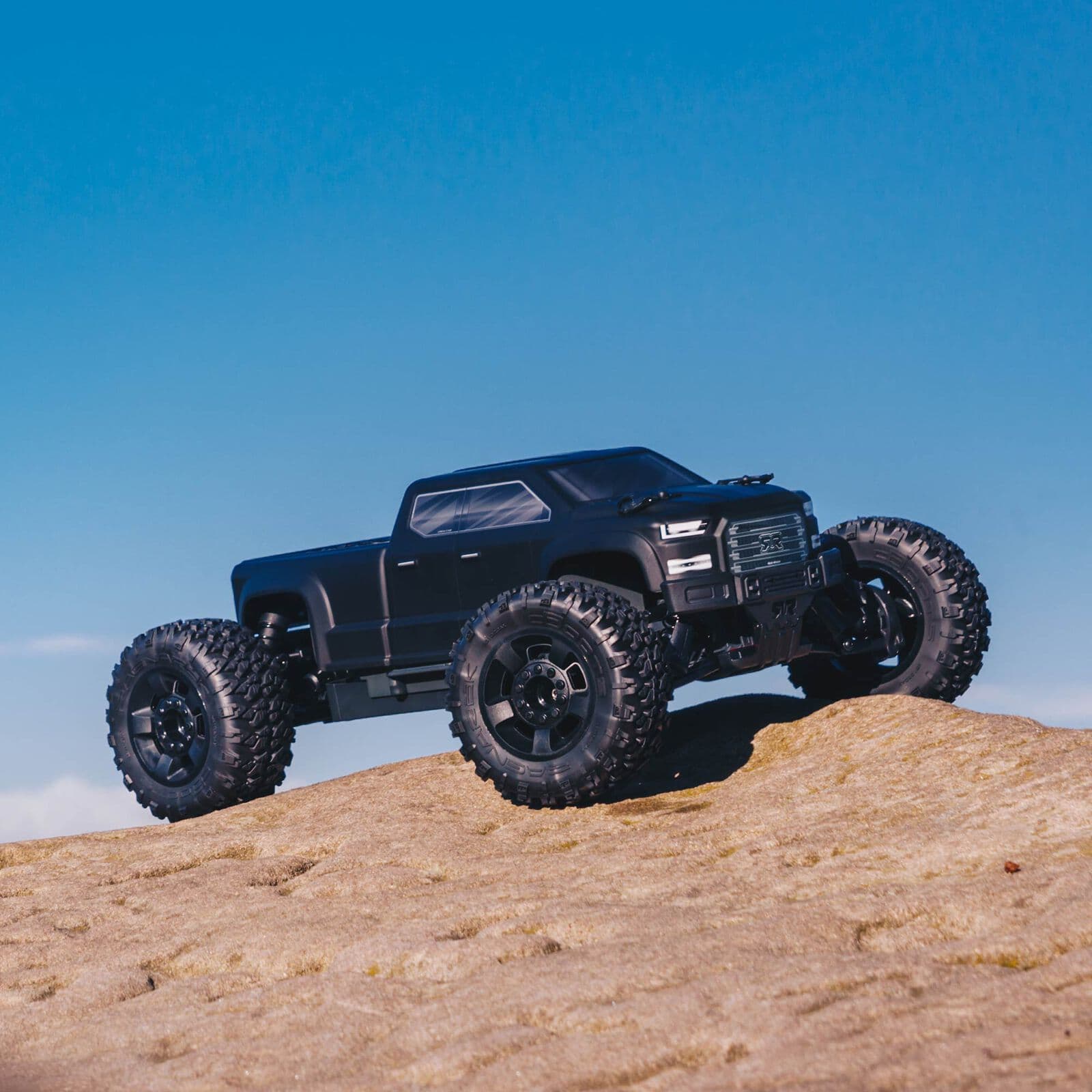
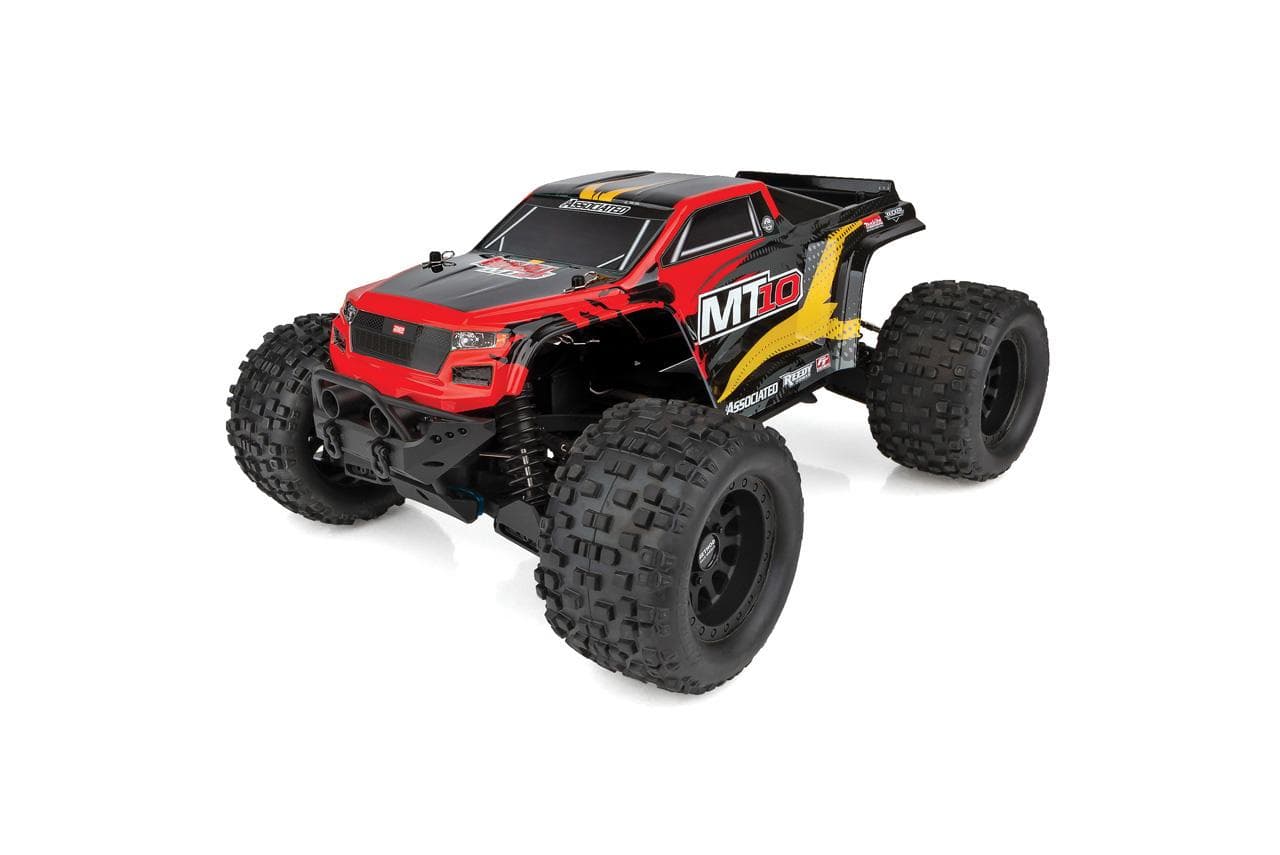
The Big Rock and Rival MT10 V2 are close competitors in the mid-range 4WD monster truck space. The Big Rock is faster, the Rival is lighter with better battery support. An underrated matchup worth considering.
At a Glance
Arrma Big Rock 3S BLX
Team Associated Rival MT10 V2
Spec Comparison
Spec
Arrma Big Rock 3S BLX
Team Associated Rival MT10 V2
Price
$369.99
$339.99
Performance
Top Speed
50 mph
40 mph
Drivetrain
4WD
4WD
Motor Type
Brushless
Brushless
Dimensions
Length
20.47 in
19.96 in
Width
14.57 in
12.80 in
Height
7.09 in
7.48 in
Wheelbase
12.91 in
11.22 in
Ground Clearance
2.05 in
2.17 in
Chassis
Weight
6.77 lbs
6.17 lbs
Battery
3200mAh 3S
5000mAh 3S
Features
Waterproof
Yes
Yes
Detailed Comparison
Team Associated doesn't get enough attention in the basher market, and the Rival MT10 V2 deserves a closer look against the Arrma Big Rock 3S BLX. The Big Rock wins on speed at 50 mph versus the Rival's 40 mph. That 10 mph gap is real and noticeable during everyday driving. The Big Rock just has more punch in its 3S BLX power system, and you feel it from the moment you pull the trigger. The extra speed gives the Big Rock a noticeable edge on straight runs and helps it carry more momentum through rough terrain.
The Rival MT10 V2 is affordably priced which is modestly more than the Big Rock's price. Paying more for a slower truck sounds like a bad deal on paper, but the Rival brings some genuine strengths that the spec sheet doesn't fully capture. Its 5000mAh 3S battery compatibility gives it significantly longer runtime than the Big Rock's stock 3200mAh 3S spec. More time driving between charges is a practical advantage that speed numbers can't reflect. If your bashing sessions are limited by battery life rather than daylight, the Rival's runtime edge matters.
Dimensions are close but favor the Big Rock in most categories. The Big Rock is 20.47 inches long with a 14.57-inch width and 12.91-inch wheelbase. The Rival measures 19.96 inches long, 12.8 inches wide, and 11.22-inch wheelbase. The Big Rock's wider stance and longer wheelbase give it better stability at speed and over rough ground. Ground clearance is 2.05 inches for the Big Rock and 2.17 inches for the Rival, a minimal difference. The Rival is lighter at 6.17 lbs versus 6.77 lbs, which gives it a small handling advantage relative to its power level.
Team Associated's heritage is in racing, and the Rival MT10 V2 reflects that with chassis geometry that handles well in corners. The steering feels more precise than the Big Rock's, which is tuned more for bashing fun than cornering accuracy. If you like hitting small tracks or carving through cones in a parking lot, the Rival's handling is a genuine advantage. For straight-line bashing, jumping, and general backyard fun, the Big Rock's extra speed and wider body make it more entertaining. The Rival rewards a more technical driving style, while the Big Rock rewards a more aggressive one.
Both trucks are waterproof and run 4WD brushless drivetrains. Build quality is solid on both, though the brands take different approaches. Arrma uses chunkier, bash-oriented components designed to absorb impacts. Team Associated uses lighter, more precisely machined parts that feel refined when you work on the truck. The Rival feels like a racing product adapted for bashing. The Big Rock feels like a purpose-built basher. Neither approach is wrong; they just reflect different brand philosophies.
Parts availability tips toward Arrma. The Big Rock is one of the best-selling RC trucks in the world, and parts are at every hobby shop and online retailer. The Rival MT10 has good support through Horizon Hobby's distribution, but you won't find parts at every local shop the way you will for the Big Rock. For someone near a well-stocked hobby shop, this doesn't matter. For rural buyers or anyone who needs same-day parts, the Big Rock's ubiquitous availability is a real advantage.
The Big Rock is the better basher for most people. The Rival MT10 V2 is the dark horse for buyers who value handling, runtime, and a brand with serious racing pedigree behind every design decision.
The Verdict
Arrma Big Rock 3S BLX
The Big Rock is faster, noticeably cheaper, and you can find parts anywhere. For most buyers, it's the obvious pick.
Full reviewTeam Associated Rival MT10 V2
The Rival MT10 is the underdog pick. Better handling, longer runtime, and that Team Associated racing DNA shows in the corners. Is 40 mph enough for you? Then look here.
Full reviewWhere to Buy
Arrma Big Rock 3S BLX
Team Associated Rival MT10 V2
Prices may vary. We may earn a commission on purchases at no extra cost to you.
Related Comparisons
Arrma Big Rock 3S BLX vs Traxxas Maxx V2
monster truckArrma Big Rock 3S BLX vs Traxxas Stampede 4X4 VXL
monster truckArrma Big Rock 3S BLX vs Traxxas Hoss 4X4 VXL
monster truckArrma Big Rock 3S BLX vs Arrma Outcast 6S BLX
monster truckArrma Big Rock 3S BLX vs Losi LMT Grave Digger
monster truckArrma Big Rock 3S BLX vs Redcat Volcano EPX Pro
monster truckRelated Guides
How to Choose Your First RC Car
A beginner's guide to picking your first RC car, from categories and budgets to what actually matters.
How Fast Are RC Cars? Speed Guide by Category
Real-world RC car speeds by category and price range. From 15 mph mini crawlers to 100+ mph speed machines.
Brushed vs Brushless Motors: What's the Difference?
How brushed and brushless motors work, what the performance differences are, and which one to pick.