Losi LMT Grave Digger vs Team Associated Rival MT10 V2Which Should You Buy?
Quick Take
The LMT is a price premium over the Rival MT10 V2, buying you a 1/8 solid-axle freestyle platform versus a conventional 1/10 basher. Same top speed, completely different trucks. The LMT is specialized, the Rival is practical.
At a Glance
Losi LMT Grave Digger
Team Associated Rival MT10 V2
Spec Comparison
Spec
Losi LMT Grave Digger
Team Associated Rival MT10 V2
Price
$499.99
$339.99
Performance
Top Speed
40 mph
40 mph
Drivetrain
4WD
4WD
Motor Type
Brushless
Brushless
Dimensions
Length
22.84 in
19.96 in
Width
17.52 in
12.80 in
Height
10.63 in
7.48 in
Wheelbase
13.39 in
11.22 in
Ground Clearance
3.54 in
2.17 in
Chassis
Weight
11.13 lbs
6.17 lbs
Battery
5000mAh 3S
5000mAh 3S
Features
Waterproof
No
Yes
Detailed Comparison
Both the Losi LMT Grave Digger and Team Associated Rival MT10 V2 top out at 40 mph and run on 3S brushless power, which makes the spec sheet comparison unusually close. Dig deeper and the differences emerge fast. The LMT is a 1/8-scale, 11.13 lb solid-axle monster truck measuring 22.84 inches long and 17.52 inches wide. The Rival MT10 V2 is a 1/10-scale, 6.17 lb independent-suspension truck at 19.96 inches long and 12.8 inches wide. These are completely different machines that happen to share a speed rating and battery voltage.
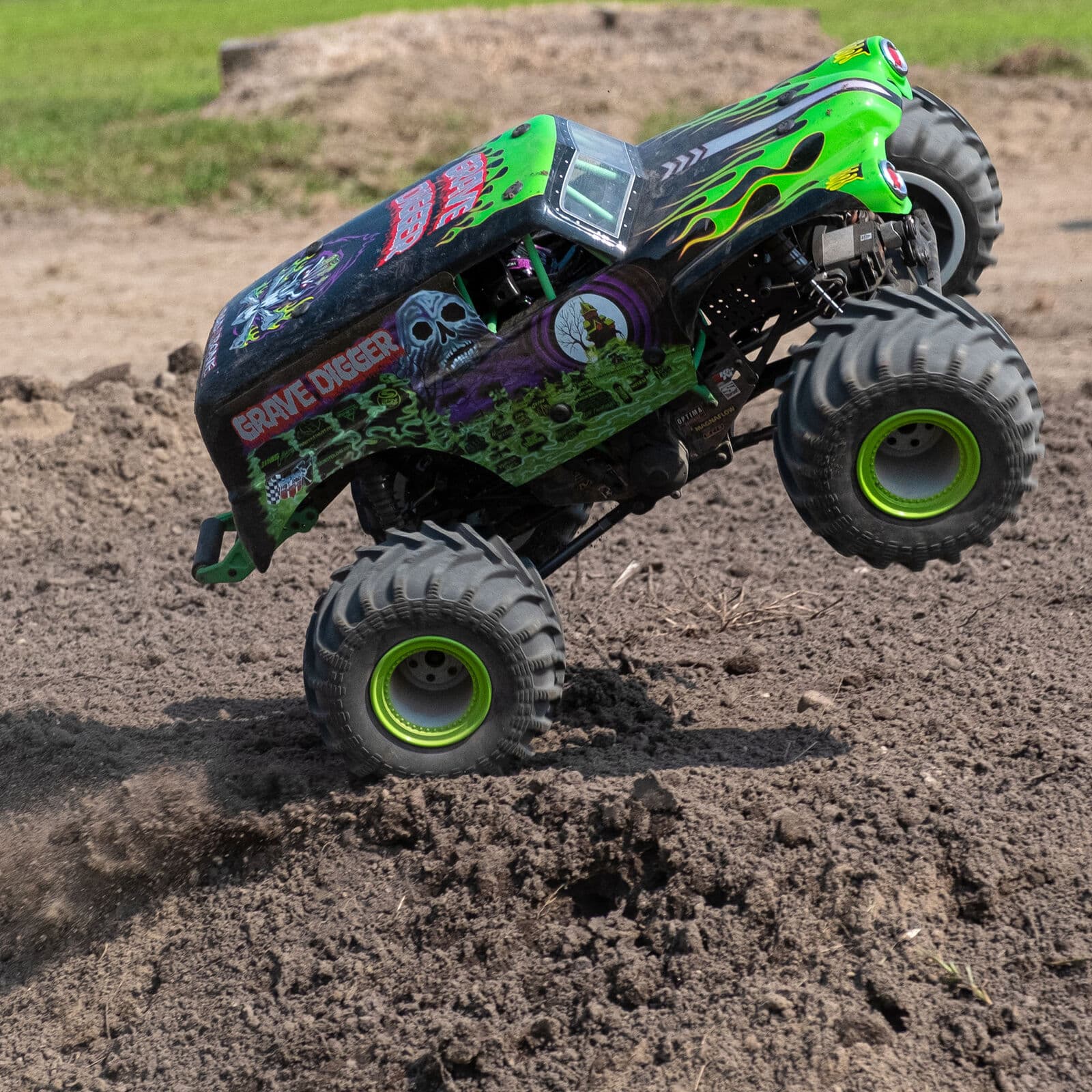
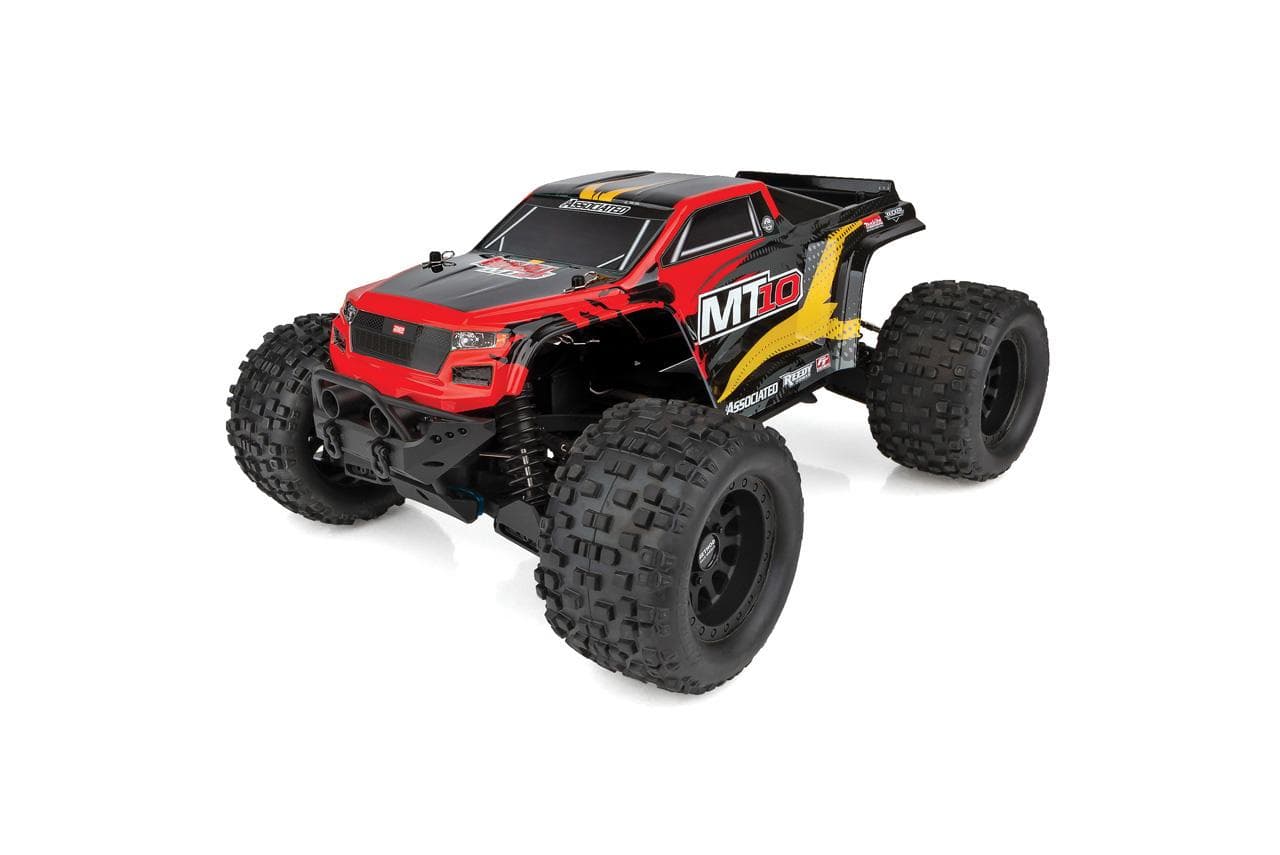
Driving the LMT is a unique experience that no conventional monster truck can replicate. The solid axles allow deliberate wheelies, two-wheel stalls, nose stands, and controlled backflips that require skill and practice to master. The heavy weight keeps it planted during tricks and gives big landings a satisfying thud that lighter trucks cannot match. There is a learning curve to freestyle driving, but the payoff is deeply rewarding. The Rival MT10 V2 drives like a typical basher: responsive, nimble, and stable at speed. Its independent suspension handles rough terrain at 40 mph better than the LMT does, soaking up bumps and maintaining predictable handling. For straightforward bashing, jumping, and general fun, the Rival feels more natural and immediately controllable.
Build quality on both trucks is appropriate for their intended purpose. The LMT has heavy-duty CNC gears, thick axle housings, and a chassis designed to absorb the repeated impacts of freestyle driving. Every component is sized to handle the stresses of backflips and hard landings at 11+ lbs. The Rival MT10 V2's improvements over the original include a metal center diff housing, beefier shock towers, and reinforced bulkheads. One critical difference: the Rival MT10 V2 is waterproof, the LMT is not. For a truck you want to bash in any conditions without worrying about electronics damage, that distinction matters significantly. The LMT requires you to either avoid wet environments or invest time and money in aftermarket waterproofing solutions.
Battery runtime favors the lighter Rival MT10 considerably. Both use 5000mAh 3S packs, but moving 6.17 lbs takes far less energy than moving 11.13 lbs. The Rival can easily deliver 25+ minutes per charge during typical bashing, while the LMT runs closer to 15-20 minutes with freestyle driving. Over time, this means the Rival stretches each battery investment further and you spend less time waiting on chargers between sessions.
At its price point, the Rival MT10 V2 is significantly less than the LMT Grave Digger. You get waterproofing, longer runtime, a more capable driving experience, and easier maintenance for less money. The Rival is the better overall truck if you judge by conventional metrics that matter to most RC drivers. But the LMT does not compete on conventional metrics. It competes on the solid axle experience, which is truly unique in the RC world. No upgrade path turns the Rival into an LMT-style freestyle truck. If that experience calls to you, the price premium is trivial. If it does not, the Rival MT10 V2 is the smarter, more practical purchase.
The Verdict
Losi LMT Grave Digger
Standing backflips. Nose stands. Solid axle monster jam tricks that no independent-suspension truck can do. The LMT is a trick machine.
Full reviewTeam Associated Rival MT10 V2
The Rival MT10 V2 is waterproof, lighter, and considerably cheaper. It won't do backflips, but it's a better everyday basher.
Full reviewWhere to Buy
Losi LMT Grave Digger
Team Associated Rival MT10 V2
Prices may vary. We may earn a commission on purchases at no extra cost to you.
Related Comparisons
Losi LMT Grave Digger vs Arrma Kraton 6S BLX
monster truckLosi LMT Grave Digger vs Arrma Big Rock 3S BLX
monster truckLosi LMT Grave Digger vs Arrma Outcast 6S BLX
monster truckLosi LMT Grave Digger vs Traxxas Maxx V2
monster truckLosi LMT Grave Digger vs Traxxas Stampede 4X4 VXL
monster truckLosi LMT Grave Digger vs Traxxas Hoss 4X4 VXL
monster truckRelated Guides
How Fast Are RC Cars? Speed Guide by Category
Real-world RC car speeds by category and price range. From 15 mph mini crawlers to 100+ mph speed machines.
Brushed vs Brushless Motors: What's the Difference?
How brushed and brushless motors work, what the performance differences are, and which one to pick.
2WD vs 4WD RC Cars: Which Is Better?
2WD and 4WD compared across handling, speed, durability, and terrain. Plus which drivetrain to pick.