Losi LMT Son-uva Digger vs Traxxas Stampede 4X4 VXLWhich Should You Buy?
Quick Take
A 1/8-scale monster jam truck versus a 1/10 speed-focused monster truck. The LMT is bigger, slower, and trick-oriented. The Stampede 4X4 VXL is faster, cheaper, and simpler. The price difference barely tells the story of how different these trucks drive.
At a Glance
Losi LMT Son-uva Digger
Traxxas Stampede 4X4 VXL
Spec Comparison
Spec
Losi LMT Son-uva Digger
Traxxas Stampede 4X4 VXL
Price
$499.99
$379.95
Performance
Top Speed
40 mph
65 mph
Drivetrain
4WD
4WD
Motor Type
Brushless
Brushless
Dimensions
Length
22.84 in
16.34 in
Width
17.52 in
12.75 in
Height
10.63 in
7.87 in
Wheelbase
13.39 in
10.24 in
Ground Clearance
3.54 in
2.75 in
Chassis
Weight
11.13 lbs
6.95 lbs
Battery
5000mAh 3S
5000mAh 3S
Features
Waterproof
No
Yes
Detailed Comparison
The Losi LMT Son-uva Digger and Traxxas Stampede 4X4 VXL present a fascinating contrast in monster truck philosophy. The LMT is a freestyle machine. The Stampede is a speed basher. They share a category name and almost nothing else.
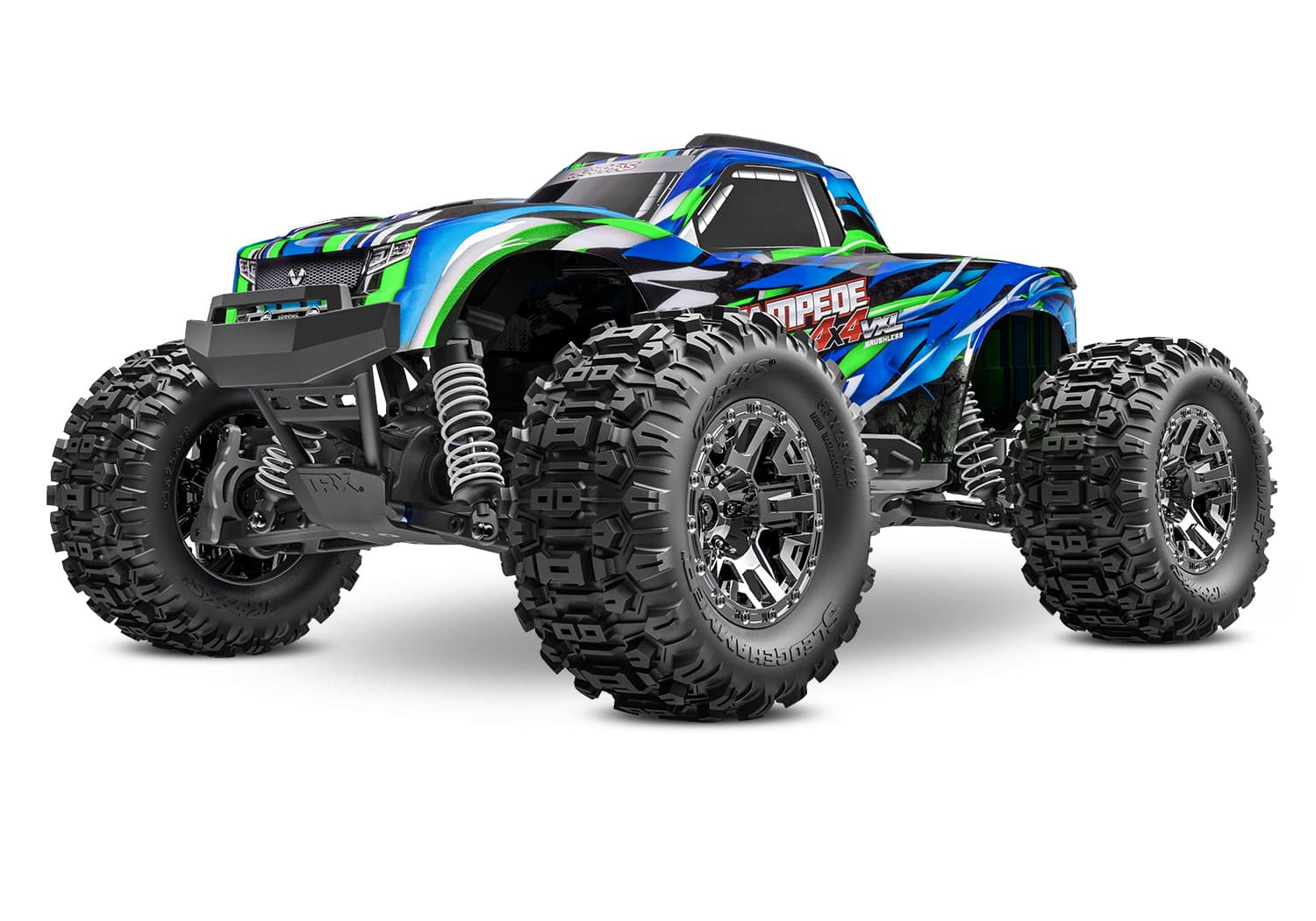
The Stampede 4X4 VXL absolutely smokes the LMT on top speed: 65 mph versus 40 mph. That's a 25 mph advantage that makes the Stampede feel like a different class of vehicle. It achieves this on 3S power with a Velineon brushless system that's lighter and more efficiently geared for speed. The LMT also runs 3S but its power goes into moving 11.13 lbs of truck through a drivetrain designed for torque, not velocity. The Stampede's 6.95-lb weight means it accelerates harder, stops shorter, and changes direction more quickly.
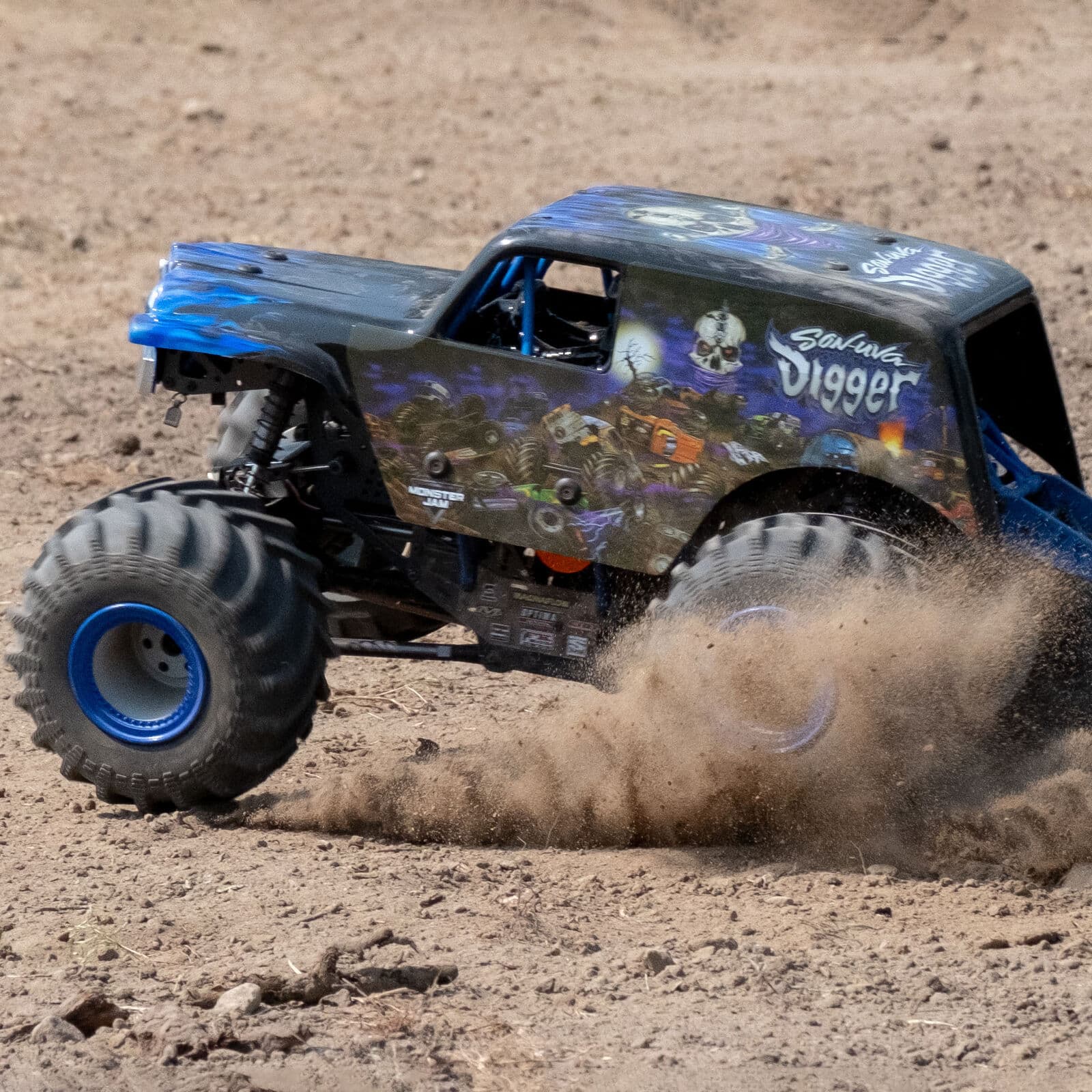
But the LMT does things the Stampede physically cannot. That solid rear axle enables standing backflips from flat ground. Consistent, repeatable, crowd-pleasing backflips. The Stampede has independent suspension that's great for absorbing bumps at speed but useless for freestyle stunts. The LMT also rolls on massive tires that look authentic to monster jam, while the Stampede's tires are smaller and more performance-oriented.
Dimensions reflect the scale gap. The LMT stretches 22.84 inches long and 17.52 inches wide, dwarfing the Stampede's 16.34-inch length and 12.75-inch width. The LMT has 3.54 inches of ground clearance versus 2.75 for the Stampede. The LMT is just a bigger truck that occupies more space and makes a bigger visual impression.
Waterproofing goes to the Stampede. Traxxas seals their electronics from the factory. Losi does not on the LMT. For a truck you'll inevitably drive through wet grass and puddles, this matters. The Stampede handles any conditions without worry. The LMT needs electronic protection mods for wet environments.
Battery specs match at 5000mAh 3S for both trucks. Runtime is similar at 15-20 minutes of hard driving. The Stampede's lighter weight gives it slightly better efficiency, but the difference is marginal. Battery costs are identical since both use the same class of pack.
Value favors the Stampede at a modest price gap for the LMT. You get a faster truck for noticeably less. The Stampede is also easier to maintain with its simpler drivetrain and Traxxas's legendary parts availability. The LMT's solid rear axle is tougher but specialized, and replacement parts require either online ordering or a well-stocked hobby shop.
The honest recommendation depends entirely on what excites you. If you want to go fast and bash hard with minimal fuss, the Stampede 4X4 VXL is the better truck by every practical measure. If you want to recreate monster jam freestyle, do backflips for your kids, and own a truck that looks like it rolled off the monster jam circuit, the LMT offers an experience worth the extra money and the speed sacrifice.
The Verdict
Losi LMT Son-uva Digger
Monster jam in your backyard. The LMT's solid axle does things no Traxxas truck can attempt. Worth extra money if stunts matter to you.
Full reviewTraxxas Stampede 4X4 VXL
25 mph faster, noticeably cheaper, waterproof. The Stampede 4X4 VXL wins on paper. The LMT wins on YouTube.
Full reviewWhere to Buy
Losi LMT Son-uva Digger
Traxxas Stampede 4X4 VXL
Prices may vary. We may earn a commission on purchases at no extra cost to you.
Related Comparisons
Losi LMT Son-uva Digger vs Arrma Kraton 6S BLX
monster truckLosi LMT Son-uva Digger vs Arrma Big Rock 3S BLX
monster truckLosi LMT Son-uva Digger vs Arrma Outcast 6S BLX
monster truckLosi LMT Son-uva Digger vs Losi LMT Grave Digger
monster truckLosi LMT Son-uva Digger vs Arrma Granite 3S BLX
monster truckLosi LMT Son-uva Digger vs Arrma Notorious 6S BLX
monster truckRelated Guides
How Fast Are RC Cars? Speed Guide by Category
Real-world RC car speeds by category and price range. From 15 mph mini crawlers to 100+ mph speed machines.
Brushed vs Brushless Motors: What's the Difference?
How brushed and brushless motors work, what the performance differences are, and which one to pick.
2WD vs 4WD RC Cars: Which Is Better?
2WD and 4WD compared across handling, speed, durability, and terrain. Plus which drivetrain to pick.