Arrma Outcast 6S BLX vs Losi LMT Son-uva DiggerWhich Should You Buy?
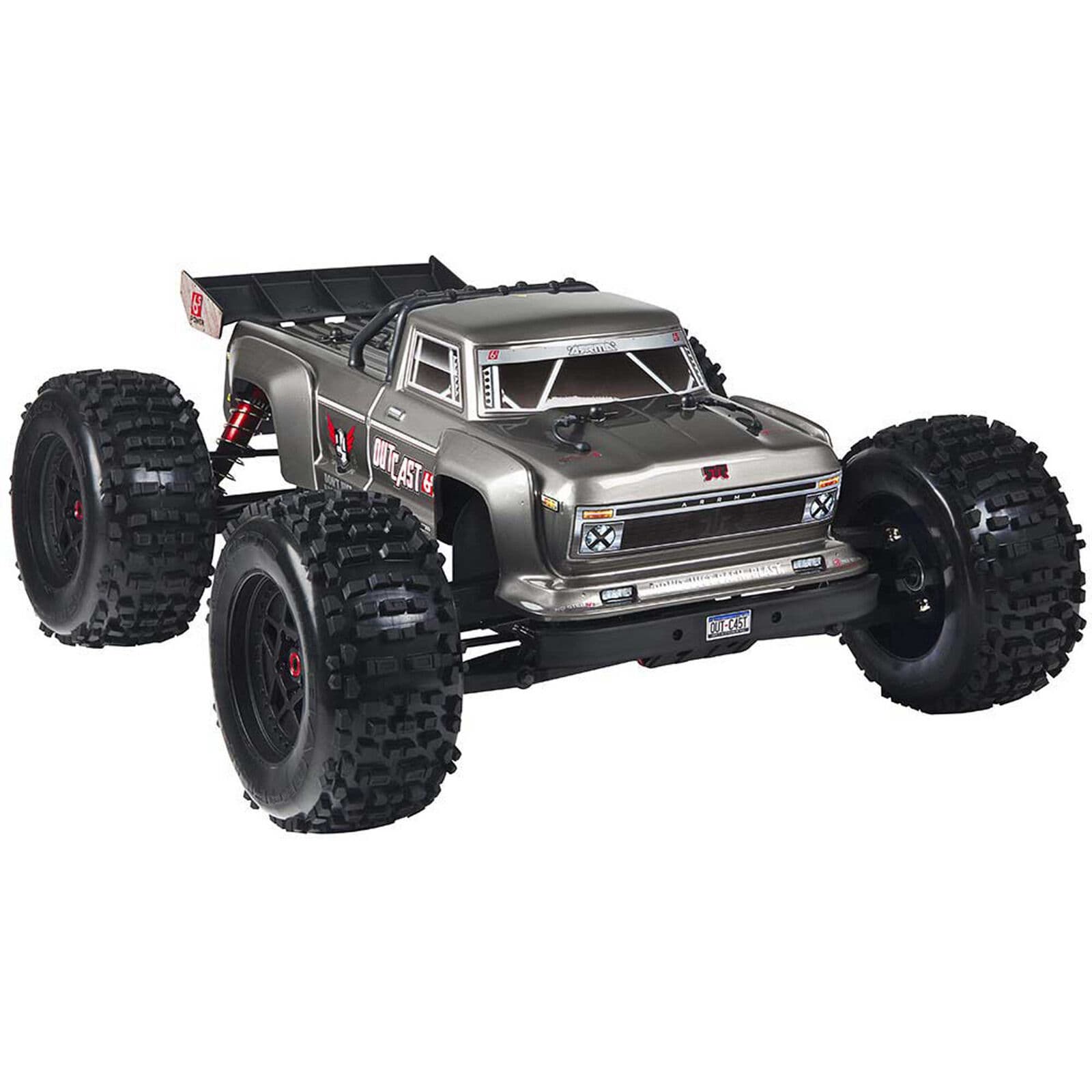

Quick Take
Two 1/8-scale monster trucks with very different personalities. The Outcast is a speed-and-stunt machine, the LMT is a slow-motion freestyle trick truck. If backflips at walking speed sound boring, get the Outcast. If that sounds like the whole point, get the LMT.
At a Glance
Arrma Outcast 6S BLX
Losi LMT Son-uva Digger
Spec Comparison
Spec
Arrma Outcast 6S BLX
Losi LMT Son-uva Digger
Price
$489.99
$499.99
Performance
Top Speed
60 mph
40 mph
Drivetrain
4WD
4WD
Motor Type
Brushless
Brushless
Dimensions
Length
21.46 in
22.84 in
Width
16.14 in
17.52 in
Height
8.46 in
10.63 in
Wheelbase
13.15 in
13.39 in
Ground Clearance
2.17 in
3.54 in
Chassis
Weight
10.58 lbs
11.13 lbs
Battery
5000mAh 6S
5000mAh 3S
Features
Waterproof
Yes
No
Detailed Comparison
The Arrma Outcast 6S BLX and the Losi LMT Son-uva Digger represent the two extremes of 1/8 monster trucking. The Outcast, powered by 6S, rips to 60 mph and launches itself into the stratosphere off every ramp. The LMT tops out around 40 mph on 3S and has no interest in going faster. Instead, it has a solid rear axle design that lets it pull off authentic monster jam-style tricks: two-wheel driving, nose stands, and slow controlled backflips using just throttle and steering. These are totally different experiences, and most people have a strong preference for one over the other.
Performance depends on what you value. Pure speed and acceleration go to the Outcast every time. Its 6S brushless setup produces ridiculous torque and the 4WD independent suspension handles high-speed runs far better than the LMT's solid axle design. But the LMT's solid axles are the whole point. That design, combined with the CNC ring and pinion gears and the deliberate weight distribution, allows tricks that the Outcast physically cannot do. The LMT weighs 11.13 lbs with 3.54 inches of ground clearance and a wider stance at 17.52 inches. The Outcast is lighter at 10.58 lbs with 2.17 inches of clearance and a narrower 16.14-inch width. For bashing over rough terrain at speed, the Outcast is superior. For low-speed technical freestyle on a flat surface, the LMT dominates.
Durability is respectable on both, but with different failure points. The Outcast's independent suspension and metal-braced chassis hold up well to high-speed crashes and big jumps. The 21.46-inch length and 13.15-inch wheelbase give it a stable platform for landings. The LMT's solid axle design is inherently strong and simple, but the gears and u-joints can wear faster under aggressive use, especially if you are doing repeated backflip attempts that stress the drivetrain in unusual ways. One important distinction: the Outcast is waterproof, the LMT is not. Running the LMT through puddles or wet grass requires extra caution or aftermarket waterproofing of the electronics.
Battery and running costs heavily favor the LMT. It runs on 3S, which means cheaper batteries, longer run times, and less wear on components from heat and current draw. The Outcast on 6S chews through packs faster and puts more stress on everything from the motor to the spur gear. A 5000mAh 3S pack in the LMT provides generous runtime since the motor rarely runs at full tilt during freestyle sessions. You can easily get 20-25 minutes of trick driving. The Outcast on 6S at full attack burns through a pack in 15 minutes or less.
The price gap matters too. The LMT Son-uva Digger comes in at a noticeably lower price than the Outcast. That price difference grows when you factor in battery costs over time. The LMT also benefits from a huge aftermarket community, especially for monster jam-style upgrades like licensed body sets, foam tires, and wheel weights. The Outcast has broad Arrma aftermarket support too, but the LMT community is uniquely passionate and creative with their builds. If speed and air are your priority, the Outcast wins convincingly. If freestyle tricks and the monster jam experience are what draw you in, the LMT is in a class of its own.
The Verdict
Arrma Outcast 6S BLX
Raw 6S power, enormous jumps, and a truck that takes hits like it was designed for them. Because it was.
Full reviewLosi LMT Son-uva Digger
Standing backflips at walking speed. The LMT does monster jam freestyle that the Outcast can't replicate at any speed.
Full reviewWhere to Buy
Arrma Outcast 6S BLX
Losi LMT Son-uva Digger
Prices may vary. We may earn a commission on purchases at no extra cost to you.
Related Comparisons
Arrma Outcast 6S BLX vs Arrma Kraton 6S BLX
monster truckArrma Outcast 6S BLX vs Arrma Big Rock 3S BLX
monster truckArrma Outcast 6S BLX vs Traxxas Maxx V2
monster truckArrma Outcast 6S BLX vs Traxxas Stampede 4X4 VXL
monster truckArrma Outcast 6S BLX vs Traxxas Hoss 4X4 VXL
monster truckArrma Outcast 6S BLX vs Losi LMT Grave Digger
monster truckRelated Guides
How Fast Are RC Cars? Speed Guide by Category
Real-world RC car speeds by category and price range. From 15 mph mini crawlers to 100+ mph speed machines.
Brushed vs Brushless Motors: What's the Difference?
How brushed and brushless motors work, what the performance differences are, and which one to pick.
2WD vs 4WD RC Cars: Which Is Better?
2WD and 4WD compared across handling, speed, durability, and terrain. Plus which drivetrain to pick.