Arrma Notorious 6S BLX vs Losi LMT Son-uva DiggerWhich Should You Buy?
Quick Take
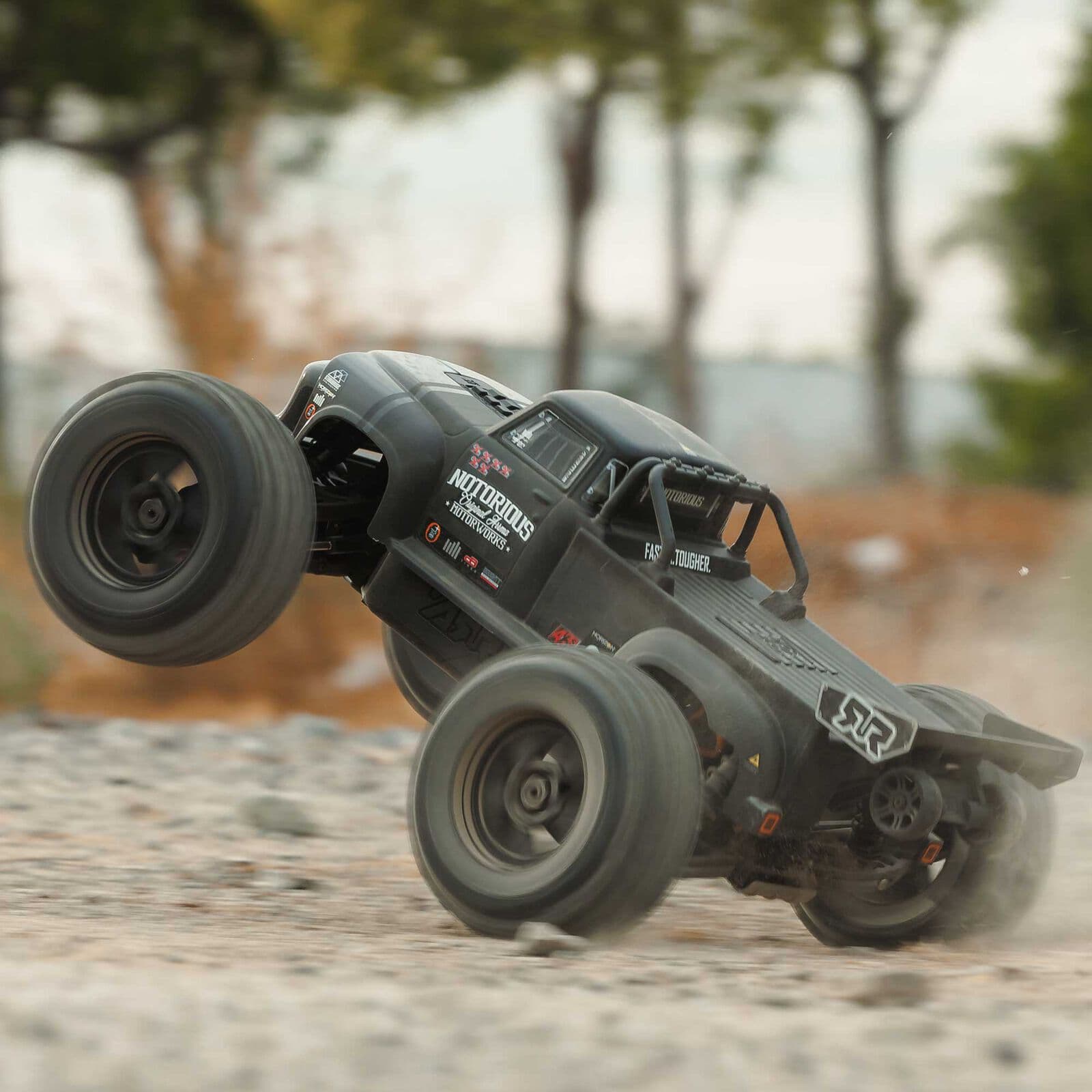
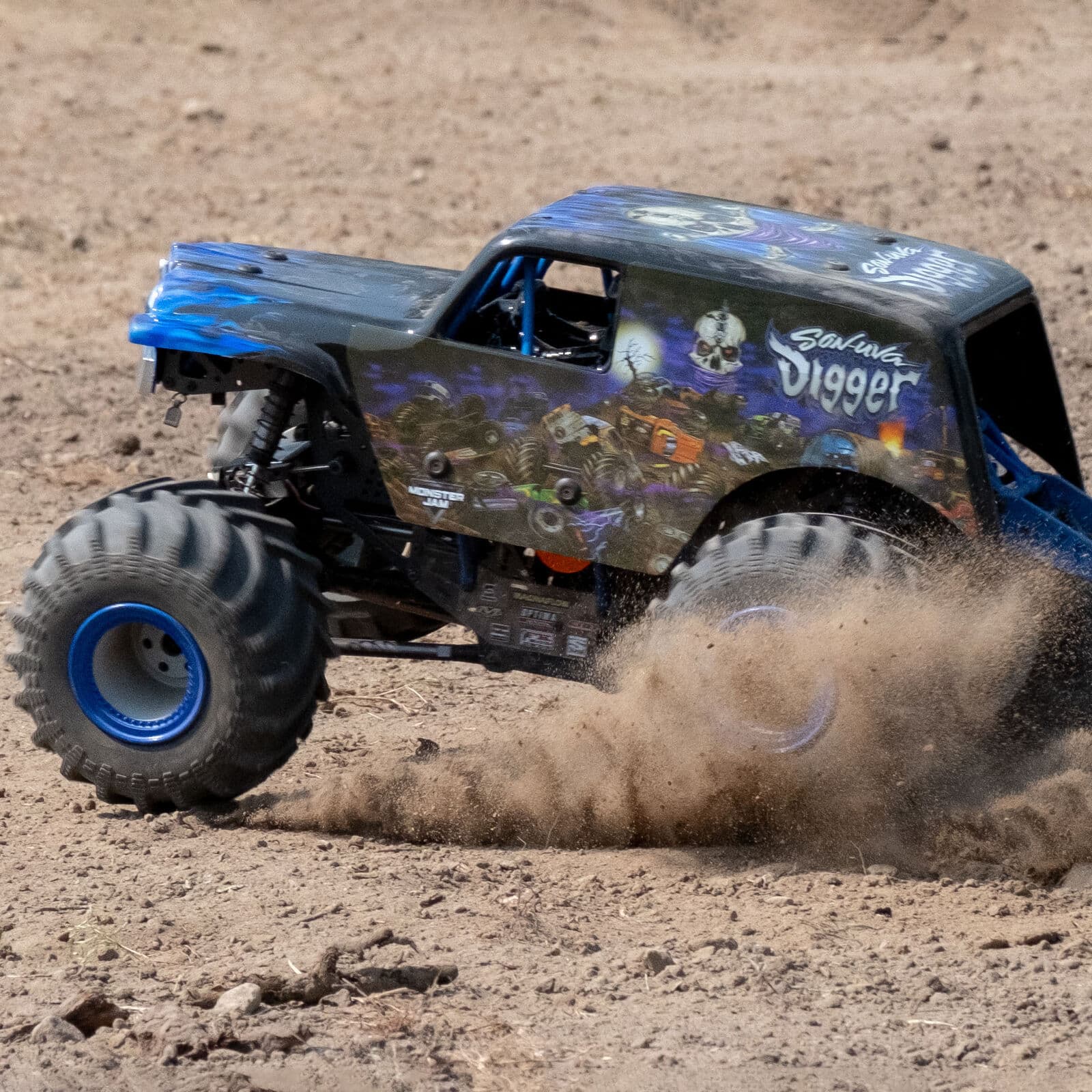
Same matchup dynamic as the Grave Digger variant: 6S speed versus solid-axle monster jam authenticity. The Son-uva Digger body is different but the LMT platform underneath is identical. Comes down to raw power vs freestyle stunts.
At a Glance
Arrma Notorious 6S BLX
Losi LMT Son-uva Digger
Spec Comparison
Spec
Arrma Notorious 6S BLX
Losi LMT Son-uva Digger
Price
$699.99
$499.99
Performance
Top Speed
60 mph
40 mph
Drivetrain
4WD
4WD
Motor Type
Brushless
Brushless
Dimensions
Length
21.26 in
22.84 in
Width
18.15 in
17.52 in
Height
9.06 in
10.63 in
Wheelbase
12.91 in
13.39 in
Ground Clearance
2.17 in
3.54 in
Chassis
Weight
11.38 lbs
11.13 lbs
Battery
5000mAh 6S
5000mAh 3S
Features
Waterproof
Yes
No
Detailed Comparison
The Arrma Notorious 6S BLX and Losi LMT Son-uva Digger occupy the same 1/8 monster truck space but chase completely different goals. The Notorious runs 6S brushless power to hit 60 mph with enough torque to rip wheelies on command and launch off any obstacle. The LMT Son-uva Digger runs 3S for a more measured 40 mph, because outright speed was never the design objective. The LMT's solid rear axle, CNC diff locker, and purpose-built suspension geometry exist to recreate monster jam freestyle driving: sustained two-wheel driving, standing backflips, and long wheelies that the Notorious's independent suspension layout cannot sustain in the same effortless way.
The trucks weigh nearly the same: 11.38 lbs for the Notorious and 11.13 lbs for the Son-uva Digger. Neither has a meaningful weight advantage. The LMT is physically larger, though, stretching 22.84 inches long with a 13.39-inch wheelbase versus the Notorious at 21.26 inches with a 12.91-inch wheelbase. Ground clearance heavily favors the LMT at 3.54 inches versus 2.17, a 1.37-inch gap that makes a real difference when driving over rough terrain and debris. The Notorious compensates with its wider stance at 18.15 inches compared to 17.52, providing better lateral stability at speed and during aggressive cornering. These dimensional differences reflect each truck's core purpose: the LMT is tall and long for obstacle clearance and stability during slow-speed freestyle stunts, while the Notorious is wide and relatively low for maximum high-speed stability.
Waterproofing gives the Notorious a major practical edge. It's fully sealed from the factory. The LMT is not. If your bashing spots include puddles, wet grass, morning dew, or any moisture at all, the Notorious won't care while the LMT needs either careful avoidance of water or aftermarket waterproofing treatment. This is a significant limitation for a truck that is mid-range priced. Losi could have done better here. Both trucks run 5000mAh packs, but the Notorious on 6S versus the LMT on 3S means different battery costs and charger requirements. The 6S setup for the Notorious costs roughly double per battery, and you'll need a 6S-capable charger if you don't already own one.
Pricing puts the Notorious at its mid-range price and the LMT at its mid-range price a modest price sticker difference that effectively disappears when you factor in the Notorious's more expensive battery requirements. Total cost of ownership is actually quite similar between the two platforms over time. The question isn't really about value; it's about what kind of driving gives you the most satisfaction. The Notorious is the better all-around basher with more speed, more power, waterproof construction, and works on any terrain. The LMT is the better freestyle truck with solid-axle capabilities that the Notorious's platform physically cannot replicate regardless of how much power you add. There's genuine magic in holding a wheelie for a full minute on the LMT's solid axle setup, and no amount of 6S power gives the Notorious that same effortless balance trick.
The Verdict
Arrma Notorious 6S BLX
6S power, waterproof, and built to fly. The Notorious is the stunt basher that also handles rain without blinking.
Full reviewLosi LMT Son-uva Digger
Backflips from a standstill. The LMT's solid axle does tricks the Notorious can't touch. Slower, not waterproof, but way more entertaining at a skate park.
Full reviewWhere to Buy
Arrma Notorious 6S BLX
Losi LMT Son-uva Digger
Prices may vary. We may earn a commission on purchases at no extra cost to you.
Related Comparisons
Arrma Notorious 6S BLX vs Arrma Kraton 6S BLX
monster truckArrma Notorious 6S BLX vs Traxxas Maxx V2
monster truckArrma Notorious 6S BLX vs Traxxas Hoss 4X4 VXL
monster truckArrma Notorious 6S BLX vs Arrma Outcast 6S BLX
monster truckArrma Notorious 6S BLX vs Losi LMT Grave Digger
monster truckArrma Notorious 6S BLX vs Traxxas XRT 8S
monster truckRelated Guides
How Fast Are RC Cars? Speed Guide by Category
Real-world RC car speeds by category and price range. From 15 mph mini crawlers to 100+ mph speed machines.
Brushed vs Brushless Motors: What's the Difference?
How brushed and brushless motors work, what the performance differences are, and which one to pick.
2WD vs 4WD RC Cars: Which Is Better?
2WD and 4WD compared across handling, speed, durability, and terrain. Plus which drivetrain to pick.