Arrma Granite 3S BLX vs Losi LMT Son-uva DiggerWhich Should You Buy?
Quick Take
A budget-friendly 1/10 basher against a premium 1/8 solid-axle monster truck built for freestyle tricks. The Granite 3S is faster and cheaper. The LMT Son-uva Digger is bigger, heavier, and designed for an entirely different kind of fun.
At a Glance
Arrma Granite 3S BLX
Losi LMT Son-uva Digger
Spec Comparison
Spec
Arrma Granite 3S BLX
Losi LMT Son-uva Digger
Price
$339.99
$499.99
Performance
Top Speed
50 mph
40 mph
Drivetrain
4WD
4WD
Motor Type
Brushless
Brushless
Dimensions
Length
18.74 in
22.84 in
Width
13.50 in
17.52 in
Height
7.70 in
10.63 in
Wheelbase
11.30 in
13.39 in
Ground Clearance
1.97 in
3.54 in
Chassis
Weight
6.20 lbs
11.13 lbs
Battery
3200mAh 3S
5000mAh 3S
Features
Waterproof
Yes
No
Detailed Comparison
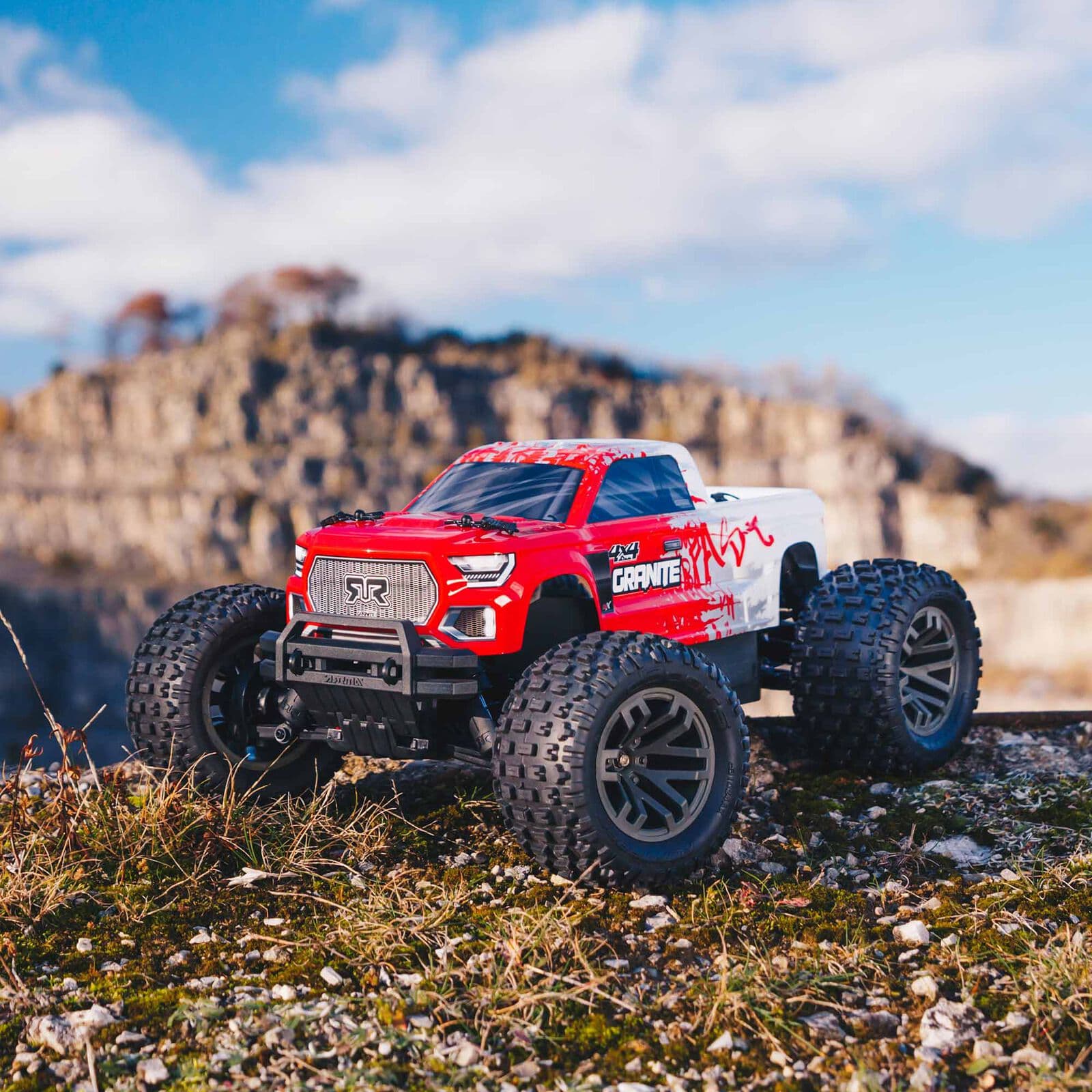
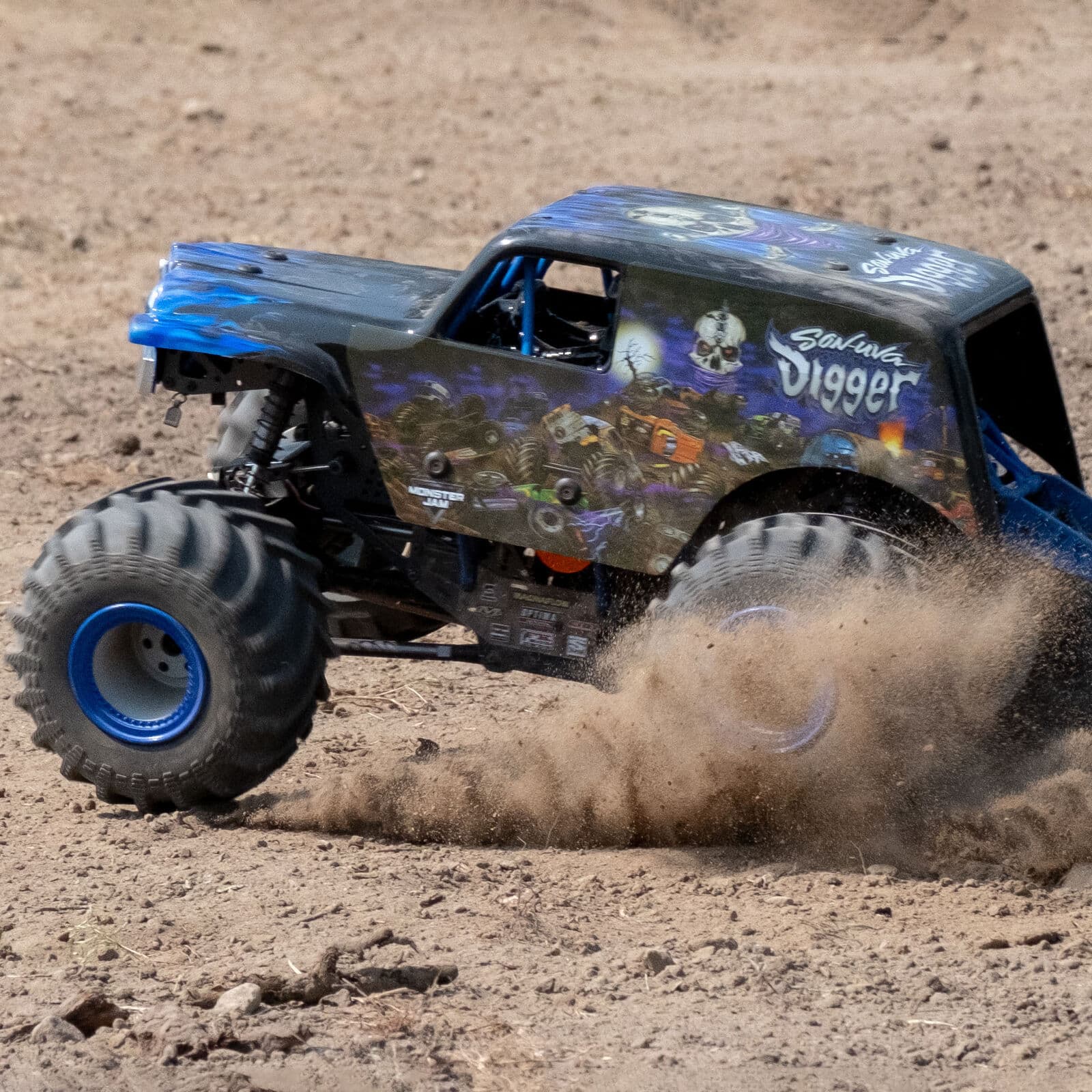
The Arrma Granite 3S BLX and Losi LMT Son-uva Digger are both monster trucks on paper, but they occupy very different niches in the RC world. The Granite is a compact 1/10 scale basher hitting 50 mph on 3S power, while the LMT is a 1/8 scale solid-axle monster truck capped at around 40 mph. Speed isn't really the point with the LMT, though. Its solid rear axle and CNC diff locker make it a wheelie and backflip machine designed to mimic real monster jam trucks. The Granite, by contrast, is your classic all-around basher: quick, nimble at 6.2 lbs, and ready for general mayhem on any terrain you can find.
Performance-wise, the Granite's 50 mph top speed gives it a clear edge in raw velocity over the LMT's 40 mph ceiling. The Granite's brushless 3S system pushes punchy acceleration through its 4WD drivetrain, and the lighter weight means it changes direction quickly and feels responsive on the sticks. The LMT is a different animal entirely. Its solid rear axle allows weight transfer that independent suspension trucks just can't replicate, meaning you can hold wheelies indefinitely and pull standing backflips with practice. The LMT's 4WD system is tuned for low-speed control and stunt execution rather than outright speed. If you've ever watched a monster jam freestyle event and wanted to recreate those moves, the LMT's chassis geometry exists specifically for that purpose.
Build quality tells two very different stories. The LMT is a heavier, beefier machine at 11.13 lbs with thick aluminum components and a chassis that can absorb serious impacts from repeated vertical drops. Its 3.54 inches of ground clearance dwarfs the Granite's 1.97 inches, and the larger 22.84-inch length gives it a commanding physical presence. The Granite uses Arrma's proven construction with composite materials that hold up well to everyday bashing, but it's not built for the kind of repeated nose-first landings the LMT invites. At 18.74 inches long with an 11.3-inch wheelbase, the Granite is meaningfully more compact and easier to transport and store. For backyard spaces and smaller parks, the Granite's footprint is actually an advantage.
Battery and runtime heavily favor the LMT on capacity. It runs 5000mAh 3S packs compared to the Granite's 3200mAh 3S setup. That larger battery in the heavier truck roughly evens out runtime, so expect similar run times around 20-25 minutes for both. One critical practical difference: the Granite is fully waterproof while the LMT is not. If you bash in wet conditions regularly, even occasionally driving through puddles or on dewy grass, the Granite has a real advantage that shouldn't be overlooked. The LMT needs aftermarket waterproofing to handle any moisture safely.
Value is where this gets interesting. The Granite 3S at its price point is considerably cheaper than the LMT. For pure speed-per-dollar, the Granite wins easily and it isn't close. But they're not really competing for the same buyer. The LMT gives you a monster jam experience with authentic licensing, solid axle stunts, and a physical presence that the smaller Granite just can't match. If you want a fast basher that handles everything competently, the Granite is hard to beat at its price. If you want to do wheelie contests and freestyle runs on dedicated tracks and don't care about top speed numbers, the LMT is purpose-built for exactly that and nothing else does it as well in this price range.
The Verdict
Arrma Granite 3S BLX
The Granite is considerably cheaper, 10 mph faster, and waterproof out of the box. For pure bashing, it's the better truck.
Full reviewLosi LMT Son-uva Digger
Get the LMT if monster jam stunts are your thing. Nothing else in this price range does wheelies and backflips like this. Just budget for waterproofing it yourself.
Full reviewWhere to Buy
Arrma Granite 3S BLX
Losi LMT Son-uva Digger
Prices may vary. We may earn a commission on purchases at no extra cost to you.
Related Comparisons
Arrma Granite 3S BLX vs Arrma Big Rock 3S BLX
monster truckArrma Granite 3S BLX vs Traxxas Stampede 4X4 VXL
monster truckArrma Granite 3S BLX vs Traxxas Hoss 4X4 VXL
monster truckArrma Granite 3S BLX vs Arrma Outcast 6S BLX
monster truckArrma Granite 3S BLX vs Losi LMT Grave Digger
monster truckArrma Granite 3S BLX vs Redcat Volcano EPX Pro
monster truckRelated Guides
How to Choose Your First RC Car
A beginner's guide to picking your first RC car, from categories and budgets to what actually matters.
How Fast Are RC Cars? Speed Guide by Category
Real-world RC car speeds by category and price range. From 15 mph mini crawlers to 100+ mph speed machines.
Brushed vs Brushless Motors: What's the Difference?
How brushed and brushless motors work, what the performance differences are, and which one to pick.