Arrma Typhon 3S BLX vs Team Associated RC10B7 Team KitWhich Should You Buy?
Quick Take
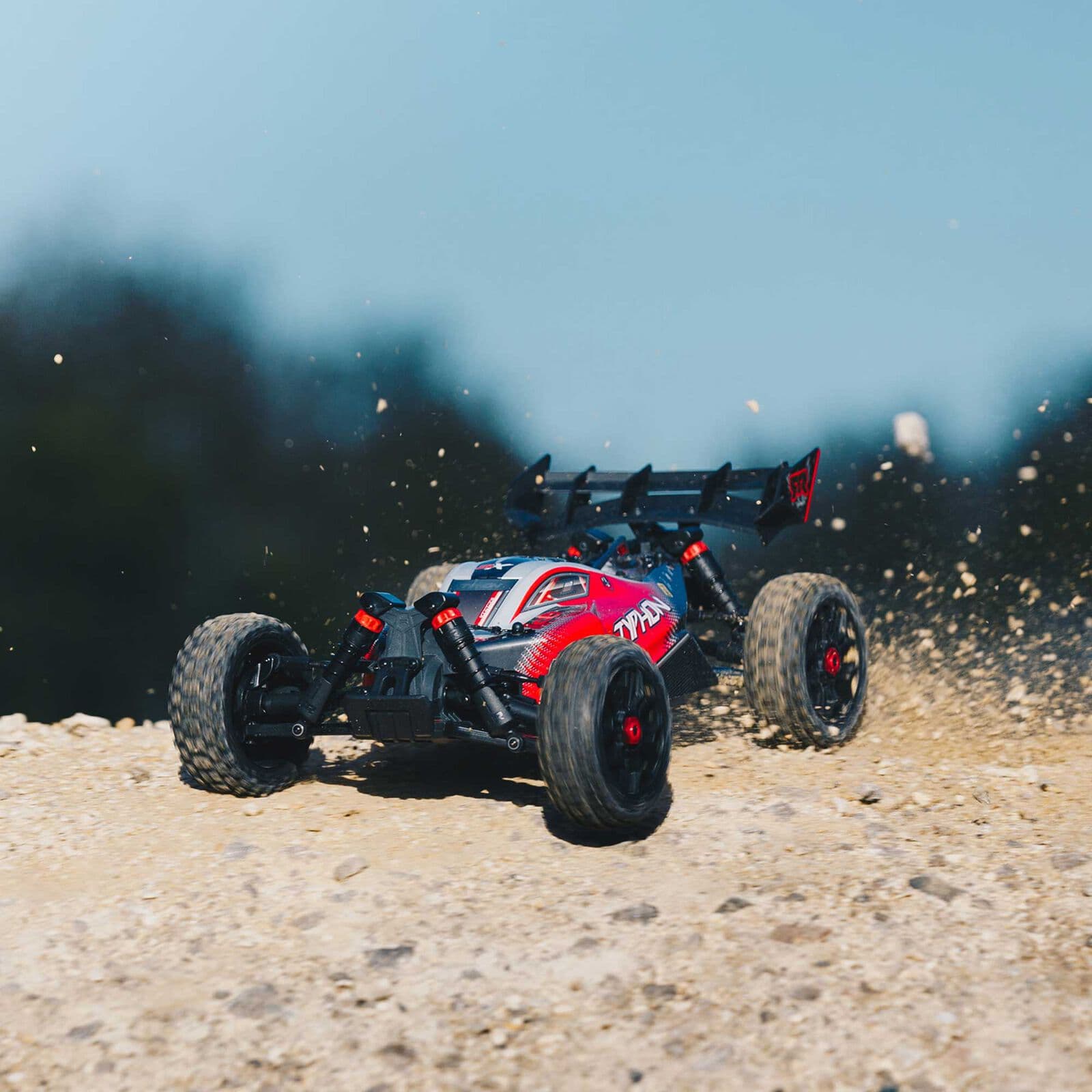
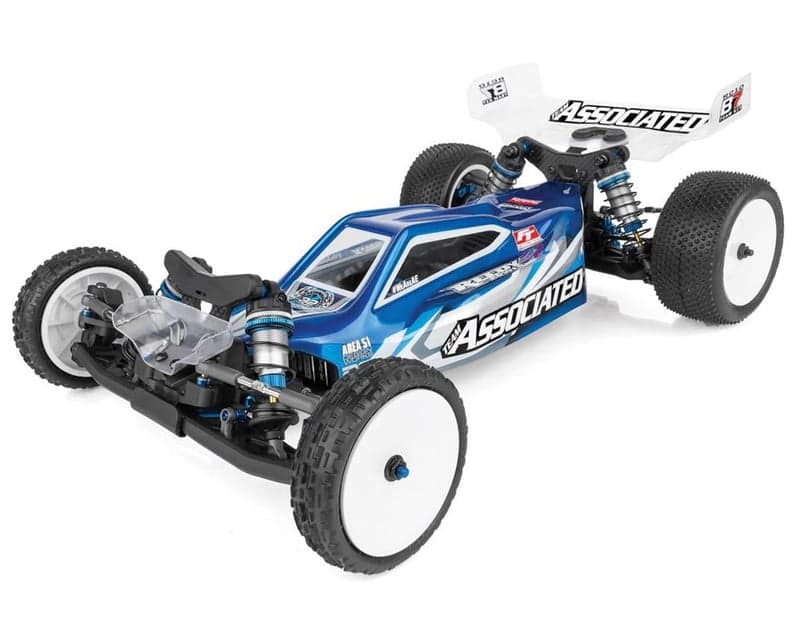
A basher versus a racer. The Typhon 3S is a ready-to-run 4WD backyard buggy. The RC10B7 Team Kit is a competition-grade 2WD platform sold unassembled with no electronics. Completely different buyers, completely different goals.
At a Glance
Arrma Typhon 3S BLX
Team Associated RC10B7 Team Kit
Spec Comparison
Spec
Arrma Typhon 3S BLX
Team Associated RC10B7 Team Kit
Price
$339.99
$399.99
Performance
Top Speed
50 mph
N/A
Drivetrain
4WD
2WD
Motor Type
Brushless
Brushless
Dimensions
Length
19.69 in
15.75 in
Width
11.42 in
9.45 in
Height
5.91 in
5.12 in
Wheelbase
12.52 in
10.83 in
Ground Clearance
1.18 in
0.98 in
Chassis
Weight
5.73 lbs
3.59 lbs
Battery
3200mAh 3S
6000mAh 2S
Features
Waterproof
Yes
No
Detailed Comparison
The Arrma Typhon 3S BLX and Team Associated RC10B7 Team Kit sit in the same buggy category but serve entirely different purposes. The Typhon 3S is a ready-to-run basher that arrives with everything except a battery. The RC10B7 is a bare chassis kit aimed at competitive racers who already own electronics, motors, and tires. Comparing them requires acknowledging this fundamental difference.
The Typhon 3S hits 50 mph out of the box with its included brushless motor and 3S battery compatibility. The RC10B7 has no listed top speed because it ships without a motor, ESC, or battery. Its ultimate performance depends entirely on what electronics the owner installs. In a typical club racing setup with a 2S 6000mAh pack and a proper 17.5T motor, the RC10B7 won't approach 50 mph, but it will be surgically precise on a groomed track. Different goals entirely.
The RC10B7 weighs just 3.59 lbs. The Typhon 3S weighs 5.73 lbs. That 2+ lb difference reflects the RC10B7's competition DNA: every gram is scrutinized. Its 2WD drivetrain reduces mechanical complexity, weight, and drag. On a prepared racing surface, a well-tuned RC10B7 will drive circles around a Typhon 3S. But take both to a gravel lot, and the Typhon's 4WD, heavier mass, and higher ground clearance of 1.18 inches versus 0.98 make it far more capable.
Build quality is where the RC10B7 justifies its existence. Team Associated's B7 platform represents decades of racing development. The tolerances are tighter, the aluminum is machined precisely, and every component is adjustable. Ride height, camber, toe, shock oil weight, spring rates, diff fluid, slipper clutch tension, everything can be dialed in for specific track conditions. The Typhon 3S has basic adjustability and uses good-quality plastics, but it's not in the same league for tunability.
Battery and runtime comparisons are skewed by the kit nature of the RC10B7. The Typhon 3S uses 3200mAh 3S packs for 15-20 minutes of bashing. The RC10B7 typically runs 6000mAh 2S packs, which provide longer runtime in the lower-power racing application. A typical 8-minute race qualifier doesn't tax a 6000mAh pack at all. If you're comparing fun-per-dollar for casual driving, the Typhon's included electronics make this a non-contest.
Value is entirely context-dependent. The Typhon 3S at its price point gives you a complete, ready-to-drive 4WD buggy. The RC10B7 at its price point gives you a bare chassis that needs a significant amount more in electronics, motor, servo, tires, and a body to become driveable. Total investment for a race-ready RC10B7 easily a substantial amount. But if you're racing competitively at a local track, the RC10B7 is the better investment because the Typhon 3S just can't compete against purpose-built race buggies.
Neither truck is waterproof, which matters only for the Typhon since it's the one more likely to see puddles and wet grass. The Typhon 3S claims waterproof electronics, actually. The RC10B7's racing electronics are typically not waterproof and shouldn't encounter water regardless.
The Verdict
Arrma Typhon 3S BLX
Just want to drive? Get the Typhon 3S. Charge a battery, hit the field. No kit building, no sourcing electronics. Immediate fun.
Full reviewTeam Associated RC10B7 Team Kit
For racers only. The RC10B7 needs your own electronics, a track, and the patience to tune it. But on race day, it's a podium car.
Full reviewWhere to Buy
Arrma Typhon 3S BLX
Team Associated RC10B7 Team Kit
Prices may vary. We may earn a commission on purchases at no extra cost to you.
Related Comparisons
Related Guides
How to Choose Your First RC Car
A beginner's guide to picking your first RC car, from categories and budgets to what actually matters.
Brushed vs Brushless Motors: What's the Difference?
How brushed and brushless motors work, what the performance differences are, and which one to pick.
2WD vs 4WD RC Cars: Which Is Better?
2WD and 4WD compared across handling, speed, durability, and terrain. Plus which drivetrain to pick.