Traxxas E-Revo 2.0 VXL vs Traxxas SledgeWhich Should You Buy?
Quick Take
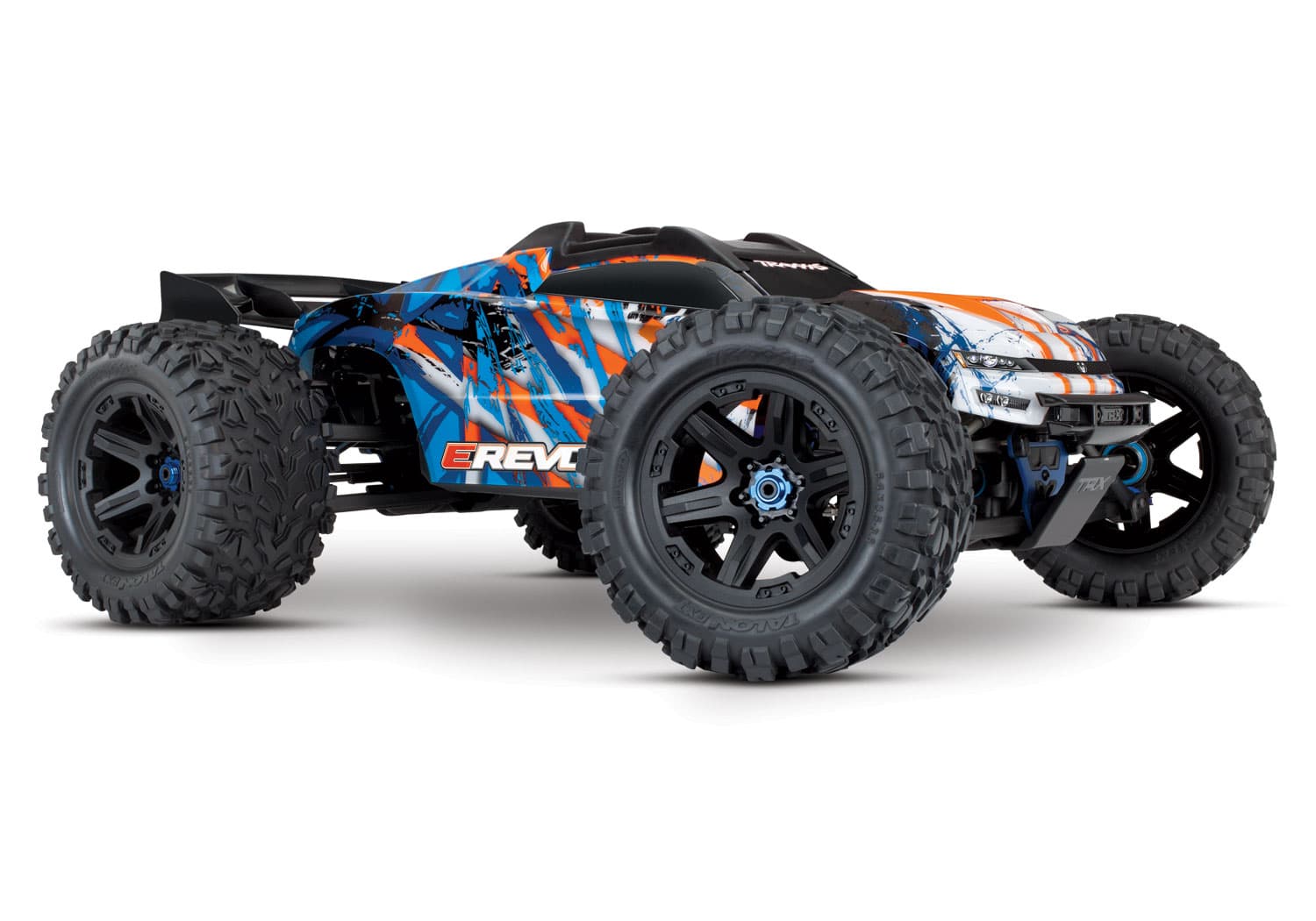
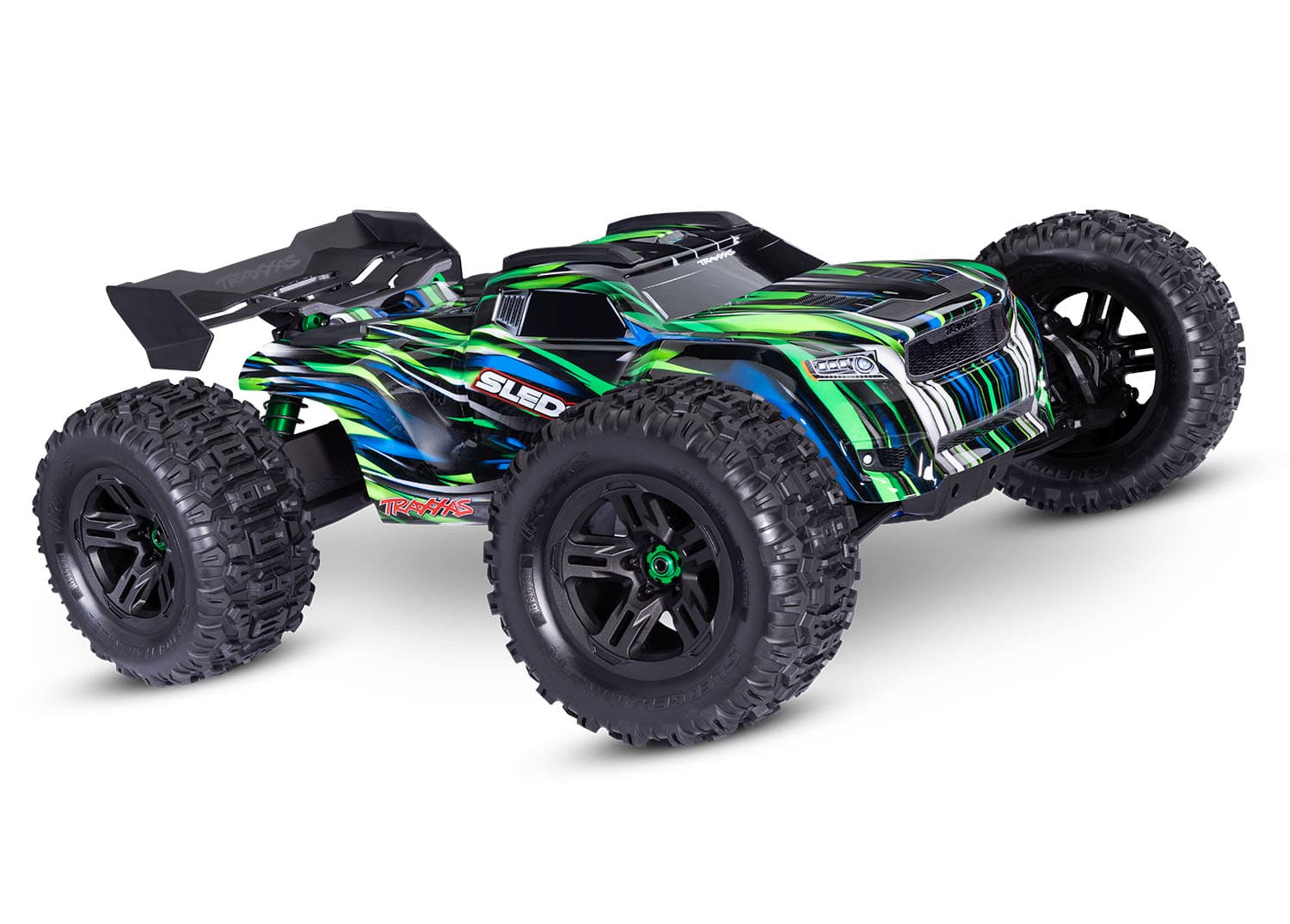
Two Traxxas truggies from different weight classes squaring off. The E-Revo 2.0 VXL is the faster 1/10 scale option running dual 4S packs, while the Sledge goes bigger at 1/8 scale on 6S power. The E-Revo is the speed play. The Sledge is the size play.
At a Glance
Traxxas E-Revo 2.0 VXL
Traxxas Sledge
Spec Comparison
Spec
Traxxas E-Revo 2.0 VXL
Traxxas Sledge
Price
$549.95
$799.95
Performance
Top Speed
70 mph
60 mph
Drivetrain
4WD
4WD
Motor Type
Brushless
Brushless
Dimensions
Length
22.76 in
25.43 in
Width
16.42 in
17.72 in
Height
8.39 in
8.27 in
Wheelbase
14.17 in
15.67 in
Ground Clearance
2.64 in
2.68 in
Chassis
Weight
11.34 lbs
11.13 lbs
Battery
5000mAh 4S x2
5000mAh 6S
Features
Waterproof
Yes
Yes
Detailed Comparison
The Traxxas E-Revo 2.0 VXL and Traxxas Sledge share the truggy DNA but take very different approaches to putting power down. The E-Revo hits 70 mph on its dual 4S battery setup, which is a genuine 10 mph advantage over the Sledge's 60 mph top speed on 6S. That speed gap is significant in real-world driving. The E-Revo's dual-battery configuration gives it a lower center of gravity, too, which helps with high-speed stability. The Sledge, however, runs a single 6S pack, making battery management simpler and slightly cheaper over time.
From a build perspective, the Sledge is the newer design and it shows. The Sledge's chassis is built around a 1/8 scale footprint at 25.43 inches long with a 15.67-inch wheelbase, giving it noticeably more stability over rough terrain compared to the E-Revo's 22.76-inch length and 14.17-inch wheelbase. Ground clearance is nearly identical at 2.68 inches versus 2.64 inches. Both trucks weigh roughly the same, with the E-Revo at 11.34 lbs and the Sledge at 11.13 lbs, so neither has a meaningful weight advantage. The Sledge's wider stance at 17.72 inches versus the E-Revo's 16.42 inches helps it resist rollovers during aggressive cornering. Traxxas also gave the Sledge a more modular chassis layout that makes accessing internals easier for maintenance, which is a small but appreciated quality-of-life improvement.
Battery and runtime is where the decision gets interesting. The E-Revo requires two 4S packs, which means you're buying batteries in pairs. Running dual 5000mAh 4S packs gives you solid capacity, but the upfront cost of two quality 4S lipos adds up fast. Expect to spend a moderate amount for a pair of decent 4S packs. The Sledge takes a single 6S pack, which typically runs a moderate amount. Per charge cycle, the Sledge is meaningfully cheaper to feed. Runtime on both trucks is comparable in the 15-20 minute range depending on driving style, but the Sledge's single-battery simplicity is a real daily convenience. No balancing two packs, no worrying about mismatched voltages, just plug in and go.
Durability under hard bashing favors the Sledge's newer engineering. Traxxas designed it with updated materials and geometry that benefit from lessons learned on the E-Revo platform. The E-Revo 2.0, while a major improvement over the original E-Revo, still carries some design compromises from its older architecture. The E-Revo has been around long enough that every weak point is well documented, though, and aftermarket reinforcement options are plentiful. The Sledge's aftermarket is growing but isn't as mature yet.
Value is where the E-Revo starts to pull ahead. At its mid-range price versus the Sledge's price you're saving a modest price and getting a faster truck. That's hard to argue against unless the Sledge's specific advantages matter to you. The Sledge justifies its premium with its more modern design, bigger platform, and better low-speed handling characteristics, but the E-Revo has been around long enough that parts availability and aftermarket support are excellent. Both are waterproof, both are brushless 4WD. The E-Revo wins on speed and price. The Sledge wins on platform size and modern engineering. For most bashers, the E-Revo's combination of speed and value makes it the smarter buy, but the Sledge is the better truck if you prioritize stability and plan to bash on rougher terrain where that wider stance and longer wheelbase shine.
The Verdict
Traxxas E-Revo 2.0 VXL
70 mph for a mid-range price. The E-Revo is the speed king here. You'll deal with dual battery packs, but that's a small price for 10 extra mph.
Full reviewTraxxas Sledge
The Sledge is the newer, more modern design with a wider stance and single-battery simplicity. Is that worth a modest price more? For rough-terrain bashers, probably yes.
Full reviewWhere to Buy
Traxxas E-Revo 2.0 VXL
Traxxas Sledge
Prices may vary. We may earn a commission on purchases at no extra cost to you.
Related Comparisons
Related Guides
How Fast Are RC Cars? Speed Guide by Category
Real-world RC car speeds by category and price range. From 15 mph mini crawlers to 100+ mph speed machines.
Brushed vs Brushless Motors: What's the Difference?
How brushed and brushless motors work, what the performance differences are, and which one to pick.
2WD vs 4WD RC Cars: Which Is Better?
2WD and 4WD compared across handling, speed, durability, and terrain. Plus which drivetrain to pick.