Arrma Talion 6S BLX vs Traxxas E-Revo 2.0 VXLWhich Should You Buy?
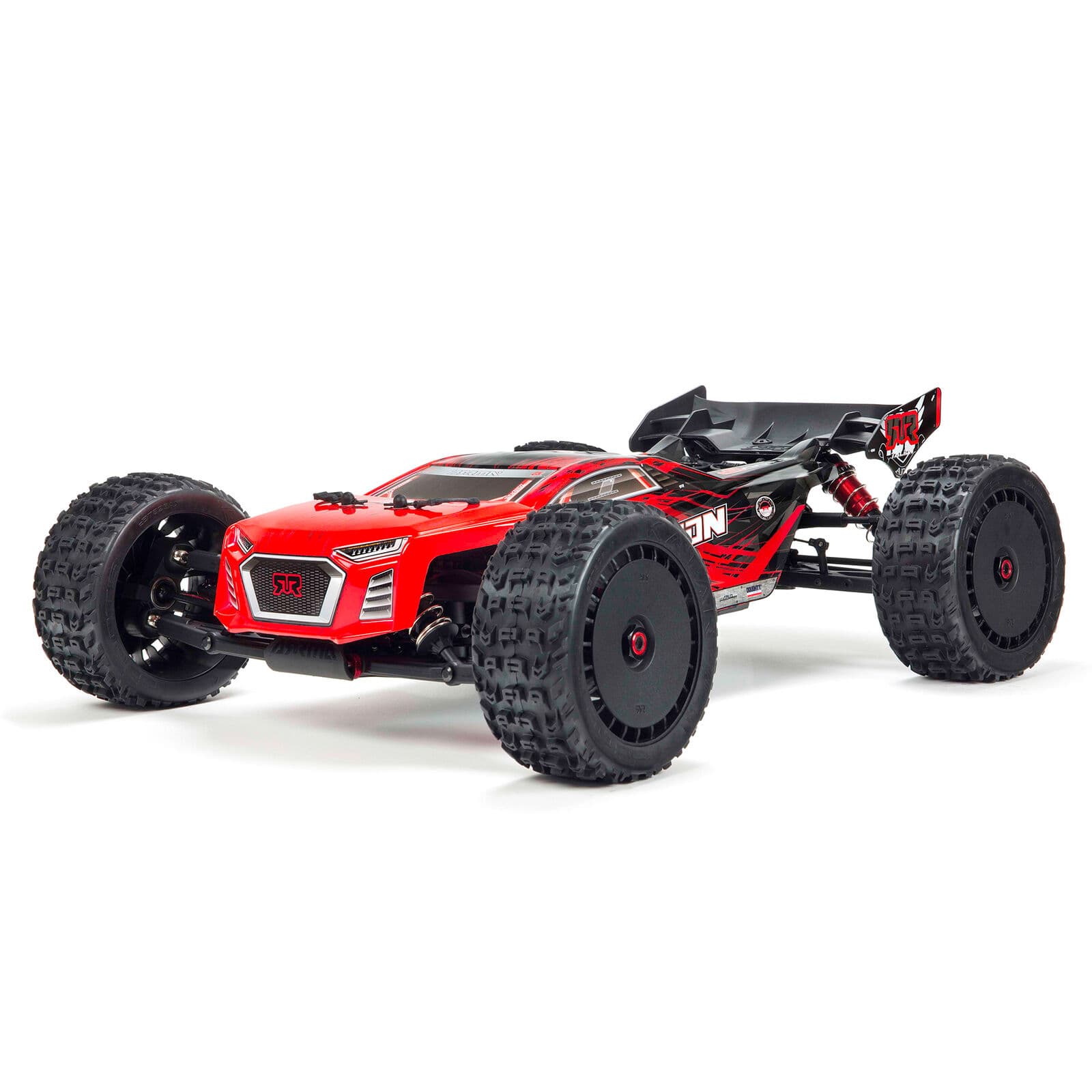
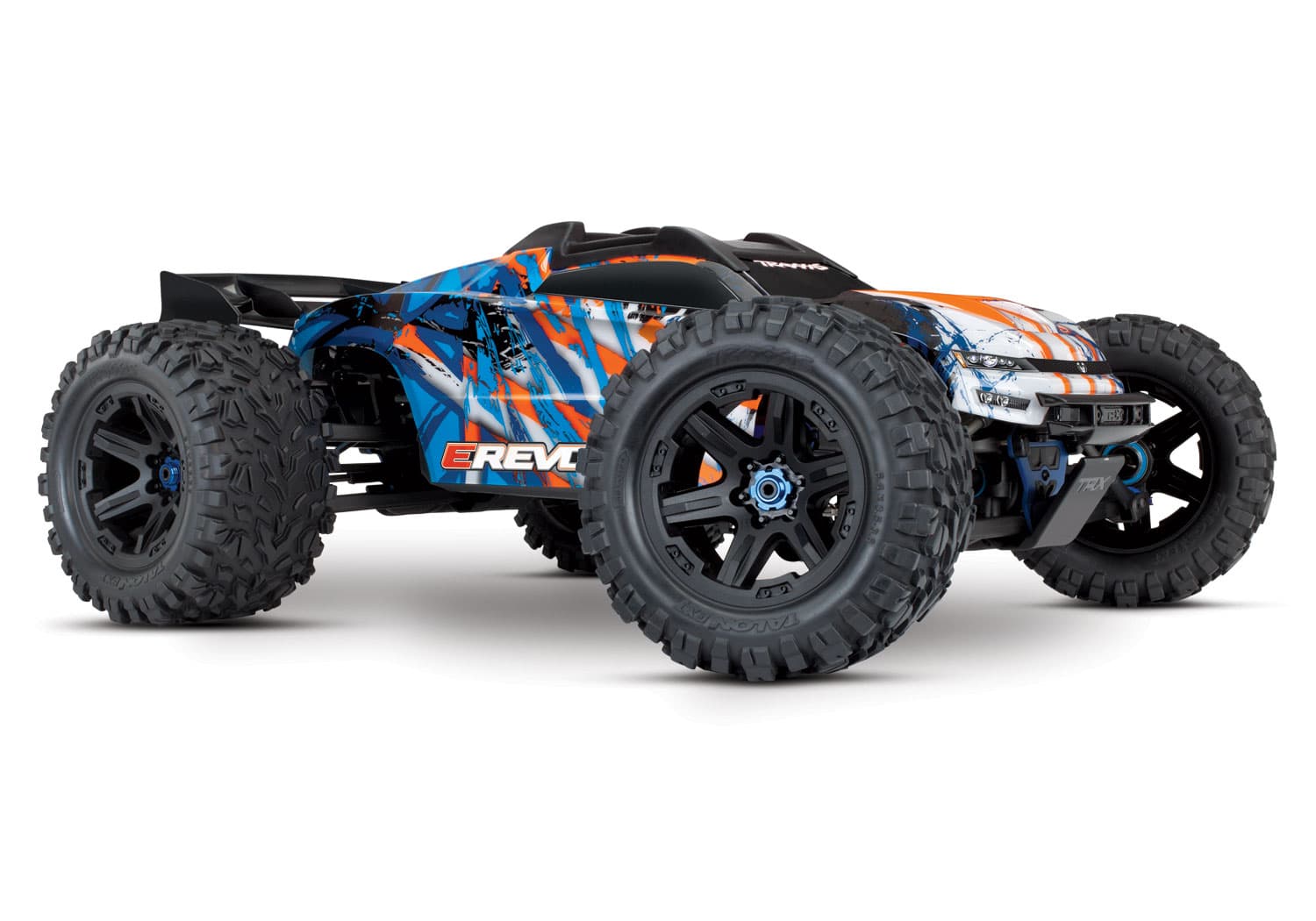
Quick Take
The definitive Arrma vs. Traxxas truggy showdown. The E-Revo 2.0 is faster and wider, the Talion is lighter and cheaper. Two different philosophies on how to build a high-performance 6S-class truggy.
At a Glance
Arrma Talion 6S BLX
Traxxas E-Revo 2.0 VXL
Spec Comparison
Spec
Arrma Talion 6S BLX
Traxxas E-Revo 2.0 VXL
Price
$699.99
$549.95
Performance
Top Speed
60 mph
70 mph
Drivetrain
4WD
4WD
Motor Type
Brushless
Brushless
Dimensions
Length
22.44 in
22.76 in
Width
12.40 in
16.42 in
Height
6.89 in
8.39 in
Wheelbase
13.46 in
14.17 in
Ground Clearance
1.57 in
2.64 in
Chassis
Weight
9.48 lbs
11.34 lbs
Battery
5000mAh 6S
5000mAh 4S x2
Features
Waterproof
Yes
Yes
Detailed Comparison
Two very different trucks: the Arrma Talion 6S BLX is a leaner, lighter 1/8 scale truggy at its mid-range price while the Traxxas E-Revo 2.0 VXL runs wider and faster at its mid-range price in 1/10 scale. Despite the scale labels, these trucks are actually close in size. The E-Revo measures 22.76 inches long with a 14.17-inch wheelbase, while the Talion comes in at 22.44 inches long on a 13.46-inch wheelbase. The E-Revo is substantially wider at 16.42 inches compared to the Talion's 12.4 inches, which is one of the most significant differences between these two. That 4-inch width gap completely changes how each truck handles, with the E-Revo being much more resistant to rollovers during aggressive cornering.
Performance tips toward the E-Revo. It hits 70 mph versus the Talion's 60 mph. The E-Revo achieves this with a dual 4S battery configuration, essentially running 8S total voltage, while the Talion uses a single 6S pack. That power advantage is obvious from the first throttle pull. The E-Revo surges forward with authority the Talion just can't match. The Talion weighs 9.48 lbs, nearly 2 lbs lighter than the E-Revo's 11.34 lbs, which helps its acceleration feel punchy for a 60 mph truck, but it can't close that 10 mph gap. Where the Talion's lighter weight does help is in agility. It changes direction faster and feels more nimble in tight spaces.
Ground clearance is where the E-Revo really separates itself. At 2.64 inches versus the Talion's 1.57 inches, the E-Revo has over an inch more clearance. That's huge for off-road bashing. The Talion's low ride height means it scrapes on terrain that the E-Revo glides over without issue. Rocks, roots, deep ruts, and rough trails all present more of a challenge for the lower-sitting Talion. The E-Revo's wider stance also makes it way more stable during cornering and less prone to rollovers. If you're running on rough, uneven ground, the E-Revo is clearly the more capable platform.
Build quality on both trucks is solid. Arrma's 6S BLX platform is well proven, with a strong anodized chassis and metal gears throughout. The E-Revo 2.0 benefits from years of iterative improvement and Traxxas's industry-leading parts support. Both are waterproof and built for abuse. The Talion's lighter weight means less stress on components during crashes, but the E-Revo's wider body distributes impact forces better. In practice, both trucks handle bashing well, though the specific parts that break tend to differ based on the crash angle and speed.
Battery economics favor the Talion significantly. A single 6S pack is cheaper and simpler than the E-Revo's dual 4S pack requirement. You'll save noticeably on batteries, which adds up across a season. No need to match pairs or worry about one pack draining faster than the other. Runtime is comparable since the E-Revo draws from its larger total capacity proportionally. The charging convenience of a single pack versus two also saves time between sessions.
At a modest price gap the price difference is only a modest price so cost isn't really the deciding factor here. The Talion wins on weight, battery simplicity, and ongoing battery costs. The E-Revo wins on top speed, ground clearance, stability, and off-road capability. For pure bashing on mixed terrain, the E-Revo is the superior truck. For someone who values a lighter truck with cheaper running costs and doesn't need maximum ground clearance, the Talion provides strong performance for less total investment.
The Verdict
Arrma Talion 6S BLX
Lighter, simpler batteries, and 60 mph. The Talion 6S is the truggy for drivers who value efficiency over excess.
Full reviewTraxxas E-Revo 2.0 VXL
Faster, more clearance, wider stance. The E-Revo 2.0 is the brute-force approach to truggies. It costs more because it does more.
Full reviewWhere to Buy
Arrma Talion 6S BLX
Traxxas E-Revo 2.0 VXL
Prices may vary. We may earn a commission on purchases at no extra cost to you.
Related Comparisons
Related Guides
How Fast Are RC Cars? Speed Guide by Category
Real-world RC car speeds by category and price range. From 15 mph mini crawlers to 100+ mph speed machines.
Brushed vs Brushless Motors: What's the Difference?
How brushed and brushless motors work, what the performance differences are, and which one to pick.
2WD vs 4WD RC Cars: Which Is Better?
2WD and 4WD compared across handling, speed, durability, and terrain. Plus which drivetrain to pick.