Losi 5IVE-T 2.0 vs Losi Super Baja Rey 2.0Which Should You Buy?
Quick Take
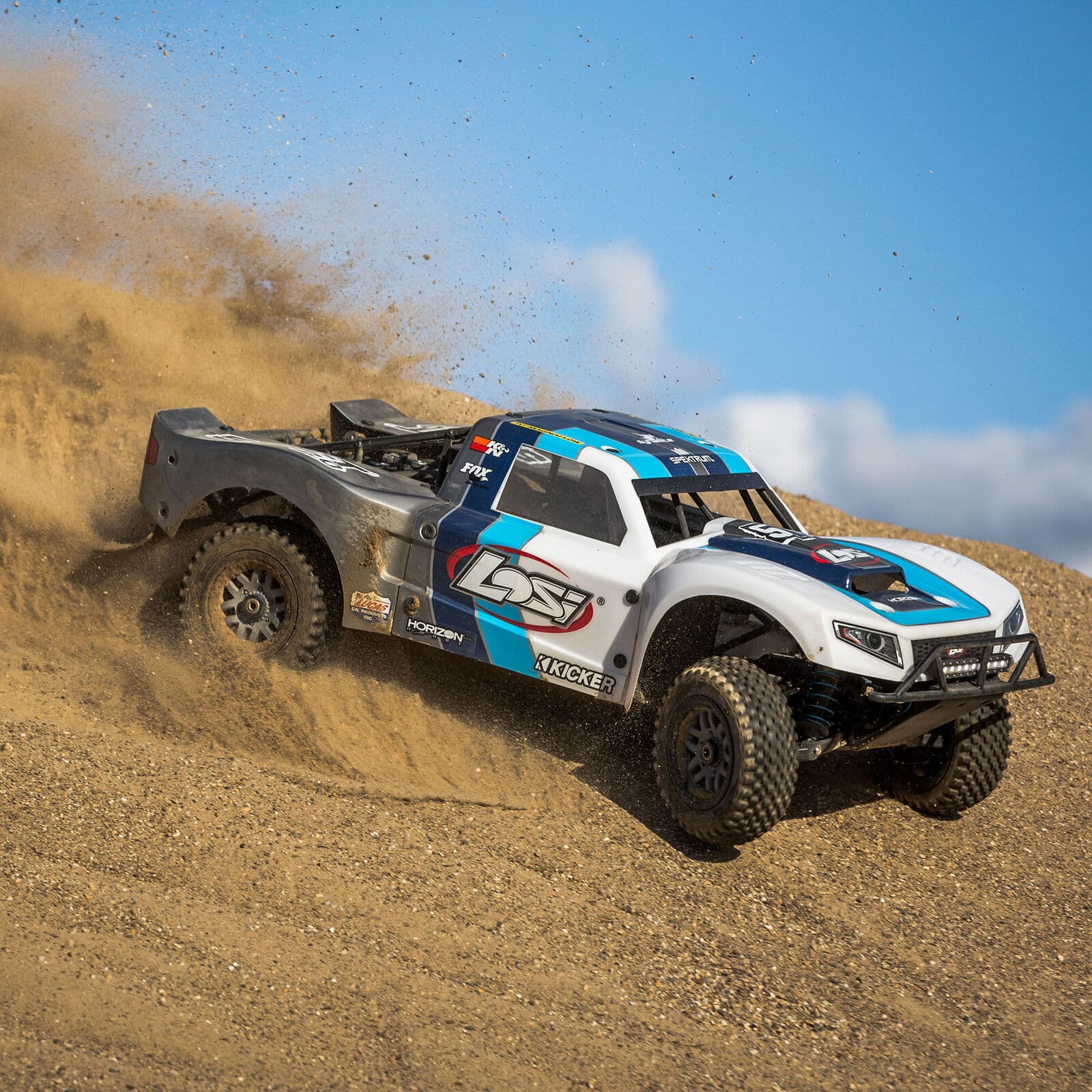
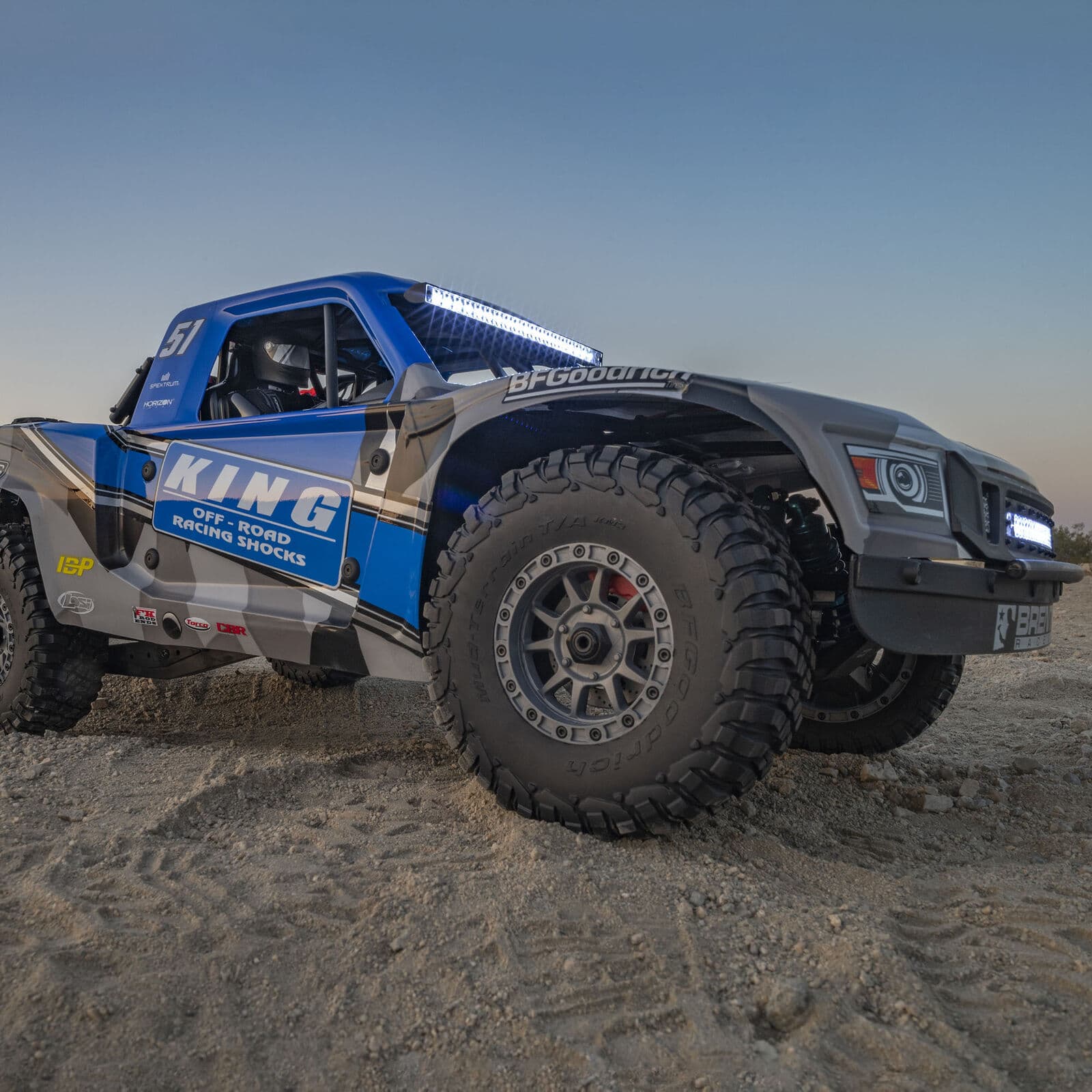
Two large-scale Losi desert machines fighting for garage space. The 5IVE-T 2.0 is the bigger 1/5 brute at its premium price while the Super Baja Rey 2.0 is the faster, waterproof 1/6 at its premium price. Both are dual-battery brushless beasts, but they suit different driving environments and priorities.
At a Glance
Losi 5IVE-T 2.0
Losi Super Baja Rey 2.0
Spec Comparison
Spec
Losi 5IVE-T 2.0
Losi Super Baja Rey 2.0
Price
$1,599.99
$999.99
Performance
Top Speed
45 mph
50 mph
Drivetrain
4WD
4WD
Motor Type
Brushless
Brushless
Dimensions
Length
35.43 in
30.50 in
Width
18.50 in
15.60 in
Height
10.24 in
11.81 in
Wheelbase
22.05 in
19.50 in
Ground Clearance
2.56 in
2.36 in
Chassis
Weight
24 lbs
19.45 lbs
Battery
5000mAh 4S x2
5000mAh 4S x2
Features
Waterproof
No
Yes
Detailed Comparison
Losi versus Losi in the large-scale desert racing arena. The 5IVE-T 2.0 is a 1/5 scale truck measuring a massive 35.43 inches long and weighing a full 24 lbs. The Super Baja Rey 2.0 is 1/6 scale at 30.5 inches and 19.45 lbs. Both run dual 5000mAh 4S battery setups with brushless motors and 4WD. These are serious machines that command respect, demand space, and require commitment to own and operate.
The Super Baja Rey 2.0 is the faster truck at 50 mph versus the 5IVE-T 2.0's 45 mph. Five mph might not sound dramatic on paper, but at this scale and weight, it's noticeable and directly felt through the controller. The SBR2 achieves this while being 4.55 lbs lighter, which compounds the speed advantage with better acceleration, more agile direction changes, and easier recovery after crashes. The 5IVE-T's extra mass and 22.05-inch wheelbase versus the SBR2's 19.5 inches give it better high-speed straight-line stability, meaning it tracks truer at full speed, but slower directional changes when you need to dodge or turn.
Ground clearance slightly favors the 5IVE-T at 2.56 inches versus 2.36 inches for the SBR2. Both numbers are adequate for desert-style running over hardpacked dirt and moderate rough terrain. The 5IVE-T's 18.5-inch width versus 15.6 inches on the SBR2 makes it more stable through high-speed sweepers but also means you need wider running areas and more storage space. These trucks eat space in your vehicle and in your garage. The 5IVE-T especially. Plan your transport situation before buying either one.
The Super Baja Rey 2.0 holds a critical practical advantage: factory waterproofing. At this price range, being able to run in damp conditions, through puddles, or on dewy mornings without worrying about killing expensive electronics is a significant feature that really expands when and where you can drive. The 5IVE-T 2.0 lacks waterproofing entirely, which is a real limitation for a premium investment truck that kicks up moisture from damp ground at speed even when the surface looks dry. Large-scale trucks generate enough tire spray from slightly moist terrain to cause real electronics problems over time.
Build quality is excellent on both. Losi's large-scale engineering is proven through years of racing use and hard bashing by thousands of owners. The SBR2 features a full-cage roll design with functional front and rear bumpers that protect the body and chassis during the inevitable high-speed tumbles these trucks take. The 5IVE-T uses a more traditional truck bed layout. Both are built to survive hard impacts at their respective speeds, but repair costs scale with the truck size. Replacement parts for either of these are substantially more expensive than 1/10 scale equivalents, and crashes at 45 to 50 mph with 20 to 24 lbs of mass hit hard.
With a meaningful price gap, the SBR2 is noticeably more but gets you higher top speed, full waterproofing, and a 4.55 lb weight savings. The 5IVE-T's appeal is its sheer size and physical presence. Nothing turns heads at a bash spot like a 35-inch, 24-lb truck tearing across desert terrain. The sound, the scale, the visual impact of a 1/5 truck is just unmatched by the 1/6 SBR2. But for pure performance and practical value, the Super Baja Rey 2.0 is the more complete package despite the higher sticker price.
The Verdict
Losi 5IVE-T 2.0
24 pounds. 35 inches. The 5IVE-T 2.0 stops people in their tracks. Nothing else in RC has this kind of presence.
Full reviewLosi Super Baja Rey 2.0
Faster, lighter, waterproof. The Super Baja Rey 2.0 is the better driver's truck. It just won't turn as many heads at the park.
Full reviewWhere to Buy
Losi 5IVE-T 2.0
Losi Super Baja Rey 2.0
Prices may vary. We may earn a commission on purchases at no extra cost to you.
Related Comparisons
Related Guides
How Fast Are RC Cars? Speed Guide by Category
Real-world RC car speeds by category and price range. From 15 mph mini crawlers to 100+ mph speed machines.
Brushed vs Brushless Motors: What's the Difference?
How brushed and brushless motors work, what the performance differences are, and which one to pick.
2WD vs 4WD RC Cars: Which Is Better?
2WD and 4WD compared across handling, speed, durability, and terrain. Plus which drivetrain to pick.