Arrma Mojave 6S BLX vs Losi Super Baja Rey 2.0Which Should You Buy?
Quick Take
Two premium large-scale desert racers from rival brands. The Mojave 6S is faster and cheaper on 6S power, while the Super Baja Rey 2.0 is bigger with dual-4S batteries and a higher-end suspension setup. Both are waterproof, both are serious machines.
At a Glance
Arrma Mojave 6S BLX
Losi Super Baja Rey 2.0
Spec Comparison
Spec
Arrma Mojave 6S BLX
Losi Super Baja Rey 2.0
Price
$679.99
$999.99
Performance
Top Speed
60 mph
50 mph
Drivetrain
4WD
4WD
Motor Type
Brushless
Brushless
Dimensions
Length
28.15 in
30.50 in
Width
13.98 in
15.60 in
Height
10.59 in
11.81 in
Wheelbase
16.54 in
19.50 in
Ground Clearance
1.85 in
2.36 in
Chassis
Weight
11.88 lbs
19.45 lbs
Battery
5000mAh 6S
5000mAh 4S x2
Features
Waterproof
Yes
Yes
Detailed Comparison
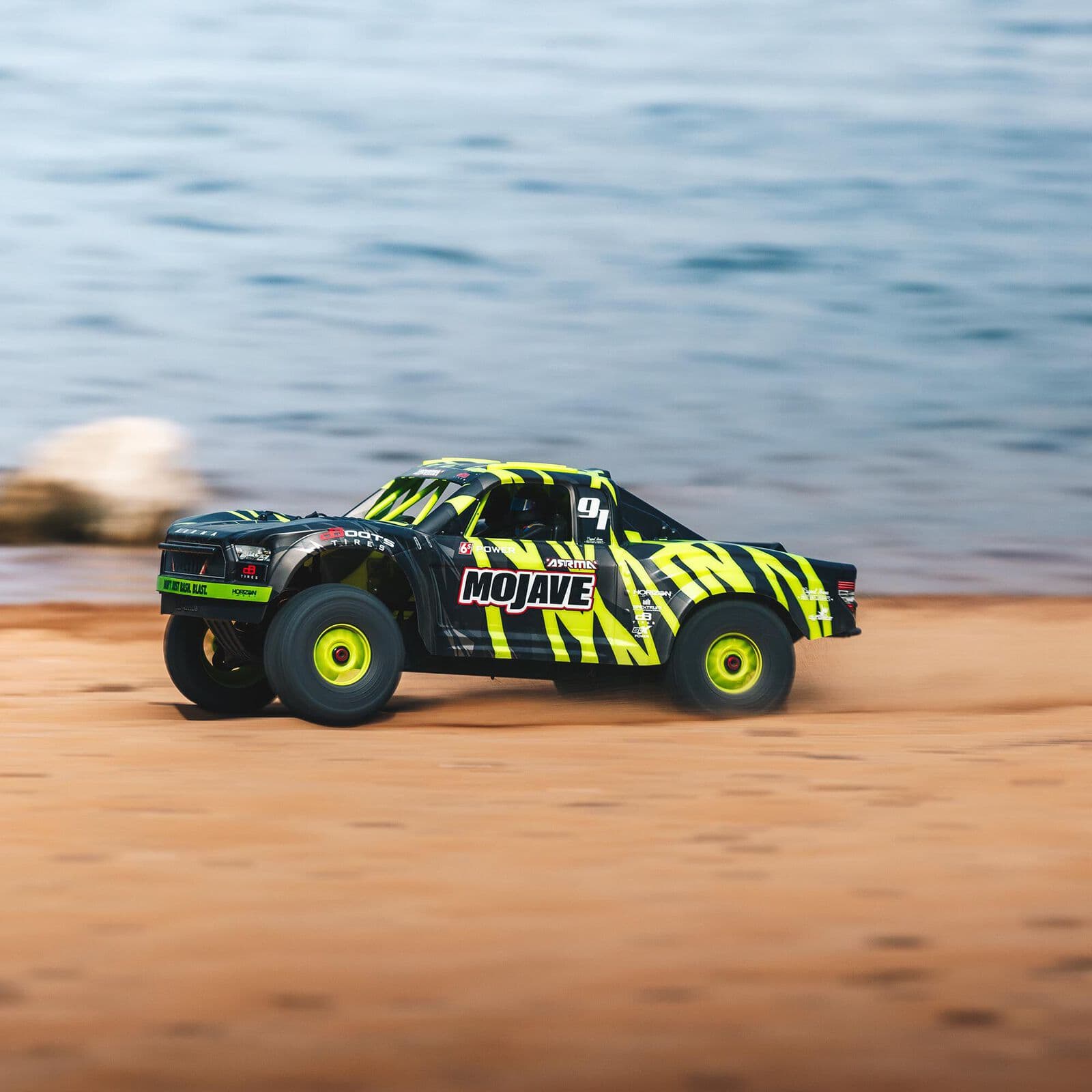
The Arrma Mojave 6S BLX at its premium price and Losi Super Baja Rey 2.0 at its premium price are both large-scale desert racers built for high-speed off-road thrills, and this is one of the tighter and more interesting comparisons in the segment. The Mojave is 1/7 scale; the SBR2 is 1/6. The Mojave is faster at 60 mph versus 50 mph. The SBR2 is bigger at 30.5 inches long versus 28.15 inches. Both are waterproof. Both are brushless 4WD. Both will make you grin.
The Mojave's speed advantage comes from running a single 5000mAh 6S pack versus the SBR2's dual 5000mAh 4S configuration. Total voltage is comparable in the ballpark, but the Mojave's single-battery system is simpler to charge, cheaper to maintain, and pushes power to a substantially lighter truck. At 11.88 lbs versus 19.45 lbs, the Mojave has a way better power-to-weight ratio. That 7.57-lb weight difference is massive in every practical sense and directly explains the 10 mph speed gap while also making the Mojave more agile in directional changes and easier to transport.
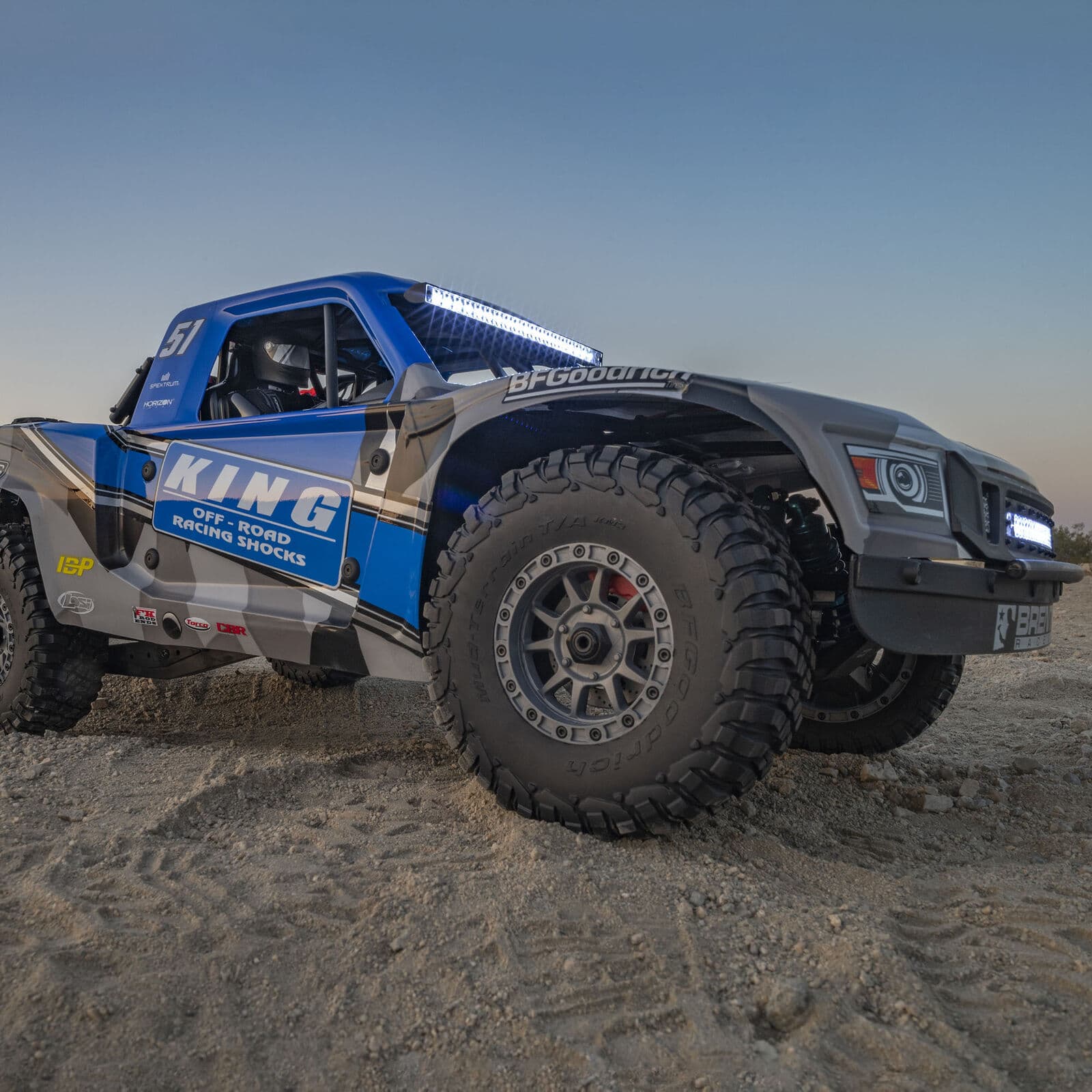
The SBR2 fights back with suspension quality and terrain-smoothing stability that only mass and size can provide. Its 19.5-inch wheelbase, wider 15.6-inch stance, and greater mass absorb rough terrain with an authority and composure the lighter Mojave can't quite match at full speed. The SBR2 runs over washboard sections, rocky patches, and rough desert hardpack with a planted confidence that makes it feel like a miniature Baja trophy truck. Ground clearance is 2.36 inches for the SBR2 versus 1.85 for the Mojave. That half-inch advantage is significant on rough terrain and means fewer chassis impacts on obstacles.
Build quality is premium on both platforms, reflecting their position at the top of their respective brand lineups. Losi's large-scale engineering is proven through years of the Baja Rey platform evolution, with robust drivetrain components, long-travel shocks, and quality materials throughout. Arrma's 6S BLX platform is equally durable with millions of trucks in the field proving its reliability under hard use. The SBR2's cage-style body with scale details like spare tire, roll cage, and driver figure looks more realistic and visually striking than the Mojave's clean trophy truck body. Both handle high-speed crashes without catastrophic failure, though at 50 to 60 mph with this much mass, hard impacts will inevitably break parts on any truck regardless of brand.
The price gap is substantial and worth careful consideration. The Mojave at its premium price is considerably less than the SBR2 at its premium price and the Mojave needs only one battery to the SBR2's two. Total battery cost for the SBR2 is roughly double the Mojave's investment, and charging two packs takes twice as long between sessions. Over a year of regular driving, the SBR2 is meaningfully more expensive to operate in battery costs, replacement parts, and the simple opportunity cost of longer charging cycles.
The Mojave 6S is the better value and the faster truck by a clear margin. The SBR2 is the more premium, more scale-realistic platform with better rough-terrain composure and a more polished overall package. If you're choosing on performance per dollar, the Mojave wins the argument cleanly. If you want the most refined and visually striking large-scale desert racing experience and the budget allows, the SBR2 is the more aspirational machine.
The Verdict
Arrma Mojave 6S BLX
The Mojave is faster, waterproof, and considerably cheaper. On pure performance per dollar, it wins cleanly.
Full reviewLosi Super Baja Rey 2.0
The SBR2 is the more refined machine with better rough-terrain composure and scale realism. You pay for it, but you can feel the difference over bumpy terrain.
Full reviewWhere to Buy
Arrma Mojave 6S BLX
Losi Super Baja Rey 2.0
Prices may vary. We may earn a commission on purchases at no extra cost to you.
Related Comparisons
Related Guides
How Fast Are RC Cars? Speed Guide by Category
Real-world RC car speeds by category and price range. From 15 mph mini crawlers to 100+ mph speed machines.
Brushed vs Brushless Motors: What's the Difference?
How brushed and brushless motors work, what the performance differences are, and which one to pick.
2WD vs 4WD RC Cars: Which Is Better?
2WD and 4WD compared across handling, speed, durability, and terrain. Plus which drivetrain to pick.