Arrma Senton 3S BLX vs Traxxas Slash 2WD VXLWhich Should You Buy?
Quick Take
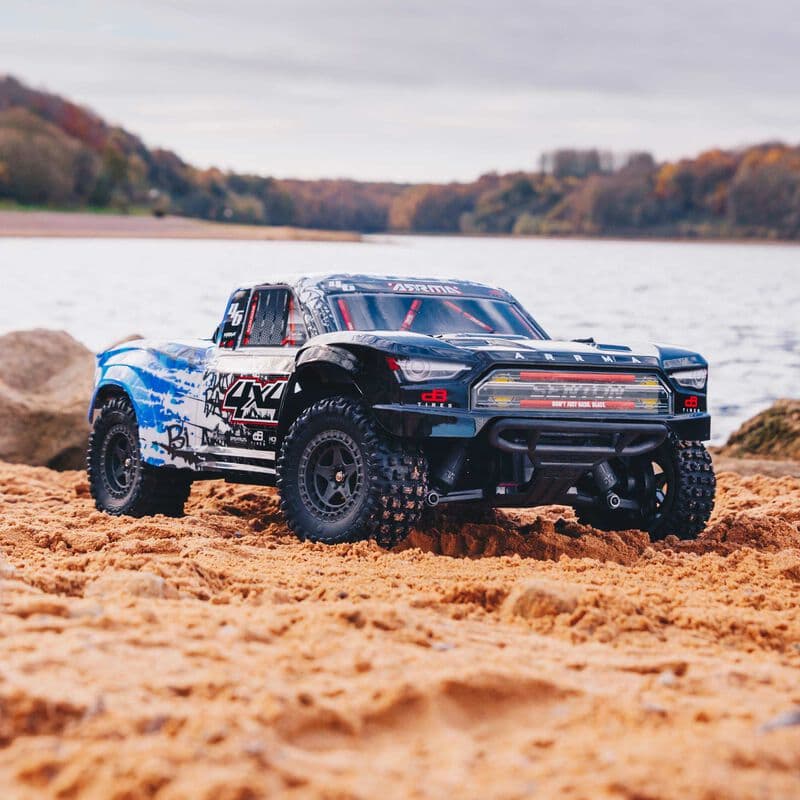
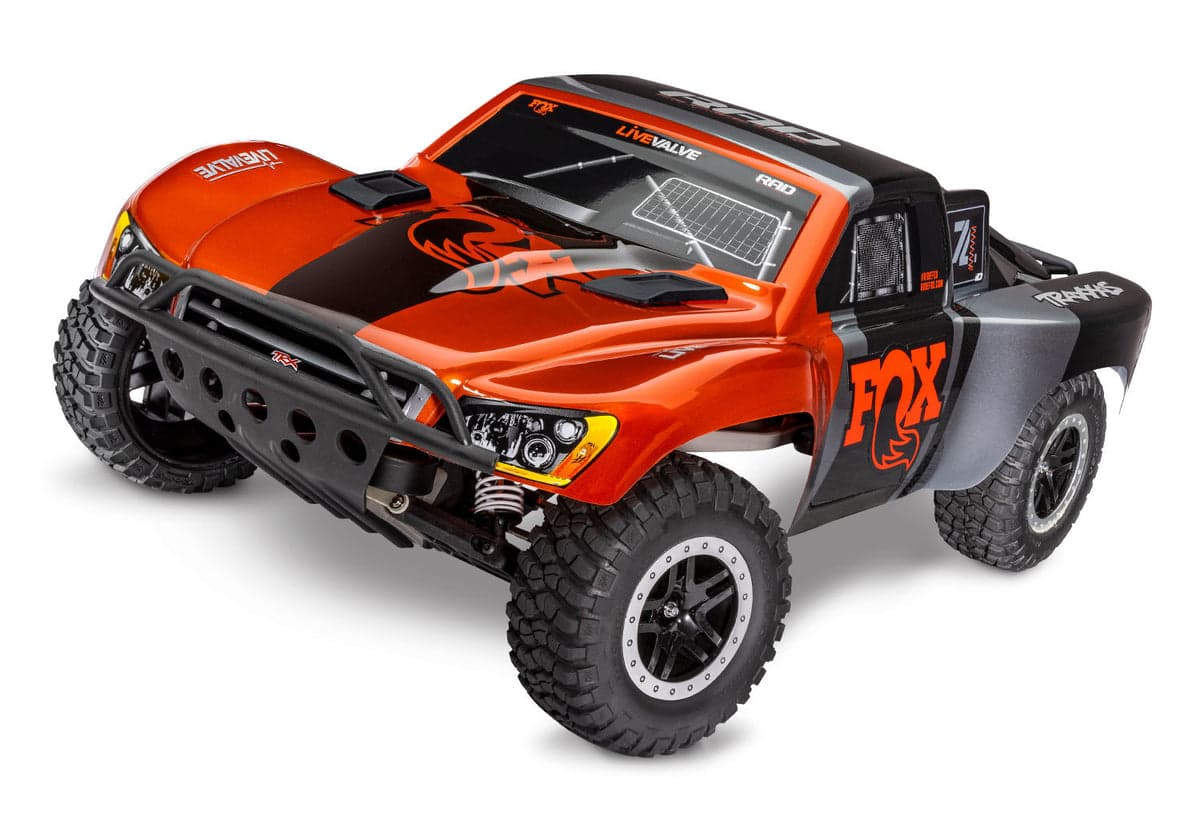
4WD versus 2WD in the short course class at nearly identical prices. The Senton 3S gives you all-wheel traction for a reasonable price while the Slash 2WD VXL trades grip for a higher 60 mph top speed at its price point. Same price tier, very different driving dynamics and terrain capabilities.
At a Glance
Arrma Senton 3S BLX
Traxxas Slash 2WD VXL
Spec Comparison
Spec
Arrma Senton 3S BLX
Traxxas Slash 2WD VXL
Price
$329.99
$379.95
Performance
Top Speed
50 mph
60 mph
Drivetrain
4WD
2WD
Motor Type
Brushless
Brushless
Dimensions
Length
20.08 in
22.40 in
Width
12.01 in
11.65 in
Height
7.09 in
8.43 in
Wheelbase
12.91 in
13.20 in
Ground Clearance
1.26 in
1.37 in
Chassis
Weight
6.17 lbs
5.65 lbs
Battery
3200mAh 3S
5000mAh 3S
Features
Waterproof
Yes
Yes
Detailed Comparison
The Arrma Senton 3S BLX and Traxxas Slash 2WD VXL are priced within a few dollars of each other at its price point and a competitive price respectively, making this a genuine toss-up decision for many buyers walking into a hobby shop. The core tradeoff is simple and fundamental: the Senton has 4WD and the Slash has 2WD. Everything else about how these trucks feel, perform, and handle flows directly from that single drivetrain distinction.
The Slash 2WD VXL claims 60 mph to the Senton's 50. That 10 mph speed advantage is real and noticeable on smooth pavement where the rear tires can hook up cleanly. The Slash achieves this because 2WD eliminates all front drivetrain drag, including the front differential, front driveshafts, and front CV joints. The lighter overall system at 5.65 lbs versus 6.17 lbs combined with less parasitic drivetrain loss helps the Velineon motor push the truck to higher velocity with the same 3S voltage. On a smooth parking lot, the Slash will pull away from the Senton in a straight-line drag race every single time.
But take both trucks off pavement and the Senton's 4WD advantage becomes overwhelming. On dirt, grass, gravel, or any loose surface, four wheels pulling means a big step up acceleration, more traction through turns, and far less tendency to spin out under hard throttle. The Slash 2WD requires significantly more driver skill to manage on low-traction surfaces, especially on loose dirt where the rear end wants to step out constantly under power. Some experienced drivers love that oversteer challenge and consider it more engaging than the Senton's predictable all-wheel grip. Others find it frustrating and limiting. Your surface preference matters enormously here.
Both trucks are fully waterproof and run 3S brushless systems, so weather capability is equal. The Slash comes spec'd with a larger 5000mAh battery versus the Senton's 3200mAh, giving the Slash significantly better out-of-the-box runtime, often 20-25 minutes versus the Senton's 12-15. This is a real day-one advantage, though both trucks accept aftermarket packs. The Slash is also physically larger at 22.4 inches long with a 13.2-inch wheelbase versus the Senton's 20.08 inches and 12.91-inch wheelbase, giving it a more commanding presence. Ground clearance slightly favors the Slash at 1.37 inches versus 1.26.
Durability is close between these two. The Senton's 4WD drivetrain has more components that can potentially break, including front differential gears and front driveshafts, but Arrma's build quality means failures are infrequent under normal bashing conditions. The Slash 2WD's simpler drivetrain has fewer mechanical points of failure and is easier and cheaper to maintain when something does break. The Slash also has the most extensive aftermarket ecosystem of any RC truck ever made, with reinforced parts like RPM arms readily available for every known weak point.
The Traxxas aftermarket is the decisive long-term differentiator. The Slash platform, across both 2WD and 4WD variants, has hundreds of upgrade parts, body options, accessory mounts, and performance modifications available from dozens of manufacturers. If long-term customization, modification, and personalization are part of your plan, the Slash's ecosystem is unmatched in the hobby.
For a few dollars more, the Slash gives you higher top speed, longer stock runtime, a bigger physical truck, and the best upgrade aftermarket in RC history. For a few dollars less, the Senton gives you 4WD traction that completely transforms the driving experience on anything but perfectly smooth pavement. In mixed terrain, 4WD is worth far more than 10 mph of straight-line speed. On smooth surfaces, that 60 mph is addictive.
The Verdict
Arrma Senton 3S BLX
Dirt, grass, gravel. The Senton's 4WD hooks up where the Slash 2WD spins. If your terrain is anything but smooth, go 4WD.
Full reviewTraxxas Slash 2WD VXL
Faster on smooth surfaces and the aftermarket is legendary. The Slash 2WD VXL rewards skilled drivers who like a challenge.
Full reviewWhere to Buy
Arrma Senton 3S BLX
Traxxas Slash 2WD VXL
Prices may vary. We may earn a commission on purchases at no extra cost to you.
Related Comparisons
Related Guides
How to Choose Your First RC Car
A beginner's guide to picking your first RC car, from categories and budgets to what actually matters.
2WD vs 4WD RC Cars: Which Is Better?
2WD and 4WD compared across handling, speed, durability, and terrain. Plus which drivetrain to pick.
How Fast Are RC Cars? Speed Guide by Category
Real-world RC car speeds by category and price range. From 15 mph mini crawlers to 100+ mph speed machines.