Arrma Fireteam 6S BLX vs Arrma Typhon 6S BLXWhich Should You Buy?
Quick Take
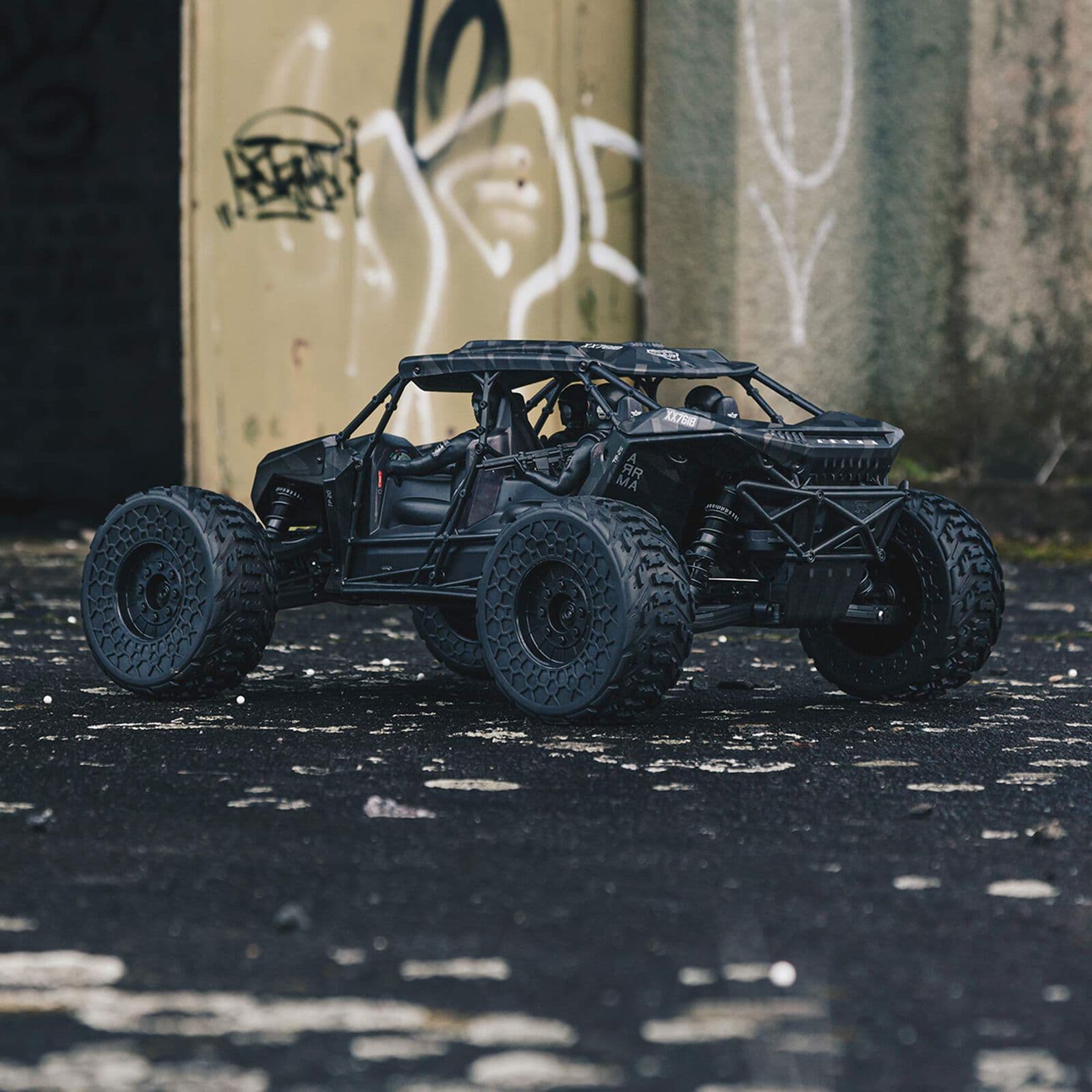
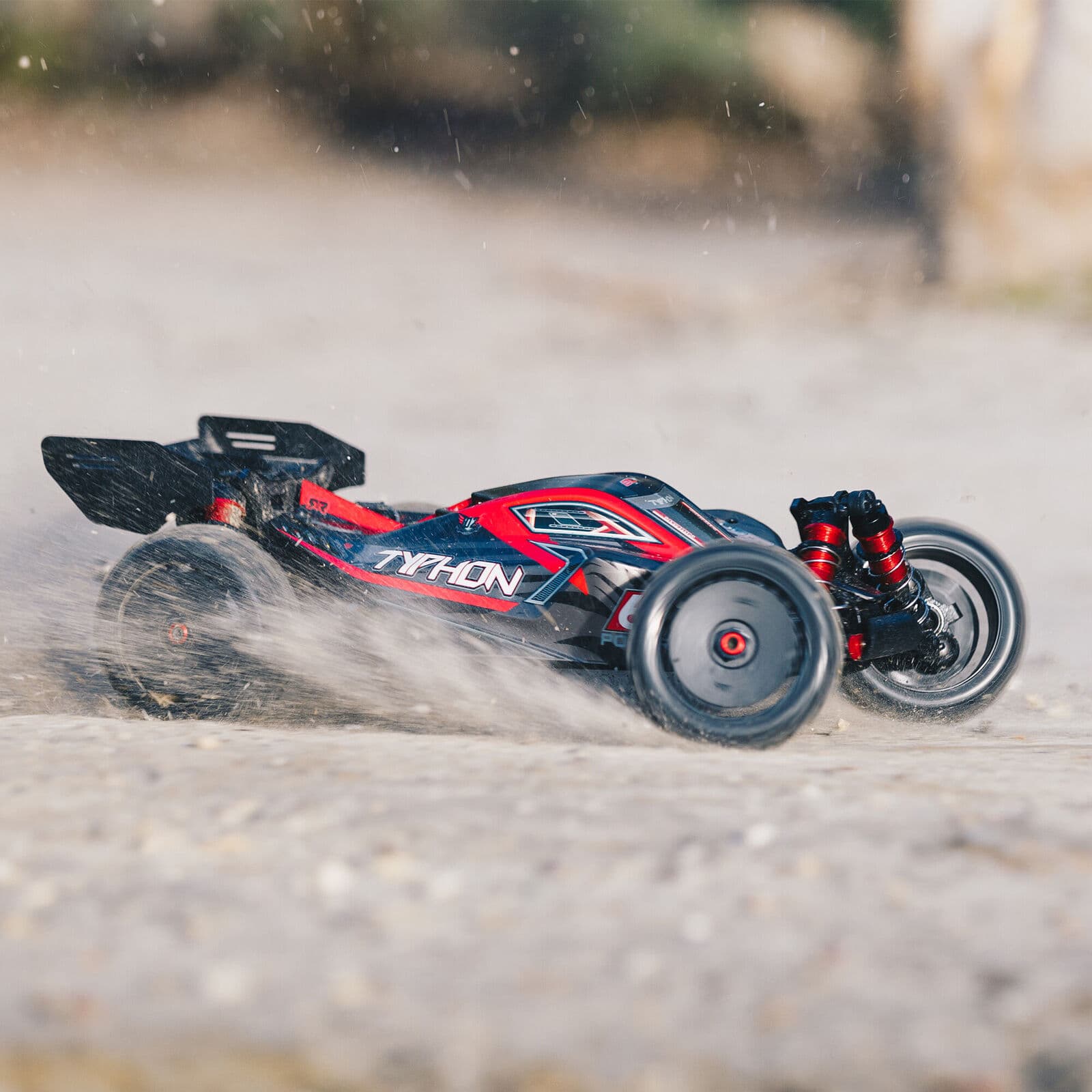
Arrma's 1/7 scale speed run buggy versus their 1/8 scale racing buggy, both on 6S. The Fireteam is bigger, heavier, and built for rough-terrain blasting. The Typhon is lighter, more agile, and closer to a competition platform at a significantly lower price.
At a Glance
Arrma Fireteam 6S BLX
Arrma Typhon 6S BLX
Spec Comparison
Spec
Arrma Fireteam 6S BLX
Arrma Typhon 6S BLX
Price
$699.99
$579.99
Performance
Top Speed
60 mph
60 mph
Drivetrain
4WD
4WD
Motor Type
Brushless
Brushless
Dimensions
Length
24.21 in
21.06 in
Width
17.72 in
12.01 in
Height
10.83 in
6.61 in
Wheelbase
16.61 in
13.31 in
Ground Clearance
2.76 in
1.57 in
Chassis
Weight
13.81 lbs
8.49 lbs
Battery
5000mAh 6S
5000mAh 6S
Features
Waterproof
Yes
Yes
Detailed Comparison
Both of these buggies carry Arrma's name and run 6S power to hit 60 mph, but they target distinctly different drivers and driving styles. The Arrma Fireteam 6S BLX is a massive 1/7 scale machine at 24.21 inches long, 17.72 inches wide, and 13.81 lbs. The Arrma Typhon 6S BLX is a more traditional 1/8 scale buggy at 21.06 x 12.01 inches and 8.49 lbs. That 5.32 pound weight difference changes everything about how these trucks drive and feel. The Typhon is flickable, quick to change direction, and feels like a purpose-built racer that responds instantly to inputs. The Fireteam is a freight train that plows through terrain with momentum and authority rather than finesse.
Ground clearance is a huge differentiator between these platforms. The Fireteam sits at 2.76 inches versus the Typhon's 1.57 inches. That extra 1.2 inches means the Fireteam can blast across rough, unmanicured terrain, through tall grass, and over rocks and roots that would high-center the Typhon immediately. The Fireteam's 16.61-inch wheelbase also dwarfs the Typhon's 13.31, giving it markedly better high-speed stability at the cost of turning agility and responsiveness. If you mostly drive on prepared surfaces, parking lots, or smooth dirt, the Typhon's lower center of gravity and lighter weight make it significantly faster through technical sections and corners. If your driving involves open desert, unmowed fields, or mixed rough terrain, the Fireteam handles the unpredictable surfaces a big step up.
Both trucks are waterproof and use similar 6S electronics from Arrma's Firma lineup, making parts interchangeability a nice bonus. Battery compatibility is shared, and both run 5000mAh 6S packs in similar trays. Runtime meaningfully favors the Typhon since its lighter weight demands less energy to move the same distance. Expect 20-30 minutes from the Typhon versus 15-20 from the Fireteam under similar driving intensity. Durability is strong on both EXB platforms, but the Fireteam's larger components and thicker materials give it better crash resistance just due to the physics of scale. The Typhon's smaller parts, while well-made, are more prone to breakage under equivalent impact forces because they're carrying less material.
The price difference is substantial and hard to ignore: a premium investment for the Fireteam versus a mid-range investment for the Typhon. That's considerably more, enough to buy several spare parts kits or a quality extra battery. The Typhon is one of the best values in the entire 6S market segment and a proven platform with years of aftermarket support, community knowledge, and readily available hop-ups. The Fireteam is a newer, more specialized product that appeals specifically to drivers who want the biggest possible 6S buggy with terrain-conquering ground clearance. For the vast majority of buyers, the Typhon gets you 90% of the experience at 64% of the cost. The Fireteam justifies its premium only if you specifically need the larger 1/7 scale, the higher ground clearance, and the terrain-crushing ability that the Typhon's low-slung chassis just cannot provide.
The Verdict
Arrma Fireteam 6S BLX
The Fireteam is for wide-open bashing over rough ground. If you need 2.76 inches of clearance and a truck that plows through anything, this is it.
Full reviewArrma Typhon 6S BLX
The Typhon gives you 90% of the experience for 64% of the cost. Lighter, more agile, and backed by a massive aftermarket. The better value by a mile.
Full reviewWhere to Buy
Arrma Fireteam 6S BLX
Arrma Typhon 6S BLX
Prices may vary. We may earn a commission on purchases at no extra cost to you.
Related Comparisons
Related Guides
How Fast Are RC Cars? Speed Guide by Category
Real-world RC car speeds by category and price range. From 15 mph mini crawlers to 100+ mph speed machines.
Brushed vs Brushless Motors: What's the Difference?
How brushed and brushless motors work, what the performance differences are, and which one to pick.
2WD vs 4WD RC Cars: Which Is Better?
2WD and 4WD compared across handling, speed, durability, and terrain. Plus which drivetrain to pick.