Arrma Big Rock 3S BLX vs Traxxas Stampede 2WD VXLWhich Should You Buy?
Quick Take
4WD versus 2WD at nearly the same price. The Big Rock has grip and stability, the Stampede has speed and simplicity. A totally different driving experience for a price difference.
At a Glance
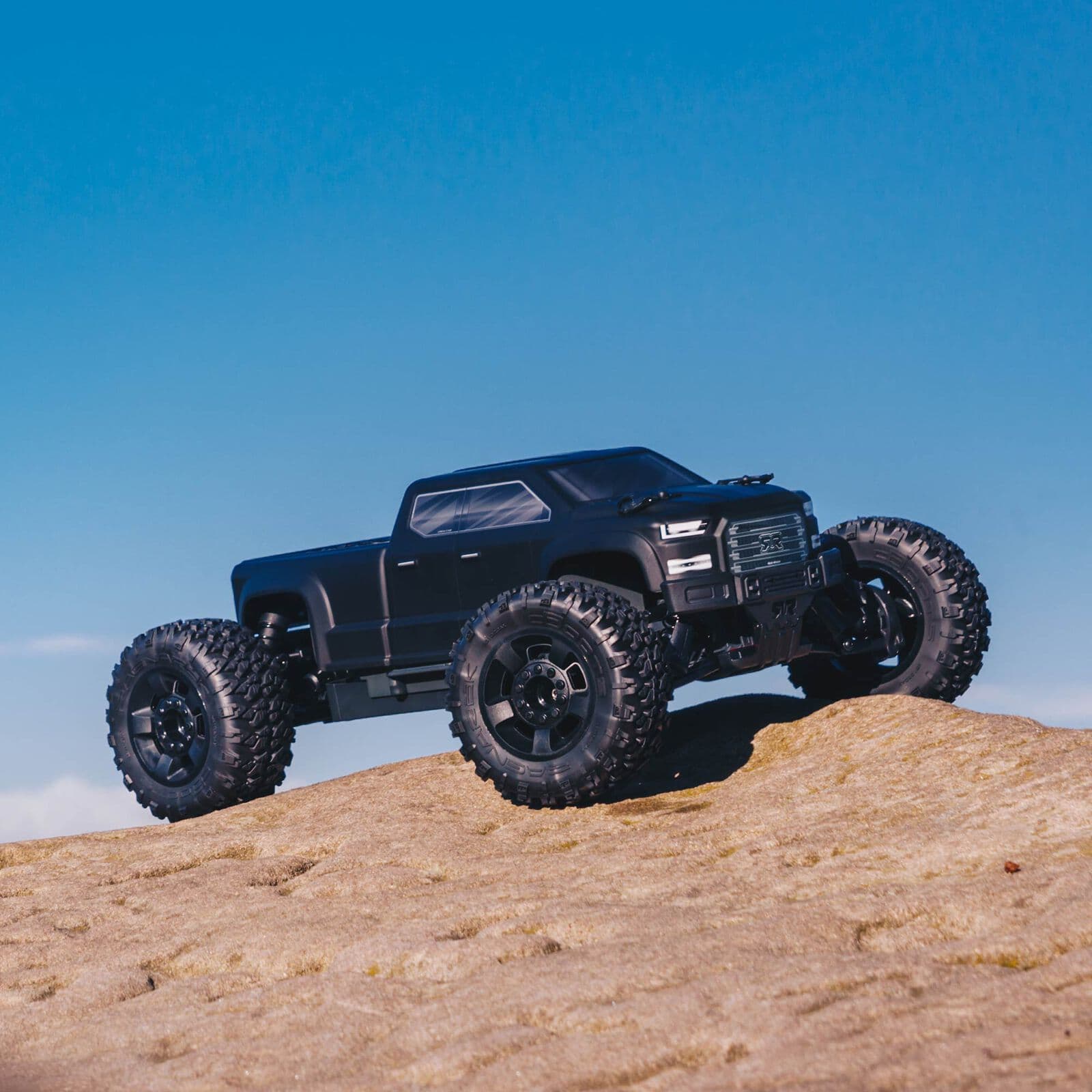
Arrma Big Rock 3S BLX
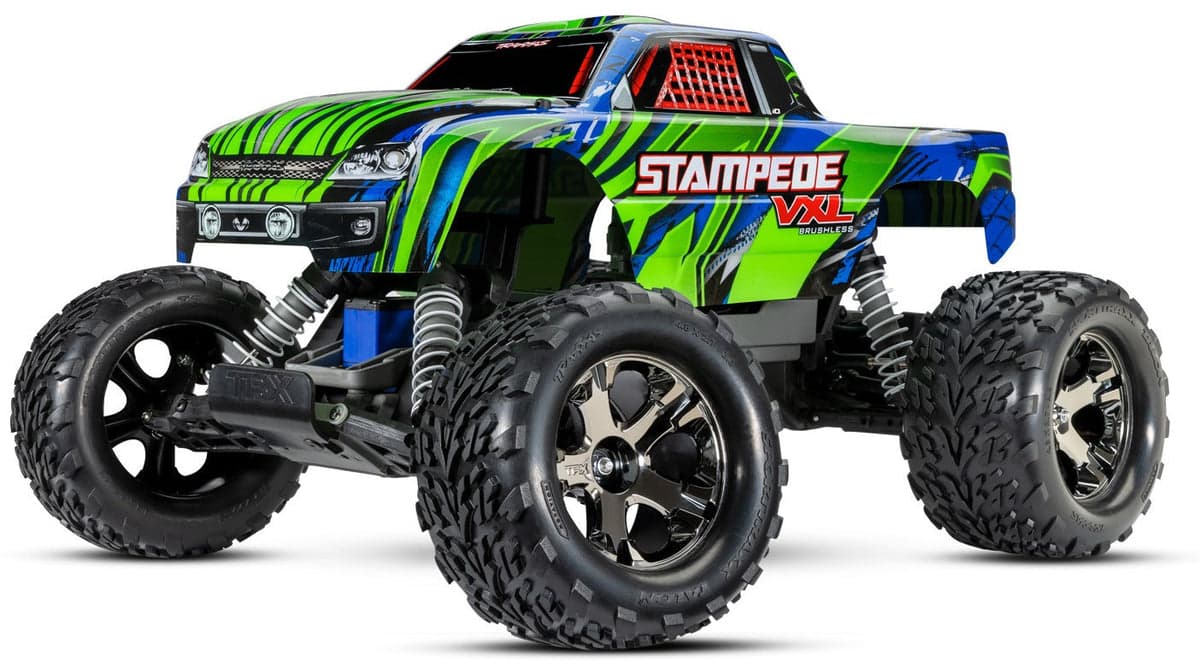
Traxxas Stampede 2WD VXL
Spec Comparison
Spec
Arrma Big Rock 3S BLX
Traxxas Stampede 2WD VXL
Price
$369.99
$379.95
Performance
Top Speed
50 mph
65 mph
Drivetrain
4WD
2WD
Motor Type
Brushless
Brushless
Dimensions
Length
20.47 in
16.34 in
Width
14.57 in
12.75 in
Height
7.09 in
7.87 in
Wheelbase
12.91 in
10.24 in
Ground Clearance
2.05 in
2.75 in
Chassis
Weight
6.77 lbs
5.51 lbs
Battery
3200mAh 3S
5000mAh 3S
Features
Waterproof
Yes
Yes
Detailed Comparison
At nearly the same price the Arrma Big Rock 3S BLX and Traxxas Stampede 2WD VXL are practically the same price. But drive them back to back and they feel like completely different machines. The Stampede 2WD blasts to 65 mph, a full 15 mph faster than the Big Rock's 50 mph. That speed gap comes from the Stampede sending all its power to two wheels instead of four, meaning less drivetrain loss and more energy reaching the ground. The Stampede's lighter weight at 5.51 lbs versus 6.77 lbs also helps it accelerate faster pound-for-pound.
The trade-off is traction. The Big Rock's 4WD system hooks up on every surface. Grass, dirt, gravel, loose sand, wet pavement, the Big Rock just digs in and goes. The Stampede's 2WD sends power to the rear only, which means wheelspin on loose surfaces and a rear end that wants to step out under hard throttle. On pavement, the Stampede is manageable and really fun with its oversteer-happy personality. On anything loose, it becomes a drifting, spinning handful that requires constant throttle management. Some people love that challenge. Most people find it frustrating after the first few sessions.
Size is significantly different. The Big Rock is 20.47 inches long and 14.57 inches wide. The Stampede is 16.34 inches long and 12.75 inches wide. The Big Rock looks and feels like a much bigger truck because it is. Its 12.91-inch wheelbase versus the Stampede's 10.24 inches means better stability over bumps and at speed. The Stampede is lighter at 5.51 lbs versus 6.77 lbs, which partially explains its speed advantage but also contributes to its twitchy handling at the top end.
Ground clearance favors the Stampede at 2.75 inches compared to the Big Rock's 2.05 inches. That's a meaningful 0.7-inch advantage. Combined with its lighter weight, the Stampede actually handles small obstacles well despite its 2WD limitation. It bounces over things rather than plowing through them, which is a different kind of capability.
Battery considerations matter for long-term enjoyment. The Stampede takes 5000mAh 3S packs, giving it excellent runtime per charge. The Big Rock specs 3200mAh 3S, which means shorter sessions unless you upgrade your battery. Both run the same 3S voltage, so batteries are interchangeable if they physically fit the tray. Both trucks are waterproof, though the Stampede's 2WD means you'll get more wheelspin in wet conditions.
The 2WD Stampede is mechanically simpler. No front differential, no front driveshaft, no front CV joints. Fewer parts to break, fewer parts to maintain, and a simpler drivetrain to work on. For beginners who want easy maintenance, the Stampede's simplicity has real value. When something breaks, diagnosis is faster and repairs are easier. The Big Rock's 4WD system adds complexity and additional wear points, though the parts are all proven and readily available.
For a few dollars more, the Big Rock gives you 4WD grip and a substantially bigger platform. For a few dollars less, the Stampede gives you 15 mph more speed and mechanical simplicity. If you drive off-road, the Big Rock's 4WD is essential. If you drive on pavement and want speed, the Stampede is really faster and more thrilling. Most people should get the Big Rock because most people end up driving off-road at some point, and 2WD frustration on loose surfaces is very real.
The Verdict
Arrma Big Rock 3S BLX
If you ever drive on grass, dirt, or gravel, get the Big Rock. 4WD grip on loose surfaces makes all the difference.
Full reviewTraxxas Stampede 2WD VXL
The Stampede 2WD is a riot on pavement. 65 mph, tail-happy handling, and a few dollars cheaper. Just stay off the grass.
Full reviewWhere to Buy
Arrma Big Rock 3S BLX
Traxxas Stampede 2WD VXL
Prices may vary. We may earn a commission on purchases at no extra cost to you.
Related Comparisons
Arrma Big Rock 3S BLX vs Traxxas Maxx V2
monster truckArrma Big Rock 3S BLX vs Traxxas Stampede 4X4 VXL
monster truckArrma Big Rock 3S BLX vs Traxxas Hoss 4X4 VXL
monster truckArrma Big Rock 3S BLX vs Arrma Outcast 6S BLX
monster truckArrma Big Rock 3S BLX vs Losi LMT Grave Digger
monster truckArrma Big Rock 3S BLX vs Redcat Volcano EPX Pro
monster truckRelated Guides
How to Choose Your First RC Car
A beginner's guide to picking your first RC car, from categories and budgets to what actually matters.
How Fast Are RC Cars? Speed Guide by Category
Real-world RC car speeds by category and price range. From 15 mph mini crawlers to 100+ mph speed machines.
Brushed vs Brushless Motors: What's the Difference?
How brushed and brushless motors work, what the performance differences are, and which one to pick.